
Gummy Cavity Count vs Loaded Flatness
The maximum pocket count that fits in CAD is not the right count. If you are locking a commercial gummy RTV, this page is that trade: pieces per cycle, footprint, loaded flatness, depositor pattern, and what happens when one tray tears. A 48-up that sags at the edge can lose more grams than a 24-up that stays flat.
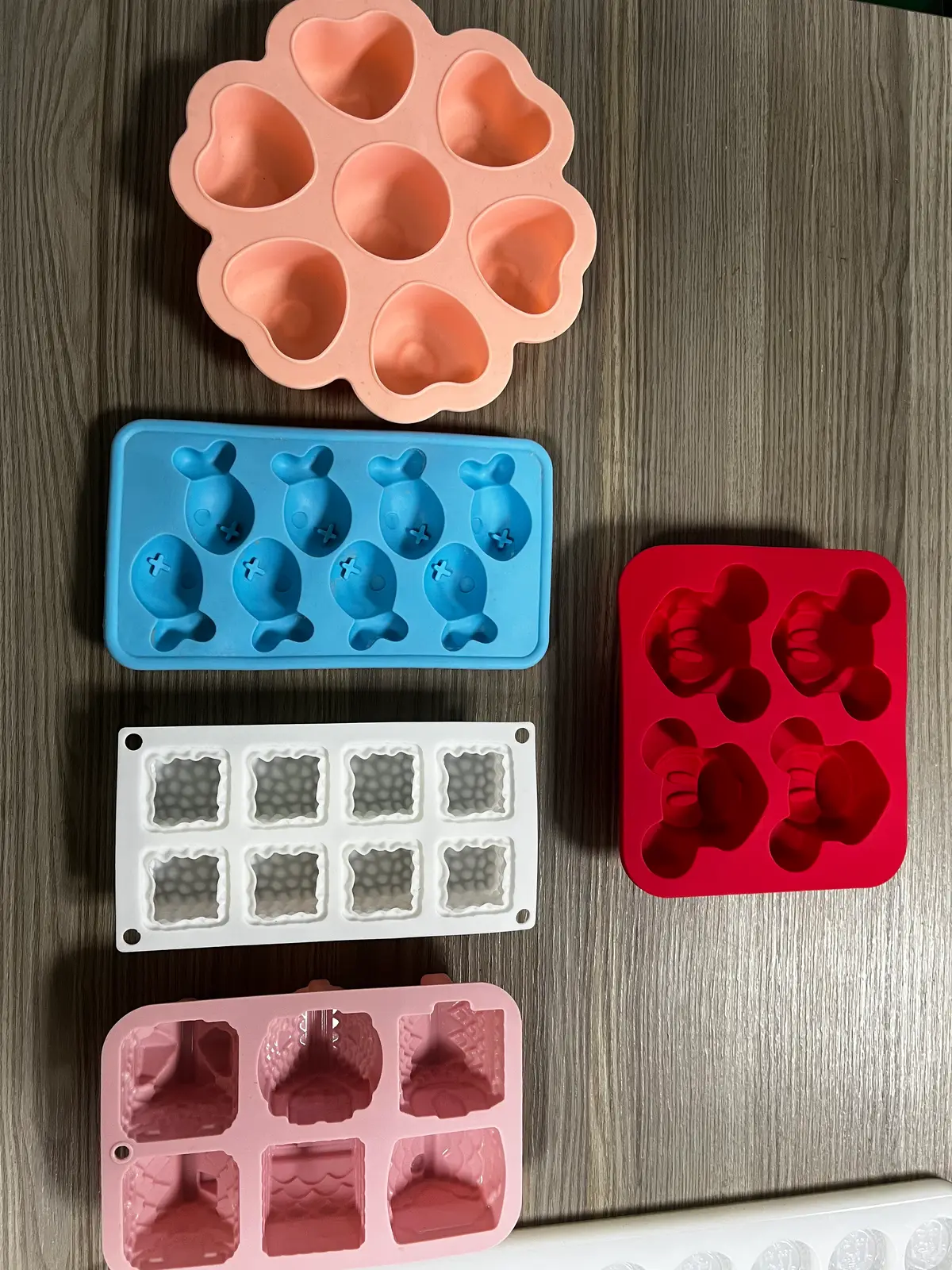
RUUIPON pours platinum food-contact gummy trays in Bao'an, Shenzhen (Licheng Technology Industry Park, Xinhe Blvd, Shajing; USCC 91440300MA5FAXCN9W) since 2018. Simple 3D is USD 50 when that CAD scope applies. Prototype is 3-7 business days after CAD lock. Production is MOQ 20 pieces per design. The SKU lives on custom silicone gummy molds.
Where this page sits
Buy the mold on custom silicone gummy molds. The multi-cavity commercial category is multi-cavity production silicone molds. Nozzle datum and machine fit live on retrofitting a gummy tray to a depositor. This page covers cavity count versus loaded flatness on a gummy sheet.
Start from output and handling
Write pieces per hour, cycle time, set / dry bottleneck, trays in rotation, and operator count. A 48-up does not automatically double a 24-up if demold doubles, two people must lift it, the machine only fills half the pockets per index, the edge sags, or one tear takes 48 cavities offline. Throughput is a system number.
Count changes the span
More cavities usually grow length or width. A longer unsupported span means more sag under hot mass, more twist on carry, more demand on the border, and more dependence on a nest. If the OD is fixed, adding pockets eats spacing, web, border, and hand access. Count has a structural cost.
Typical shop values
Reference values only. Confirm material-specific limits against the supplier’s technical data and agree project acceptance criteria before production.
| Item | Typical shop value |
|---|---|
| Right count | Highest count that stays predictable in your process |
| Cavity Shore | Often 10A-20A platinum; jacket / nest if loaded |
| Loaded-tray edge sag if unsupported | About 0.5-1.5 mm |
| Outer-row vs center if the sheet sags | Often 3-6% heavy |
| Proof | Full production span in the real formula, not one cavity |
| 3D / CAD | USD 50 when that modeling scope applies |
| Prototype after CAD lock | 3-7 business days |
| Production after written pass | MOQ 20 pieces per design |
| Contact | [email protected] · +86 135 3006 2969 |
Weight-map the edge
If center and edge pockets are the same CAD and finished grams drift by position, look at deflection, nest contact, scraper plane, nozzle Z, and machine offset before you recut the master. Label rows and columns. Compare center, long edge, short edge, corners. A position pattern is support. One pocket off is local.
Empty-flat is not enough
Seat the tray in the real nest. Measure empty. Fill to working mass. Remeasure. Run the real depositor or scrape. Weigh by position. Allowed deflection is a process number, not a universal silicone standard.
Two smaller trays
Two sheets can beat one large one when the nest is small, one person must carry, edge sag is hard to hold, demold damages webs, or you cannot afford one tray taking the line down. One large sheet can win when the depositor is built around that footprint, a rigid nest holds flatness, and automation handles the lift. Do not pick from rubber price per cavity.
Match the nozzle when you have a machine
Ask nozzles per shot, indexes per tray, row pitch, cycle, whether nozzles can be disabled, and nest size. A 36-up that fills 12 at a time can beat a 40-up that misses the index. The pretty round number is irrelevant. Machine geometry lives on the depositor page.
Count demold labor
Track pieces per minute, whether a row peels together, whether a sticky formula forces one-by-one release, and how often the tray must be flipped. A dense sheet can raise labor while cutting tray count.
Prototype the real span
One cavity does not prove a 600 mm tray. The first tool should match length / width, support, border, count or a representative map, and Shore. That is the only loaded test.
Worked example: 48 vs 24
Typical job, not a named PO. Buyer asked for 48-up on a pectin bear. Without a nest the outer row ran about 3-6% heavy. We cut to two 24-up nests so one person could lift the fill. The 48-up render never showed the sag.
When this page does not apply
This count page does not replace the gummy product or the depositor retrofit. It does not apply to chocolate scrape trays (different dump). HCR compression products and molds stay on a RUUIPON HTV RFQ. High-volume LSR cold-runner part tools are a different RFQ - ask us.
RFQs we will not accept as-is
Picking the highest CAD count with no nest or grams. Approving empty-flat only. Claiming compatibility with every depositor brand. Sending an HCR / LSR part through this RTV gummy page.
Matched next step
Send target grams, tray envelope or nest drawing, fill method, and pieces per hour. We will name count and whether a jacket is required. "Gummy mold, 48 cavities" is not a count brief.
Send grams, nest, and fill method · Gummy product · Depositor retrofit · Multi-cavity category
[email protected] · +86 135 3006 2969 · Licheng Technology Industry Park, Xinhe Blvd, Shajing, Bao'an, Shenzhen. USCC 91440300MA5FAXCN9W.
FAQ
Is this the gummy product page? No. Buy the mold there. Count lives here.
Can we skip the nest on 48-up? Only if loaded flatness stays inside your grams. Most sheets cannot.
Is this the depositor page? No. Datum and dry-fit live there.
Do you quote steel mogul boards here? No. This is RTV.
What is MOQ after a pass? 20 pieces per design.