
Multi-Cavity Volume and Flatness Inspection
Checking one center cavity is not enough on a 20-, 50-, or 100-cavity production sheet. If you are writing the inspection map, this page is that metrology: position samples, CAD vs physical volume, water vs product weight, relaxed vs loaded flatness. An average hides a heavy edge row.
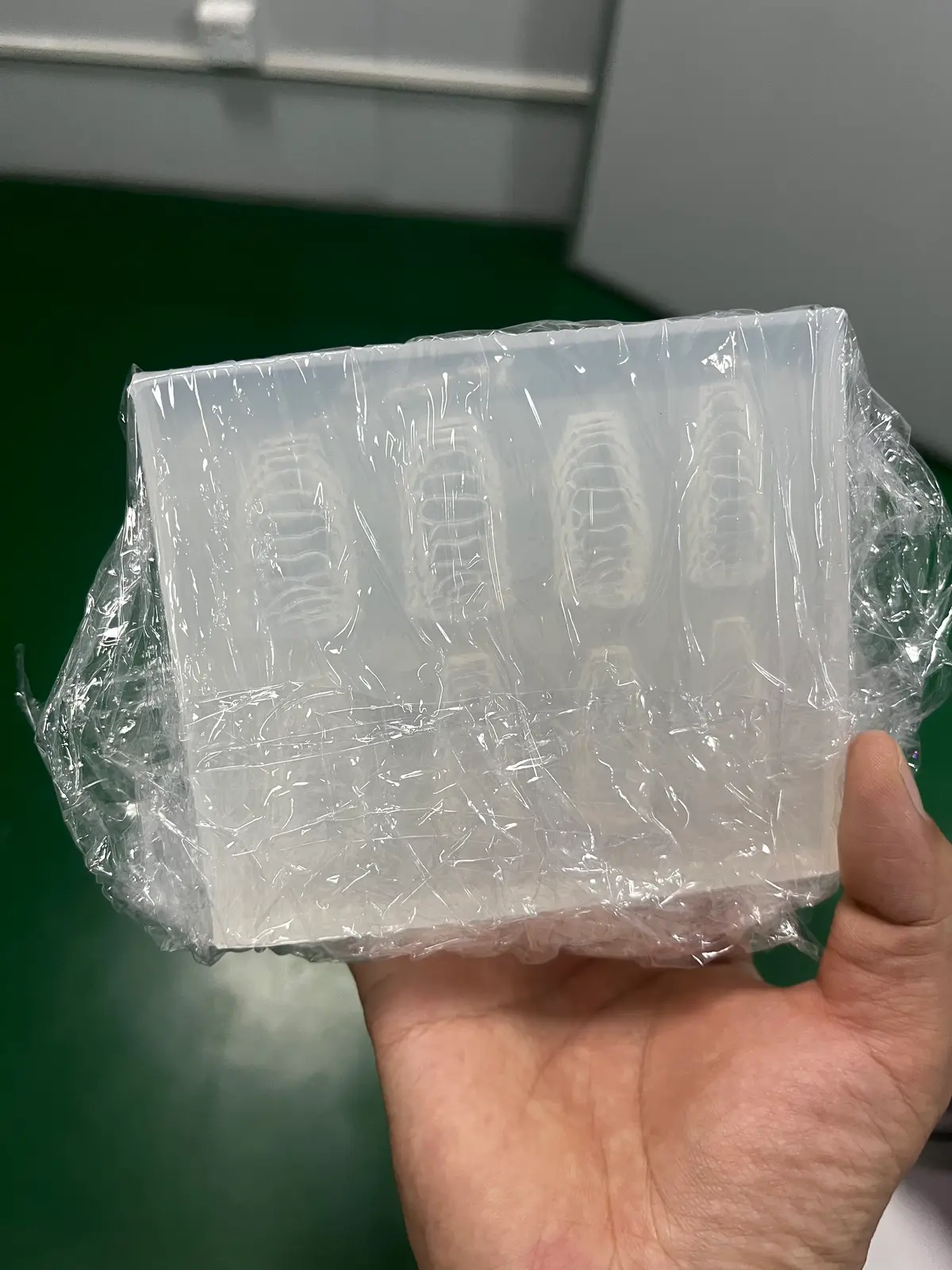
RUUIPON pours platinum RTV tools in Bao'an, Shenzhen (Licheng Technology Industry Park, Xinhe Blvd, Shajing; USCC 91440300MA5FAXCN9W) since 2018. Simple 3D is USD 50 when that CAD scope applies. Prototype is 3-7 business days after CAD lock. Production is MOQ 20 pieces per design.
Where this page sits
The commercial category is multi-cavity production silicone molds. Gummy count vs sag lives on gummy cavity count and flatness. First-tray CTQs live on prototype inspection CTQ. Lot QC lives on silicone mold quality control. This page covers how to map volume and flatness.
Sample the map
On a rectangle: four corners, center, mid long edges, mid short edges. Use IDs like R1C1. CAD volume is the design reference, not production proof. Water fill only if you define level, support, fill plane, and bubbles. For gummy, chocolate, soap, or wax, finished piece weight is often the CTQ - and it includes process variation.
Typical shop values
Reference values only. Confirm material-specific limits against the supplier’s technical data and agree project acceptance criteria before production. No universal tolerance.
| Item | Typical shop value |
|---|---|
| Sample | Center + corners + mid-edges (expand if risk is high) |
| States | Relaxed / seated in nest / loaded |
| Loaded-edge sag if unsupported | About 0.5-1.5 mm is a common shop observation |
| Outer-row vs center if the sheet sags | Often 3-6% heavy on food trays |
| Pattern vs one pocket | Position pattern = support; one ID = local / master |
| 3D / CAD | USD 50 when that modeling scope applies |
| Prototype after CAD lock | 3-7 business days |
| Production after written pass | MOQ 20 pieces per design |
| Contact | [email protected] · +86 135 3006 2969 |
Loaded flatness moves grams
A tray can be empty-flat and still tilt the scrape plane or nozzle Z when filled. Use the same map on reorders. Acceptance limits come from the product - a supplement gummy is not a craft soap.
Worked example: left-heavy
Typical job, not a named PO. Center grams sat on target. The left edge ran heavy on every lot. We seated the nest and leveled the scrape. Recutting the master would have copied the tilt.
When this page does not apply
This inspection page does not replace the multi-cavity hub, gummy count, or first-tray CTQ. It does not apply to HCR / LSR part FAI - send an HTV product RFQ here.
RFQs we will not accept as-is
One center-cavity water shot as the only CTQ. Averaging the sheet to hide an edge row. Sending an LSR T0 through this RTV map.
Matched next step
Send tray envelope, dump, cavity IDs you already use, and whether you scrape or deposit. We will write the map. "Inspect the mold" is not enough.
Send tray size and dump · First-tray CTQ · Gummy count / sag · Lot QC
[email protected] · +86 135 3006 2969 · Licheng Technology Industry Park, Xinhe Blvd, Shajing, Bao'an, Shenzhen. USCC 91440300MA5FAXCN9W.
FAQ
Is this the QC hub? No. Lot inspection lives there.
Is CAD volume enough? No. It is the reference.
Is this the gummy count page? No. Count vs sag lives there.
Do you inspect LSR parts here? No.
What is MOQ after a pass? 20 pieces per design.