
Pectin vs Gelatin: Release, Set Time, Fill Method
Pectin and gelatin can share one outline and still peel differently. If you are locking one RTV tray for both families - or switching formula on an approved cavity - this page is that comparison: tack at demold, set time, deposit temperature, and whether you flood-and-scrape or shoot nozzles. There is no fixed "pectin always sticks more" rule.
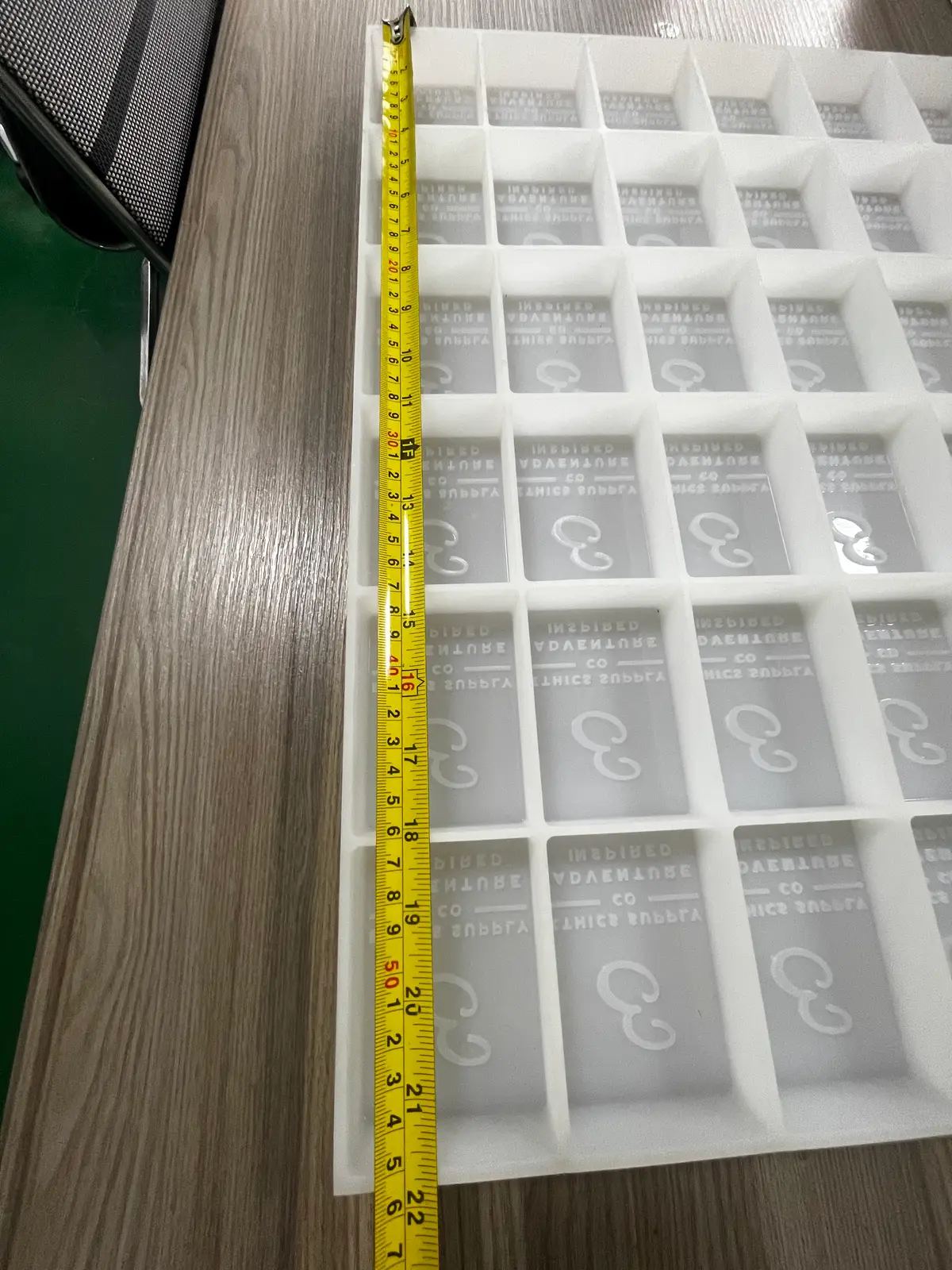
RUUIPON pours platinum RTV tools in Bao'an, Shenzhen (Licheng Technology Industry Park, Xinhe Blvd, Shajing; USCC 91440300MA5FAXCN9W) since 2018. Simple 3D is USD 50 when that CAD scope applies. Prototype is 3-7 business days after CAD lock. Production is MOQ 20 pieces per design. Food-contact paper follows the compound and market, not a factory stamp.
Where this page sits
Buy the mold on custom silicone gummy molds. Hot pectin span, outer-row grams, and jacket live on commercial pectin production trays. Scrape-plane rims live on flood-and-scrape gummy molds. Nozzle datum lives on depositor-compatible gummy molds. This page covers formula-family vs fill-method behavior.
Formula changes peel
Buyers may see different tack, elasticity, release timing, drying shrink, and smear if they pull too early. Those properties also move with acid, solids, and coating. Prototype the production formula. Do not copy a universal draft or Shore table from one SKU onto the other.
Typical shop values
Reference values only. Confirm material-specific limits against the supplier’s technical data and agree project acceptance criteria before production.
| Item | Typical shop value |
|---|---|
| What to lock first | Formula family, deposit C, set/demold time, fill method |
| Cavity Shore | Often 10A-20A platinum; jacket if the loaded sheet sags |
| Loaded-edge sag if unsupported | About 0.5-1.5 mm |
| Outer-row vs center if the sheet sags | Often 3-6% heavy |
| Proof | Each formula on the real tray span |
| 3D / CAD | USD 50 when that modeling scope applies |
| Prototype after CAD lock | 3-7 business days |
| Production after written pass | MOQ 20 pieces per design |
| Contact | [email protected] · +86 135 3006 2969 |
Deposit temperature and set
Hot mass changes wetting, how long the sheet stays soft, and whether a large unsupported tray bows. Many "sticking" complaints are early pulls: ears tear, logo smears, operators yank harder. Over-dry can also grip. Write time and condition at demold on the prototype sheet.
Fill method can outrank formula
Flood-and-scrape makes the top plane a production surface: rim height, scraper force, overflow, loaded flatness. A nozzle tray is a machine interface. Hand dump is neither. A deep logo that a hand pour can live with may starve or trap residue on a scrape line.
If both formulas share one tool
Validate both. Record deposit C, fill method, set, demold, finished grams, logo fill, peel, and tray flatness. If one formula needs a jacket and the other does not, say so before you multiply 20 skins.
Worked example: same bear, two masses
Typical job, not a named PO. One 12-up bear passed gelatin and smeared on pectin at the same demold clock. We held CAD, added dwell, and jacketed the sheet. A Shore bump was not the first move.
When this page does not apply
This comparison does not replace the gummy product or the pectin production-tray page. It does not apply to chocolate scrape trays. It does not apply to steel mogul boards or HCR / LSR parts - send an HTV product RFQ here.
RFQs we will not accept as-is
A universal "pectin Shore" table. Copying flood-and-scrape rims onto a nozzle tray. Sending an HCR / LSR part through this RTV comparison.
Matched next step
Send pectin vs gelatin (or hybrid), deposit temperature, fill method, and target grams. We will say whether one tray can hold both. A bear PNG alone is not enough.
Send formula family and fill method · Gummy product · Pectin production tray · Flood-and-scrape
[email protected] · +86 135 3006 2969 · Licheng Technology Industry Park, Xinhe Blvd, Shajing, Bao'an, Shenzhen. USCC 91440300MA5FAXCN9W.
FAQ
Is this the gummy product page? No. Buy the mold there. Formula vs fill lives here.
Does pectin always need more draft? No. Test the production mass.
Can one tray run both formulas? Only after both pass on the real span.
Is this the pectin production-tray page? No. Span, jacket, and outer-row grams live there.
What is MOQ after a pass? 20 pieces per design.