
Silicone Molds for Product Development: Prove the Dump Before Qty
The most expensive mistake in product development is quoting a picture without defining dump, peel, grams, or pass/fail - then cutting steel or LSR as if the sketch were frozen. If you're developing a candy SKU, a resin object, a soap bar, a candle, or a planter, an RTV mold is the revision-friendly tool: resin master to RTV casting mold, recast. Lock CAD, dump the real chemistry in 3-7 business days, write what failed, recast. Production at MOQ 20 per design when the listing is honest. Custom/simple 3D modeling is USD $50 when that scope applies.
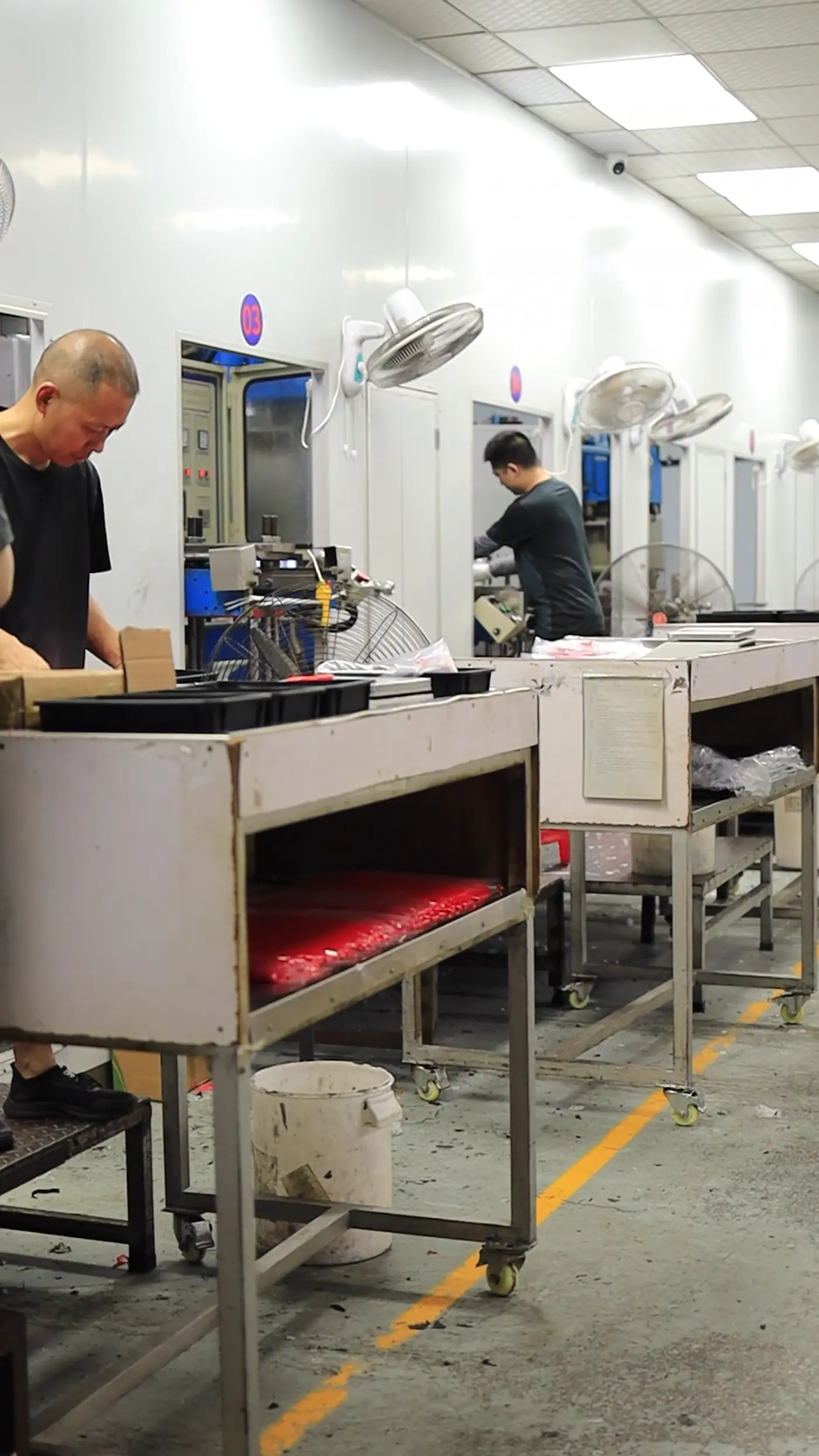
RUUIPON, Bao'an since 2018. This is not an LSR EVT cell and not HCR first-article for a silicone *part*. Those development paths sit here as an HTV product RFQ. Sequence: services and process catalog. First commercial path: first SKU to reorder.
What a development mold has to prove
Write the hypothesis before A/B:
- Will this shape leave the cavity (peel vs split vs core)?
- Will grams / wall / logo survive the real dump and peak °C?
- Will a loaded tray stay flat enough for ads that will scale?
- Which dimensions are frozen vs allowed to move after sample 1?
Don't freeze Shore, cavity count, or steel because the render looks done.
Common mix-up: development = cheaper hobby tin, then "graduate" to HTV
Tin kits hide tear until restock. Production development sheets that see epoxy heat or sticky pectin need platinum and vacuum - vacuum platinum. You don't graduate an RTV cavity into HCR compression. If you later need molded silicone *parts*, that's a new an HTV product or mold RFQ here, or ask us if you need a high-volume LSR cold-runner tool tool. If you still pour into a pocket, you recast RTV.
Development sequence we actually run
- RFQ: grams, formula, master, split, jacket, certs - RFQ checklist.
- DFM - DFM review.
- CAD (USD $50 simple 3D when that scope applies) and master - master + prototype.
- Prototype in the real dump, 3-7 days after lock.
- Ads/spares/archive decision - first SKU path.
- MOQ 20, then recast when the skin wears.
Typical shop values
Reference values only. Confirm material-specific limits against the supplier’s technical data and agree project acceptance criteria before production.
| Item | Typical shop value |
|---|---|
| Custom/simple 3D | USD $50 when that scope applies |
| Prototype | 3-7 business days after CAD lock |
| Production MOQ | 20 pieces per design |
| Mix / shrink | Platinum 1:1 or 10:1; ~0.1-0.3% |
| Cavity Shore | 10A-20A typical; jacket if loaded |
| Loaded-tray sag, unsupported | About 0.5-1.5 mm |
Failure: concept art ignores opening direction
Symptom: Hooked bail in the listing; one-piece tray quoted; grams never weighed; steel "so we can scale" while pectin is still moving.
Confirm: Is there a pass/fail sentence? KEEP/FLATTEN on undercuts? Object = cavity or part?
Fix: DFM first. Prototype in the real dump. Don't cut steel for a pour SKU.
Worked example: new 18 mm bear, CAD still moving logos
Brand in development: 12-up pectin tray, logo not frozen, ads not live. Path: $50 cavity map, DFM on islands, platinum 10A-20A + jacket, prototype dump 3-7 days after lock, revise wordmark once, recast skin, then MOQ 20 and archive. Cutting a steel mogul "to be ready" would have frozen the wrong grams.
What to ask when you're using molds to develop
- What hypothesis must sample 1 prove?
- Which dimensions are allowed to move?
- Is the endpoint still a cavity, or are we secretly heading to LSR parts?
- Spares and archive before ads?
- Food-contact path if the dump will be eaten?
When this page is the wrong lab
Frozen silicone *part* at thousands: an HTV product or mold RFQ here, or ask us if you need a high-volume LSR cold-runner tool, not an RTV development tray. A catalog shape that already matches: don't pay NRE. Geometry can override: a one-off sculpture still needs DFM; 10,000 LSR spatulas do not.
Related: solutions, case studies, contact.
RFQ: development hypothesis
Copy this.
Hypothesis sample 1 must prove: Frozen vs allowed-to-move dimensions: Dump + peak °C + target grams: Artwork frozen? yes/no 3D at $50 in scope? Prototype 3-7 days after lock If pass: MOQ 20 + archive yes/no Object remains RTV cavity (yes):
Send the hypothesis, not only the render. contact - [email protected] · +86 135 3006 2969.
We would not recommend cutting steel while CAD is moving
We would not recommend tin hobby kits as the development sheet for pectin or epoxy. We would not recommend freezing Shore before a real demold. We would not recommend skipping the pass/fail sentence. We would not recommend an LSR EVT on this PO.
RUUIPON Mold Structure Decision:
- DFM -> CAD lock of what is frozen
- CAD lock of what is frozen -> 3-7 day real-dump prototype
- 3-7 day real-dump prototype -> Hypothesis true?
- Hypothesis true? - no -> Revise master/split
- Revise master/split -> CAD lock of what is frozen
- Hypothesis true? - yes -> MOQ 20 + archive
FAQ
Should I prototype in RTV then move the same mold to HTV? No. Recast RTV if you still pour. New an HTV product or mold RFQ here, or ask us if you need a high-volume LSR cold-runner tool tool if you need parts.
Is development cheaper than production? NRE is front-loaded. 20 production sheets after a cheap wrong prototype is the expensive path.
Can CAD stay open after ads? Then don't cut 20. Keep paying for recasts honestly.
3D fee during development? USD $50 when that simple/custom scope applies. Rebuilds after lock are a new lock.
Where are you? Bao'an, Shenzhen, since 2018. Licheng Technology Industry Park, Xinhe Blvd, Shajing.