
What Food-Grade Means on a Custom RTV Mold
"Food-grade" is not a color, a Shore A, or a factory badge. If you are buying a custom RTV food tray, this page is the evidence chain: intended use, exact compound, process, pigment, finished article, then the papers that match that article. A spatula PDF does not cover this tray, this color, or this dump temperature.
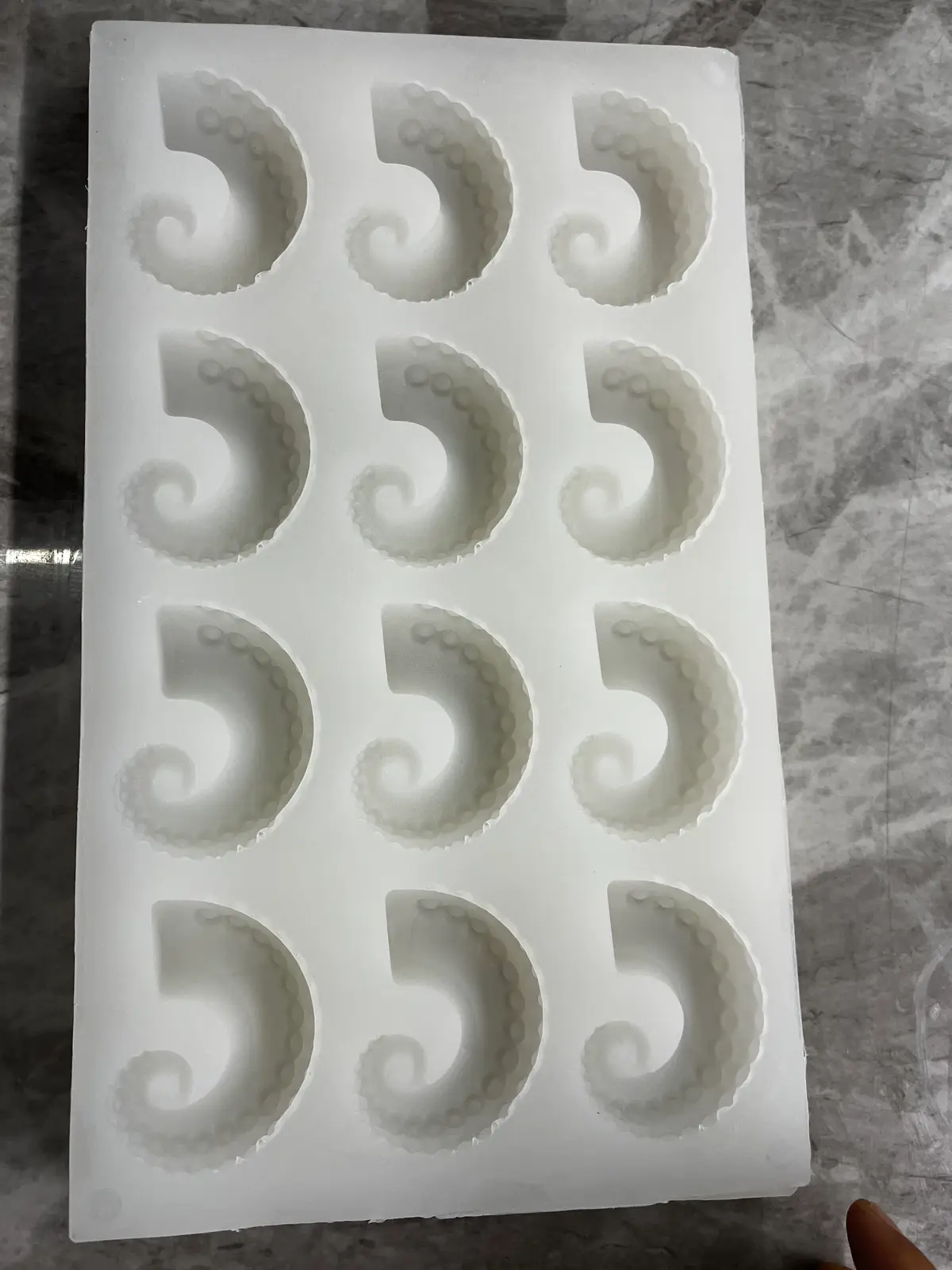
RUUIPON pours platinum food-contact RTV in Bao'an, Shenzhen (Licheng Technology Industry Park, Xinhe Blvd, Shajing; USCC 91440300MA5FAXCN9W) since 2018. Simple 3D is USD 50 when that CAD scope applies. Prototype is 3-7 business days after CAD lock. Production is MOQ 20 pieces per design. This is procurement language, not legal advice. Your compliance owner still reviews the pack.
Where this page sits
The food-grade commercial hub is food-grade silicone molds. Copy-ready RFQ fields live on food-grade buyer spec. Document vocabulary lives on materials and compliance. Raw PDF versus finished article is raw report vs finished mold. Oven time and color lot live on post-cure and pigments. This page covers what "food-grade" means on the article you will dump into.
Use comes before papers
Name food type, contact time, temperature, reuse, cleaning, destination market, and color. Short chocolate contact is not a 12-month acidic drink. An oven claim is not a room-temperature candy tray.
Platinum is chemistry
Platinum addition-cure is commonly selected for food-contact RTV. Platinum alone does not prove a named regulation, pigment coverage, a match to the tested specimen, or your time / temperature. Do not treat "platinum = FDA compliant" as a universal line. The compound and the evidence matter.
Typical shop values
Reference values only. Confirm material-specific limits against the supplier’s technical data and agree project acceptance criteria before production. Not legal advice.
| Item | Typical shop value |
|---|---|
| Useful chain | Use → grade → process → pigment → finished article → matching papers |
| US path (when named) | 21 CFR 177.2600 on the rubber article - not an FDA-approved factory stamp |
| EU / DE path (when named) | 1935/2004 + GMP 2023/2006; LFGB sections 30/31 / BfR XV as technical support |
| TDS / SDS | Properties and handling - not article coverage |
| 3D / CAD | USD 50 when that modeling scope applies |
| Prototype after CAD lock | 3-7 business days |
| Production after written pass | MOQ 20 pieces per design |
| Contact | [email protected] · +86 135 3006 2969 |
US and EU wording
For U.S. repeated-use rubber, buyers commonly reference 21 CFR 177.2600. FDA does not issue a blanket custom-mold approval. Safer wording: material / article documented to applicable requirements of 21 CFR 177.2600 - not "FDA-approved factory."
For EU food-contact, start from Regulation (EC) No 1935/2004 and GMP under Commission Regulation (EC) No 2023/2006. There is no single EU-wide silicone registration certificate. German RFQs often say LFGB. BfR Recommendation XV is a technical reference for silicones; it is not itself a binding legal standard. Do not market LFGB as an automatically higher-tier stamp than a U.S. extraction.
What each paper proves
TDS: hardness, viscosity, mechanical data. SDS: handling. A supplier declaration ties a compound to named requirements. A lab report shows one specimen under named methods. A finished-article test covers the molded tray or a production-color coupon. A TDS that says food grade is not a substitute for the report your retailer named.
Match the article
Check grade, cure system, Shore, color / pigment, lot where relevant, and post-cure. A natural-plaque report does not automatically cover a different pigment. Same polymer family is not enough. A report also does not prove every temperature, food type, cleaner, long immersion, dishwasher life, grams, or mold life. Keep papers separate from durability.
Ask before PO
Exact grade, cure, production color, intended basis, report number, sample identity, test conditions, traceability, and whether finished-article testing is in scope. If your importer has a checklist, send it before material lock.
Worked example: chocolate vs drink
Typical job, not a named PO. Buyer sent a chocolate-tray extraction and asked us to stamp the same number on a pigmented drink insert for months-long contact. We held color and use. The chocolate paper did not cover the drink. USD 50 3D applied only because the logo still needed a lock.
When this page does not apply
This definition page does not replace the food-grade hub or buyer spec. It does not apply to resin, wax, or CP soap - those dumps do not inherit a food pack. HCR food products and molds stay on a RUUIPON HTV RFQ. High-volume LSR food parts are a different RFQ - ask us.
RFQs we will not accept as-is
Treating platinum as automatic compliance. An FDA-approved factory claim. Hanging a spatula PDF on a different color or dump. Asking for food papers on wax or resin. Sending an HCR / LSR part through this RTV definition.
Matched next step
Send dump and peak C, market, color, and the paper you already hold. We will say whether it covers this article. "Food-grade silicone, send cert" is not enough.
Send dump, market, color, and the PDF · Food-grade molds · Buyer spec · Materials and compliance
[email protected] · +86 135 3006 2969 · Licheng Technology Industry Park, Xinhe Blvd, Shajing, Bao'an, Shenzhen. USCC 91440300MA5FAXCN9W.
FAQ
Is platinum automatically food-grade? No. Chemistry is not the paper pack.
Is this the buyer-spec page? No. Copy-ready fields live there.
Do you hang FDA / LFGB on wax or soap? No.
Is LFGB stricter than FDA? Different frameworks. Match the market and the use.
What is MOQ after a pass? 20 pieces per design.