
Why Amazon Chocolate Molds Get Returns (And How Custom Tooling Fixes It)
Why Amazon chocolate molds get returns - stuck chocolate, broken pieces, inconsistent weight - and how cavity design, Shore A, and food-grade custom tooling fix the root cause.
 Kyler Yang · Founder6 min read
On this page
An Amazon seller forwarded us three 1-star reviews in one week: "chocolate stuck," "half the ears broke," "pieces look different sizes." They had bought a bulk catalog mold pack because unit price looked good for FBA. Temper was fine. Packaging was fine. The cavity design was not. Returns were not a customer service problem - they were a tooling problem showing up in the Buy Box metrics.
If your Amazon chocolate mold listings burn returns on stuck product, breakage, or weight variance, start in the cavity, Shore A, and silicone grade - not in another round of keyword ads.
Returns Are Usually Born in the Cavity
Catalog molds optimize for photo density and low landed cost. They rarely optimize for your couverture viscosity, fill weight, or demold labor. Deep logo wells without draft trap chocolate. Thin webs between dense cavities tear when operators flex harder. Soft tin-cure stock ages and sticks after a few dozen hot pours. Customers blame the seller; the root cause sat in the tray.
Custom tooling at RUUIPON starts from the failure mode: target grams, demold method, Shore band, and food docs for the market you ship into. Production typically opens at MOQ 50 per design after sample approval. Prototypes land in about 3-7 days after CAD sign-off; production often follows in 2-4 weeks. Quotes on complete packs usually return within about 24 hours.
Stuck Chocolate: Depth, Draft, and Shore
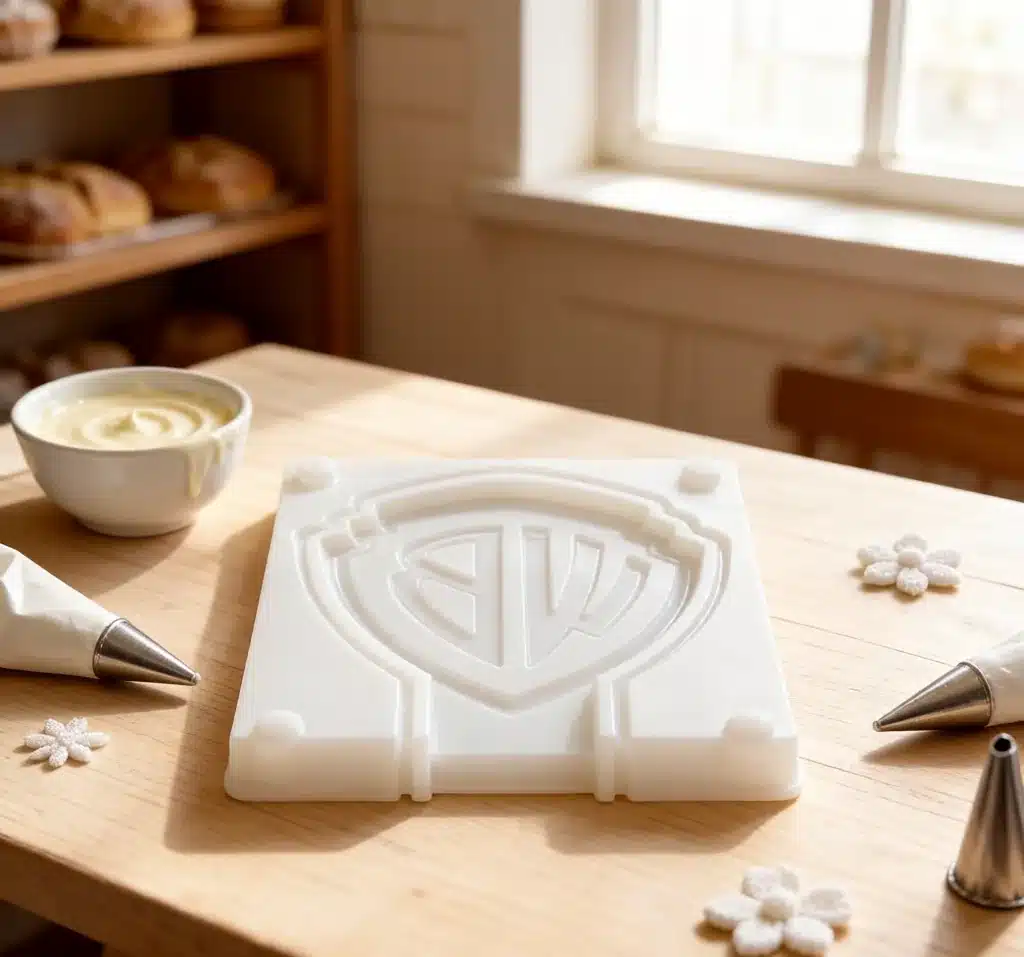
Stuck product reviews spike when logo emboss is too deep or walls are too stiff. Spec emboss in the 0.3-0.6 mm band when you can. Add draft on vertical walls taller than about 5 mm. Soften into roughly Shore A 25-40 for flex peel so operators do not pry with tools that scar the piece.
Release spray is a band-aid, not a redesign. If every pour needs oil to leave the cavity, you will taste residue, fog photos, and still get "hard to remove" reviews when a temp worker skips the spray. Fix the geometry and Shore first; then decide if a light food-grade release is still needed on filled centers.
Case (anonymized): an FBA chocolate seller ran a 24-up catalog tray with ~1.0 mm letter depth and hard feel (~Shore A 50+ on our check). Return rate on that ASIN sat near 9%, mostly "won't come out clean." We remade a 12-cavity custom tray at Shore A 28, logo 0.4 mm, walls ~3.2 mm, spacing ~12 mm. After sample pour with their 34 g fill, MOQ 50 production replaced the catalog pack. Return rate on stuck complaints fell under 2% over the next 30 days of orders. Ad spend did not change - cavity did.
Hardness detail: Shore hardness guide. Cure system matters too - tin-cure craft trays often stick sooner under hot couverture; platinum is the production baseline. See platinum vs tin cure.
Broken Pieces: Thin Ears and Aggressive Demold
Breakage returns show up when ears, links, or thin walls are below what tempered chocolate can survive on a hard pull. Catalog cavities often chase "cute" geometry without wall support. Operators then flex harder because the silicone is stiff or sticky - and ears snap.
Second case (anonymized): a seasonal bunny ASIN with 1.8 mm ear tips and a stiff catalog tray saw ~14% breakage returns in peak week. We thickened ear roots in CAD, moved to Shore A 32, walls ~3.5 mm, and dropped from 18 to 10 cavities with ~14 mm spacing. Prototype pour in five days; MOQ 50 ship after approval. Breakage complaints fell under 3% the following peak weekend. Unit tray cost rose; return refunds and FBA removal fees fell harder.
Fix path: thicken critical sections in CAD, raise web thickness, drop Shore into a flex band, and cut cavity count so trays bend without tearing. Dense 48-up sheets look productive and destroy thin brand shapes. Layout math: how many cavities. First-order buyers who skip samples learn this the expensive way - first-order mistakes.
Inconsistent Weight: Volume Is Not Silhouette
"Pieces look different" reviews often mean cavity volume drifted or flash changed fill height. Catalog multi-packs can vary cavity to cavity. Custom tooling starts from target grams and checks cavity volume on sample pour before MOQ.
Spec finished weight and tolerance on the RFQ - not just outer length. Aim for a realistic band (for example +/- 1-2 g on a 30-40 g piece) and weigh every cavity on the sample tray before you approve. If Amazon nutrition or unit-count claims depend on grams, cavity variance becomes a compliance headache, not only a star rating. Use a clean brief: RFQ template. Approve sample with a scale in the room, then follow after you approve the sample so production matches the pour you signed.
Wrong Grade Shows Up as Smell, Stick, and Retailer Questions
Some sellers buy industrial or unlabeled "food safe" trays for chocolate ASINs. Customers report odor; retailers ask for docs; returns and account health follow. Food-contact path must match market - FDA-facing for US retail, LFGB-style packs when you ship EU. Primer: FDA vs LFGB.
If your listing is chocolate for human consumption, the tray is a food-contact tool. Spec platinum food-grade on the quote, not as a chat promise. How to audit the PDF: how to read a silicone mold quote and cost context in the cost guide.
Return Reason to Fix Table
| Amazon return / review theme | Likely root cause | Tooling fix |
|---|---|---|
| Stuck / hard to remove | Deep logo, no draft, Shore too hard | 0.3-0.6 mm emboss, draft, Shore A 25-40 |
| Broken ears / chips | Thin geometry + stiff demold | Thicken walls, fewer cavities, softer Shore |
| Inconsistent size / weight | Cavity volume drift, flash | Custom cavities from target grams + sample weigh |
| Odor / "not food safe" | Wrong grade or missing docs | Platinum food-grade + FDA/LFGB path |
| Mold tore after weeks | Tin-cure / thin webs / dense layout | Platinum, 2.5-5 mm walls, 8-20 mm spacing |
Custom Tooling Path That Sticks on Amazon
- Pull 20-30 return comments and tag stuck / broke / weight / smell.
- Send photos of the current cavity plus target piece weight.
- Lock Shore, logo depth, cavity count, and food market on the RFQ.
- Pour the prototype with production couverture and weigh every cavity.
- Approve in writing, then release MOQ 50 production for custom silicone chocolate molds.
Ads will not fix a cavity that traps chocolate. Custom trays priced honestly - NRE, sample, Shore, docs - beat another catalog pack that regenerates the same 1-star themes.
Send your worst ASIN return themes, cavity photos, and target grams to [email protected], WhatsApp +86 135 3006 2969, or /contact. We will map each complaint to a cavity change before you order the next fifty trays.
Ready to order custom silicone molds?
Free quote for OEM/ODM projects. MOQ 20 · Prototype 3-7 days · FDA/LFGB available.