
RTV Candy and Gummy Molds for Depositing, Food-Safe
Candy RTV molds split hard candy, gummy, and fondant loads. Platinum pour, dry release, depositor registration, then 21 CFR 177.2600 or LFGB/BfR XV.
 Kyler Yang · Founder7 min read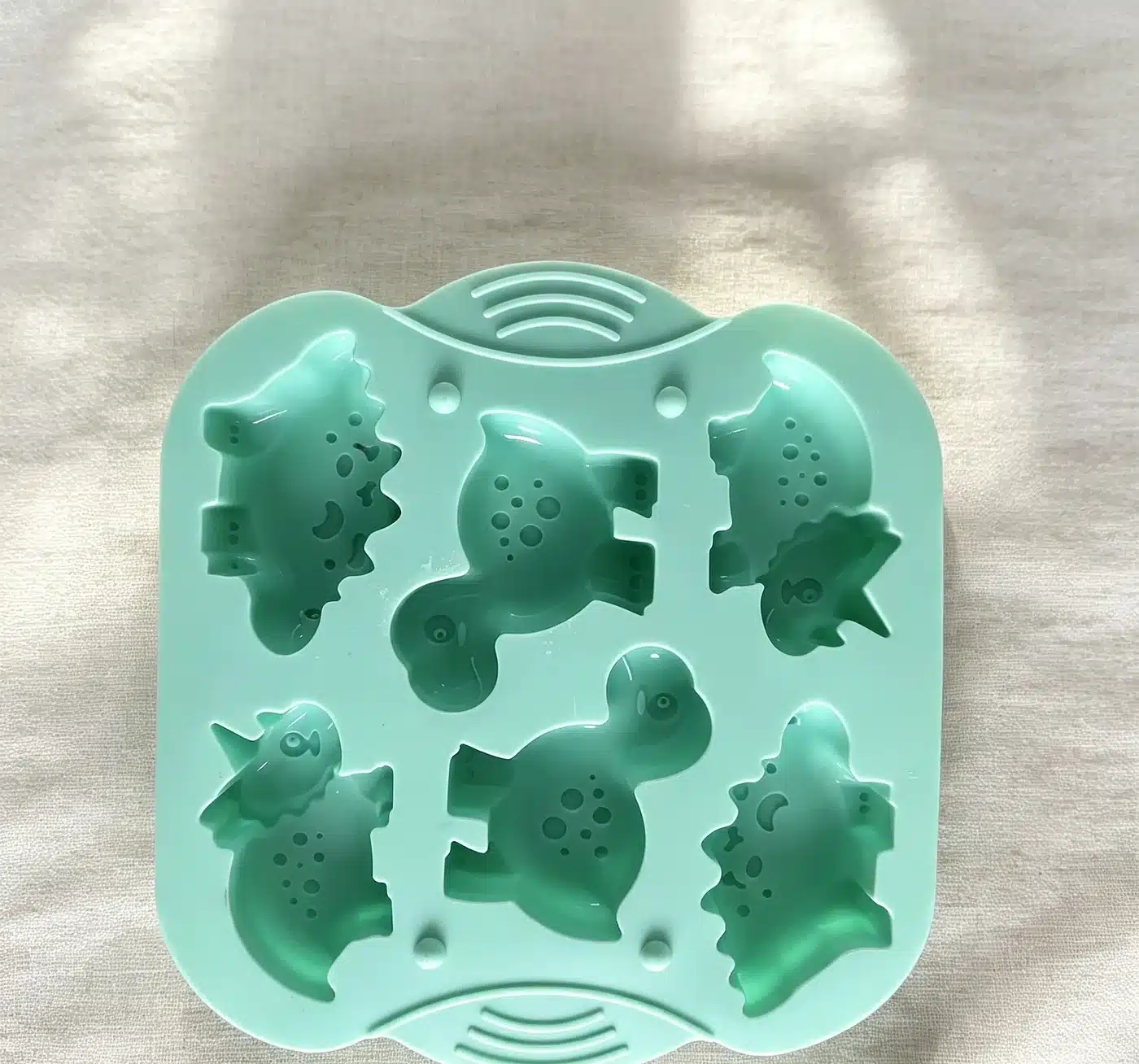
If you're buying a candy mold, you're buying food-contact RTV tooling for foods that aren't all alike. Hard candy is hot sugar. Gummies are sticky, often acidic, deposited warm. Fondant and chocolate-adjacent fillings are cooler and fatty or sugary. The cavity is still the finished article under FDA 21 CFR 177.2600 and, on the German/EU path, LFGB via BfR Recommendation XV.

Platinum addition-cure RTV is typical. The process has to release candy without a coating you can't put on the report. Tin-cure craft molds are the wrong line. Don't stamp FDA approved on a gummy sheet. If the PDF is LSR steel with a cold-runner, that's a molded *part*, not a dump sheet.
Common mix-up: one generic “candy” work order covers pectin, boiled sugar, and fondant
A lot of RFQs treat candy as one Shore and one flask. In the shop that usually means a chocolate-cool hexane file covering hot sugar, fruit-acid gummies with no acetic simulant, and a sheet that warps off the depositor pins.
Don't write one generic candy traveler. Hard candy / lollipop: high temperature at deposit, glassy stickiness, often a stick insert — tell the lab. Gummy / pectin / gelatin: warm deposit, acid fruit flavors; acidity is why 3% acetic acid on a BfR XV stack can matter; stickiness is why geometry and Shore beat secret sprays. Fondant and caramel extras: fatty or dairy-adjacent, cooler — 177.2600 hexane thinking returns. If one physical mold will see all three, the article file has to cover the worst-case food types and temperatures you'll print.
What to ask when you're buying a gummy or candy RTV sheet
- Which load: hard candy, gummy, fondant — dump temperature, acidity, fat?
- Sheet size, cavity volume (piece-weight), registration holes for the depositor pitch?
- Platinum RTV skin plus rigid jacket, or an unjacketed craft pour that will sag under the dump?
- Dry release vs a named food-legal aid (not shop aerosol); radii on letters so sugar glass doesn't shard into the cavity
- 177.2600 food types; LFGB/BfR XV simulants matched to deposit temp; dual-market vitamin brands often want both
- Who owns the master; recast when registration holes ovalize or a logo is recut
Cavities, cure, and depositor reality
Manufacturing intent: demold dry or with a named, food-legal aid only. Draft and flex for gummy undercuts. Uniform cavity volume for piece-weight. Vents that don't leave a nipple on the eating face. Multi-cavity balance so a 64-cavity gummy plate is one article. Starch-mogul thinking (heavy oiling, starch dust) doesn't translate to a silicone food-contact sheet.
Cure in the box. Post-cure in a ventilated oven even when the candy isn't “baked.” Thick gummy sheets hide under-bake in the web. Then wash. Pack so cavities don't nest-print ink onto the deposit face.
Depositor alignment is manufacturing too: registration holes, sheet stiffness at deposit temperature, how the plate sits on a conveyor. That doesn't create a new food-contact class. It does create scrap if the sheet warps. Inserts (lollipop sticks) often paper or plastic — they aren't covered by 177.2600. Don't hide them in the silicone report. Color freeze for branded vitamin gummies.
A gummy or hard-candy sheet is a measuring tool. Cavity volume scatter is product scatter. Incoming cavity audits: depth, flash, blocked vents. Scrap sheets are still food-contact articles until you quarantine them; don't toss them into a resin-mold bin where tin-cure dust lives. If a depositor pin ovalizes a hole, sugar lands on the web. Replace sheets; don't grind the hole with a shop tool that leaves metal in a food face.
Worked example: 64-cavity gummy sheet on a depositor
A vitamin brand wants a 64-cavity sheet, cavities about 20 mm, sheet roughly 380 × 280 mm, platinum RTV skin plus rigid jacket, registration for a depositor, 1,500–3,000 dumps a month, US plus German retail.
Traveler: CNC master, vacuum-degas platinum RTV, even webs, jacket that stays flat at dump temperature, post-cure scaled to the web, wash, 177.2600 (aqueous/acidic as used), LFGB/BfR XV including acetic if fruit acids are in, both reports on the same freeze. First article is production color. A plaque from a spatula line is the wrong specimen.
When this candy process is the wrong quote
If you run a starch mogul and only need a one-off showpiece, full silicone-sheet registration may be the wrong spend. If you need molded silicone *parts* shaped like gummies, that's LSR, not a dump cavity. If the “candy mold” is resin, don't file 177.2600. A 6-cavity fondant tray can be a one-piece glove; a 64-cavity depositor plate usually can't skip the jacket. Geometry and line pitch can override quantity.
Related reading: chocolate RTV production, applications by food, gummy trays, custom RTV molds.
What to send for a depositing-line RTV sheet
Copy this.
- Load: gummy / hard candy / fondant; dump temperature; acids or fats
- Piece weight target, cavity count, sheet size, nozzle/pin pitch
- Master and logo orientation vs carton photo; flash off the eating face
- Platinum RTV Shore, jacket, registration hole spec
- Markets: 177.2600 food types; LFGB/BfR XV simulants; dual-market both
- Recast trigger: torn logo, ovalized holes, warped jacket
Send formula notes (pectin vs gelatin, fruit acid), nozzle pitch, and the STL. We'll design cavity volume and jacket flatness for the dump, and we'll refuse a tin-cure shortcut.
We would not recommend one candy traveler for pectin, boiled sugar, and fondant
We would not recommend starch-mogul oiling on a food-contact RTV sheet, or grinding a worn registration hole with a shop tool. We would not treat "only gummies" as a tin-cure waiver.
- Load - gummy / fruit acid -> Acetic on BfR XV; jacket + pin pitch
- Load - fondant / fatty -> Hexane thinking returns
- Acetic on BfR XV; jacket + pin pitch -> Registration holes; even cavity volume
- Dump temp to the lab; stick slot washes -> Registration holes; even cavity volume
- Hexane thinking returns -> Registration holes; even cavity volume
- Registration holes; even cavity volume -> One article if compound, color, post-cure frozen
Typical shop values: gummy / candy RTV sheet
| Item | Typical shop value | | --- | --- | | Shore | 10A–20A platinum RTV skin + rigid jacket | | Mix | 1:1 or 10:1; vacuum degas | | Outer-row vs center | Often 3–6% heavy if the loaded sheet sags | | Edge sag | About 0.5–1.5 mm without a flat jacket | | Monthly dumps | ~1,500–3,000 on a 48–64 cavity depositor sheet is a common band | | BfR XV for fruit gummy | Include 3% acetic acid when acids are in the formula |
Reference values only. Confirm material-specific limits against the supplier’s technical data and agree project acceptance criteria before production.
FAQ
Can one silicone sheet be qualified for hard candy and gummies together? Yes if you test the harsher claimed conditions and freeze that use on the carton. Hot sugar isn't a gummy deposit. If you only tested warm gummy conditions, don't print hard-candy oven-like temperatures.
Why do fruit gummies care about acetic acid simulants? Fruit acids are an acidic food contact. BfR XV kitchenware stacks commonly include 3% acetic acid. A water-only US thought process is incomplete for that SKU on the German path.
Is starch from a mogul line a problem on silicone gummy sheets? Starch dust is a hygiene and allergen-control issue if it remains, not a 177.2600 substitute. Silicone lines that still dust starch must wash to a cleansed article. Don't import mogul habits blindly.
Do vitamin gummy molds need different compound than candy molds? They need the same food-contact discipline. The brand may add logo depth, piece-weight tolerance, and dual-market reports. Compound still has to be platinum food-contact RTV, not a supplement-themed industrial leftover.
Can I use tin-cure because gummies are “only gummies”? Edible gummies are food. Tin-cure RTV isn't the typical food-contact chemistry. Platinum-cure, post-cure, article test.
Custom silicone development · DFM & prototype support
CAD, drawing, photos or sample details