
Commercial Gummy Molds for Deposit-Dump Lines
Commercial gummy molds are depositor trays with spare fleets, not kitchen hearts. Spec pitch, dump, cavity volume, and 177.2600 extractives on the RTV
 Kyler Yang · Founder6 min read
If you need commercial gummy mold solutions, you need plate fleets that match a depositor, a dump station, and a washer, with cavity volume QC can live with.
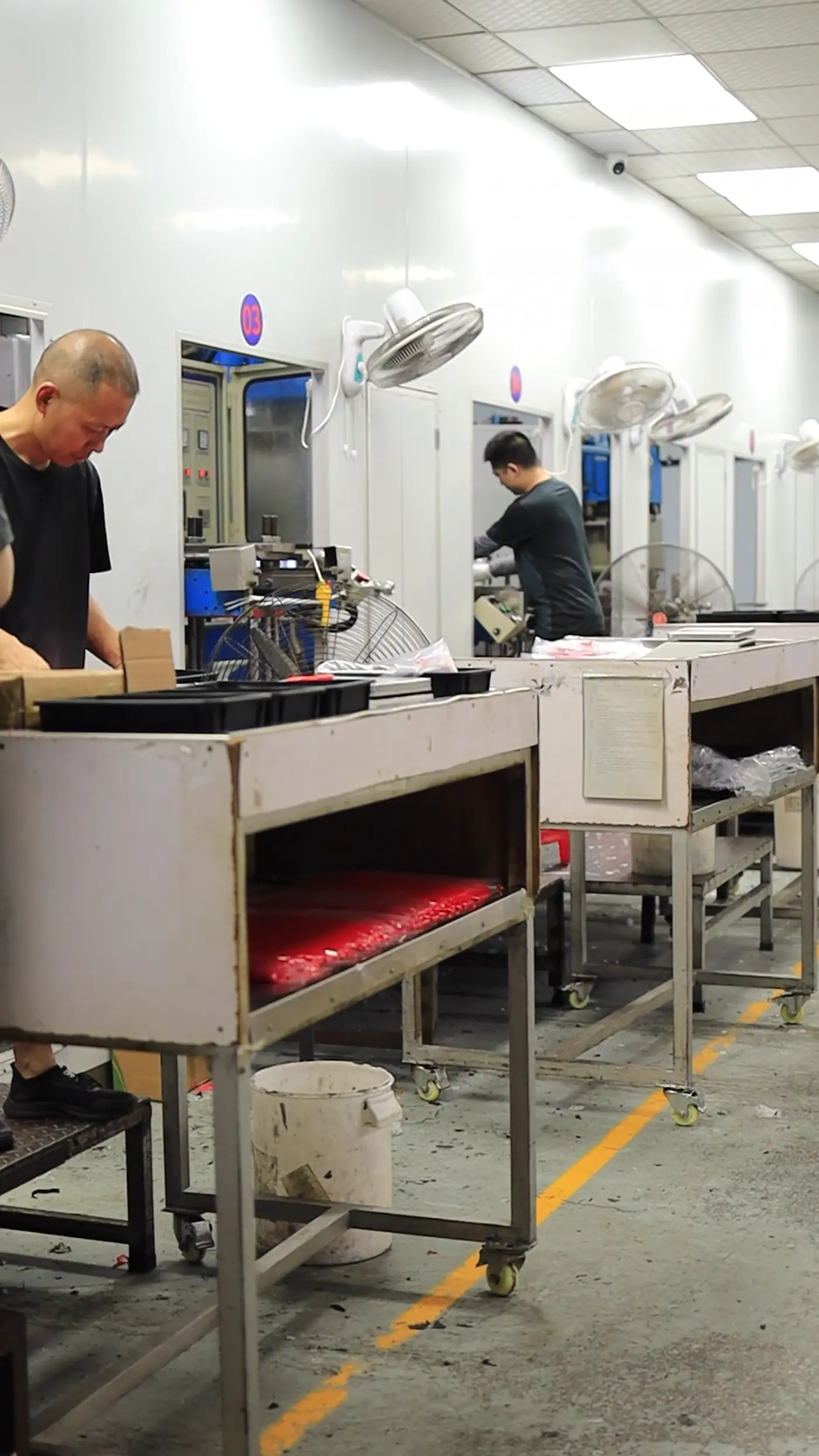
A kitchen heart tray isn't a solution. A catalog bear with no pin pattern isn't a solution. A starch mogul is a solution when starch is the process. Platinum RTV trays, PC cups, and jacketed hybrids are solutions when reusable cavities are the process. Food-contact on RTV is 21 CFR 177.2600 extractives / LFGB on the article.
Kitchen trays aren't commercial plates
Retail molds lack depositor pitch and locating, stiffness for a belt, a dump motion other than hand peel, article identity and post-cure at plate thickness, a spare fleet and a rack drawing. Using them on a servo head is how you write a funny failure report. Commercial means the tray is equipment: envelope, material, tests, revision, spares. Lab one-ups are commercial R&D tools — label them so they don't migrate onto the line.
Name the forming system: mogul/starch; plate/RTV (platinum pour, jacket, flex dump, logos, no dust); plate/plastic (knock dump, simple cups); hybrid (stiff envelope, rubber cavity). The depositor is the customer of the plate. Copy it. If you're buying a new depositor, buy the grid before the mascot. Vitamin commercial solutions usually drop starch. Candy often keeps it. Co-packers may need both fleets, two halls or two racks.
Common mix-up: house "commercial molds" at the co-packer are your milliliters
A lot of RFQs treat a co-packer's house bear as a commercial solution for a branded vitamin. In the shop that usually means their 2.4 ml cup isn't your 2.0 ml piece. Either accept their mass, or OEM your cavity on their envelope. Licensed art is OEM even if they "already have a bear."
Candy plant: count per kilo, fun shape, maybe mogul — starch plus an RTV SKU for a licensed mascot. Vitamin/supplement: piece-weight, hygiene, documented wash — volume-frozen tray, often RTV or PC, food-contact file, spare plates, no tin-cure culture. Co-packer: many brands, many faces, fast changeover — shared envelope, family faces, revision tabs, NDAs. CBD-adjacent co-pack is still a plate solution plus a legal problem we don't solve: same tooling, no dosing, no medical claims, markets vary for the food.
A commercial package includes how many trays on the belt, in cool, in wash, in buffer; rack drawing so cavities don't oval (ASTM D395 as a screen); handles or lips not in the food area; color or tab for SKU ID; pack that survives export without crease. Without this you bought a sample. Monday idle isn't a mystery; it's missing spares. "Dishwasher safe" isn't a wash spec.
A kickoff that works has three chairs: the person who owns the depositor, the person who owns piece-weight, and the mold buyer. If marketing sits alone with a cartoon, you'll buy a kitchen-adjacent sample. Serial or tab the trays; retire a nicked cavity so it can't return to a vitamin belt. Document the solution as a one-page equipment spec taped to the washer and the depositor.
What to ask when you're buying a commercial fleet
- System: starch / PC / platinum RTV / hybrid?
- Envelope, nozzle pitch, dump, tray size vs washer
- Cavity volume / grams and art
- Array and spare count (belt + cool + wash + buffer)
- 177.2600 extractives / LFGB on the article, per color
- Tool ownership, revision tabs, one-up then production path
Example
Washer holds twelve, belt needs eight, cool and buffer eat the rest: order twenty-four 32-cavity platinum RTV trays, Shore 25A, aluminum jacket, same 400 mm envelope, spare math written on the spec page. A single plate is a demo.
When a "commercial solution" is still a kitchen PO
If the RFQ has no pin pattern, no spare count, and no washer rack, you're buying samples. Mixing starch dust and RTV racks in one hall without QA isn't commercial. A hybrid frame is more commercial when the depositor envelope is rigid and the cavity must flex; it's less commercial when seals become crevices. LSR *part* tools aren't a depositing fleet.
Related reading: efficiency and spares, OEM trays, gummy trays.
Commercial spec (copy onto the washer)
- Plate envelope, spare count, wash recipe, dump motion
- Milliliter / gram target, nozzle pitch
- Article test methods on the tray you will wash and fill
- Revision and SKU tab
- One-up then array
Send grams, formula family, nozzle pitch, tray size, washer rack, and spare math. We'll spec a fleet — not a cartoon and a promise to quote later.
We would not recommend a single plate as a commercial fleet
We would not recommend a catalog bear with no pin pattern, or treating a co-packer's house milliliters as your 4.0 g piece. Either accept their mass or OEM your cavity on their envelope. We would not mix starch dust and RTV racks in one hall without QA. CBD-adjacent co-pack is still a plate solution plus a legal problem we don't solve: tooling only; no dosing; markets vary for the food.
- Copy depositor envelope -> Freeze milliliters / 4.0 g class
- Freeze milliliters / 4.0 g class -> Fleet = belt + cool + wash + buffer
- Fleet = belt + cool + wash + buffer -> One-page equipment spec on the washer
Typical shop values: commercial jacketed RTV fleet
| Item | Typical shop value | | --- | --- | | Piece-weight target | 4.0 g (cavity volume × measured slurry density; fill-to-brim or fill-to-line stated) | | Outer-row vs center | 3–6% heavy if the loaded tray sags under the nozzles | | Loaded-tray edge sag | 0.5–1.5 mm without a flat jacket | | Cavity Shore | 10A–20A platinum RTV skin + rigid jacket | | Platinum linear shrink | 0.1–0.3% (cut the master so poured pitch lands) | | Mix | Platinum 1:1 or 10:1; identity per color | | Spare math | Washer holds N, belt needs M — order belt+cool+wash+buffer, not one demo plate |
Reference values only. Confirm material-specific limits against the supplier’s technical data and agree project acceptance criteria before production.
FAQ
What's the minimum commercial tray count to order? Belt plus cool plus wash plus a buffer. A single tray is a demo. Your washer and tunnel decide the number, not a catalog MOQ.
Can a commercial solution mix starch and RTV in one hall? Only with QA. Dust and plate racks fight. Many sites split halls or shifts. The mold PO can still come from one buyer with two vendor classes.
Do co-packers need OEM trays per brand? If the mascot and volume are unique, yes. A shared generic cup can be a house plate. Don't mix those without a volume check. Licensed art is OEM even if the co-packer already has a bear.
Is a hybrid frame more commercial than a one-piece RTV tray? It is when the depositor envelope is rigid and the cavity must flex. It isn't when seals become crevices. Pick from the station, not from the word hybrid.
Where do 21 CFR 177.2600 and LFGB sit in a commercial spec? On the RTV article you'll wash and fill, post-cured, per color and process. They sit next to pitch and volume, not in a brochure appendix from another SKU.
Custom silicone development · DFM & prototype support
CAD, drawing, photos or sample details