
Custom Gummy Mold Design for Fill, Set, and Dump Lines
Custom gummy cavities fail on starved ears, bad pitch, and dump tears, not on pretty CAD. Design volume, draft, and depositor register first.
 Kyler Yang · Founder8 min read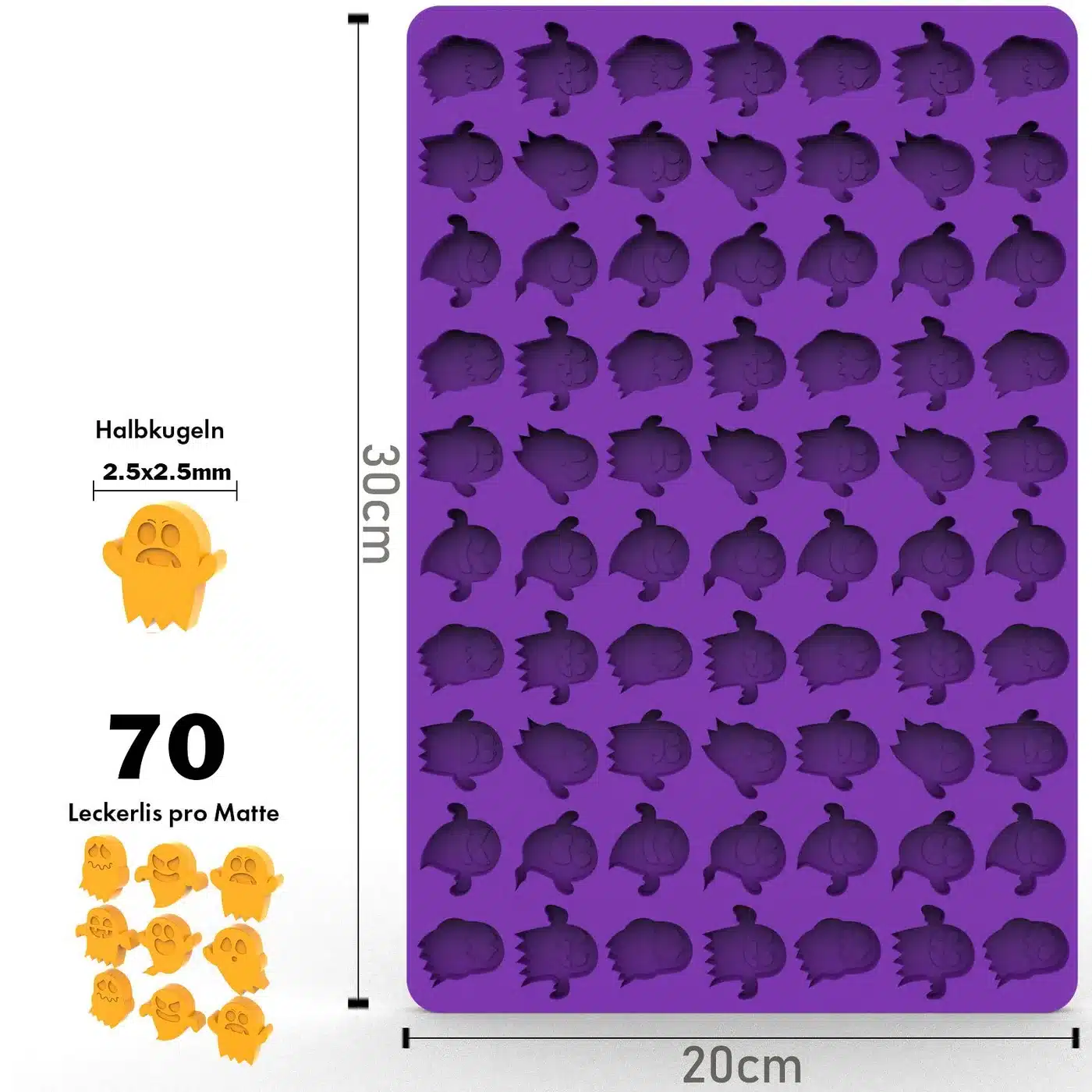
Custom gummy mold design is cavity design for fill, set, and dump, with a piece volume the depositor can repeat.
The mascot is the last drawing, not the first. Start with target milliliters, slurry family (gelatin vs pectin, viscosity, inclusions), dump method, and the tray envelope you already run. Then we cut ears, logos, and undercuts those constraints can survive. Platinum RTV in a support jacket is the usual custom tray here. Starch moguls and rigid plastic still exist; they just can't hold the same undercuts. Food-contact on the RTV article is 21 CFR 177.2600 extractives and LFGB/BfR XV.
Draft, radii, and ears that tear
A gummy is a weak gel at dump compared with a cooled chocolate bar. Design as if the piece will smear if you ask it to climb a sharp hook: draft on walls (more if dump is invert-only), radii at ear roots and letter counters, a slightly open mouth rather than a parallel cup, no through-holes into the jacket, flash off the show face (usually the cavity bottom).
Undercuts are a flex-dump privilege. If the line only knocks, don't design a closed loop or a barb. If it flexes over a roller, design a flex axis in the tray or jacket, not a random thin web that tears after wash. A 10A–20A face behind a rigid jacket is how we split stiffness and peel when one Shore can't do both.
Logo relief that actually leaves
Brand marks are reverse in the master. Hairline serifs fill with slurry and lock; a shallow hairline vanishes after smear; a deep trench holds gel and tears. Radius the relief, keep stroke width the slurry can fill, and test in the real gel at dump temperature. Chocolate cocoa-butter depths are the wrong analog. Polish versus a light texture (VDI 3400 / MT 11000 on a metal master, if you specify) changes gloss *and* leave. Paint, metallization, and sugar sanding are post-dump confection — don't put them in the cavity.
Volume before the mascot
Piece weight is density times filled volume. A muscular bear and a slim bear can share an outline and differ ~20% in milliliters. Freeze target mass and range, expected slurry density, fill-to-brim vs a designed fill line, and whether air in a blind pocket is allowed (it isn't, on a vitamin piece).
We don't allocate milligrams of a nutrient. A scored two-piece look is geometry and dump, not a dosing instruction. Prove volume on a one-up or 2-cavity RTV pour with water *and* slurry before you recut a 60-cavity master. Closure of the jacket, depositor charge, cavity condition, and the agreed drawing limits hold size. Don't treat a rubber-article tolerance class name as a synonym for "precision."
Pitch is copied, not invented
Custom doesn't mean a new grid. Copy nozzle pitch, tray envelope, and locating hardware. Family tools: one jacket, several RTV faces for seasonal SKUs, with a designed seal so slurry doesn't enter a hygiene crevice. Kitchen tin-cure as a gasket isn't a design.
Multi-cavity balance for gummies isn't LSR runner balance. It's equal cavity volume and equal aim point under each nozzle. Starch-mogul CAD is a different problem (the stamp that prints starch). If the shape can't print in starch, say so early and move to RTV. Don't discover that at FAT.
Some depositors expect a rigid plate. RTV faces can live in aluminum or PC, or as a dual-pour tray with a firmer back. Pins belong on the jacket if the rubber would tear. Mixing dump methods on one carrier without a designed motion is how inserts walk. Food-contact identity is platinum RTV, post-cure thickness, pigment, 21 CFR 177.2600 extractives / LFGB on whatever touches the gummy.
Common mix-up: a 3D charm file is mold-ready
A lot of RFQs treat a jewelry or game-asset charm as a gummy cavity. In the shop that usually means undercuts only a hand peel can survive, no milliliter target, and a 40-cavity master you'd regret. You can send it as artwork. It isn't mold-ready until volume, draft, ear roots, and dump method are frozen.
What to ask when you're buying the design freeze
- Target milliliters and fill-to-brim vs fill-to-line?
- Dump motion, and do we actually need undercuts?
- Depositor pitch and pin pattern, or are we still on a one-up?
- Logo stroke width and dump temperature of the real gel?
- Shore of the face, jacket material, split vs one-piece?
- Who owns the master, and can art steal volume from the belly without a revision?
A freeze meeting should end with one milliliter number, a dump sketch, and a pitch print. If art wants more ear, it steals volume from the belly or you raise target mass — write that on the drawing.
Example
An 18 mm mascot on a 36-cavity RTV face, 2.3 ml, 1.5° draft, 0.6 mm radiused logo, Shore 20A in a printed jacket copying a 5 mm pin pattern. The one-up was two cavities; the array waited until pectin dumped without tearing the ears.
When this DFM note is the wrong drawing review
If the shape is a drafted cup that already dumps on PC, don't force RTV undercuts into the CAD. If starch already prints the silhouette and dust is allowed, custom art alone isn't a reason to leave the mogul. Hollow "shell" gummies need a core and a process you probably don't have — we should refuse the shell and offer a dimple. Charm-jewelry files with interlocking parts belong on a peelable one-up, not a 40-cavity master.
Related reading: custom gummy shapes, dump / release, gummy trays.
Design-freeze packet
Copy this onto the drawing.
- Target milliliters and grams (density if you have it)
- Fill-to-brim vs fill-to-line; dump motion sketch
- Nozzle pitch and pin pattern (or "one-up only")
- Ear-root radii, logo stroke, undercuts yes/no
- Shore of the face, jacket material, one-piece vs keyed split
- Who owns the master if art steals volume from the belly?
Send grams, nozzle pitch, tray size, and a dump sketch. We'll freeze milliliters and the flex axis before anyone grows ears in isolation.
We would not recommend freezing the mascot before milliliters
We would not recommend sending a jewelry charm STL as mold-ready, or growing ears in isolation until they steal belly volume. We would not design a closed loop for a knock-only station. We would not treat a rubber-article tolerance class name as "precision." Prove fill and dump on a one-up before you recut a 60-cavity master.
- Dump motion sketch -> Copy nozzle pitch — do not invent a grid
- Copy nozzle pitch — do not invent a grid -> Ear roots, logo stroke, undercuts yes/no
- Ear roots, logo stroke, undercuts yes/no -> One-up dumps without tear?
- One-up dumps without tear? - no -> Ear roots, logo stroke, undercuts yes/no
- One-up dumps without tear? - yes -> Array at real pitch + jacket
Typical shop values: custom cavity before the array
| Item | Typical shop value | | --- | --- | | Piece-weight target | 4.0 g (cavity volume × measured slurry density; fill-to-brim or fill-to-line stated) | | Outer-row vs center | 3–6% heavy if the loaded tray sags under the nozzles | | Loaded-tray edge sag | 0.5–1.5 mm without a flat jacket | | Cavity Shore | 10A–20A platinum RTV skin + rigid jacket | | Platinum linear shrink | 0.1–0.3% (cut the master so poured pitch lands) | | Mix | Platinum 1:1 or 10:1 on the one-up and the array | | Logo | Radius relief; chocolate cocoa-butter depths are the wrong analog |
Reference values only. Confirm material-specific limits against the supplier’s technical data and agree project acceptance criteria before production.
FAQ
Can I send a 3D charm file and call it a gummy cavity? You can send it as artwork. It isn't mold-ready until volume, draft, ear roots, and dump method are frozen. Many charm files are undercut jewelry. Those belong in a peelable one-up trial, not a depositor tray.
How deep should a logo be? Deep enough to read after dump, shallow and radiused enough to fill and leave. There's no universal millimeter. Cut a one-up and dump the real gel. Chocolate logo depths are the wrong default.
Do custom vitamin shapes need tighter drawing limits than candy bears? They need a stated cavity volume and fillable geometry because piece weight is a QC item. Drawing limits on the RTV article describe the tray, not milligrams of a nutrient. Freeze volume first.
Should custom undercuts force RTV instead of starch? If the undercut can't print and release from starch, yes — flexible tray or jacketed hybrid. If the shape is a drafted cup, custom art alone isn't a reason to leave a working mogul.
Does a dual-pour face and jacket change food-contact design? It changes the specimen. Both stocks still need to be platinum food-contact, post-cured, and tested as the article that touches the gummy. Don't food-contact the face and ignore an oil-bleeding chassis that can stain.
Custom silicone development · DFM & prototype support
CAD, drawing, photos or sample details