
Custom silicone chocolate molds: design, hardness & production
Logo smears or edges tear on temper demold? Shore A bands, cavity spacing, FDA/LFGB, MOQ 50, and what to send for a quote from RUUIPON Shenzhen.
 Kyler Yang · Founder5 min read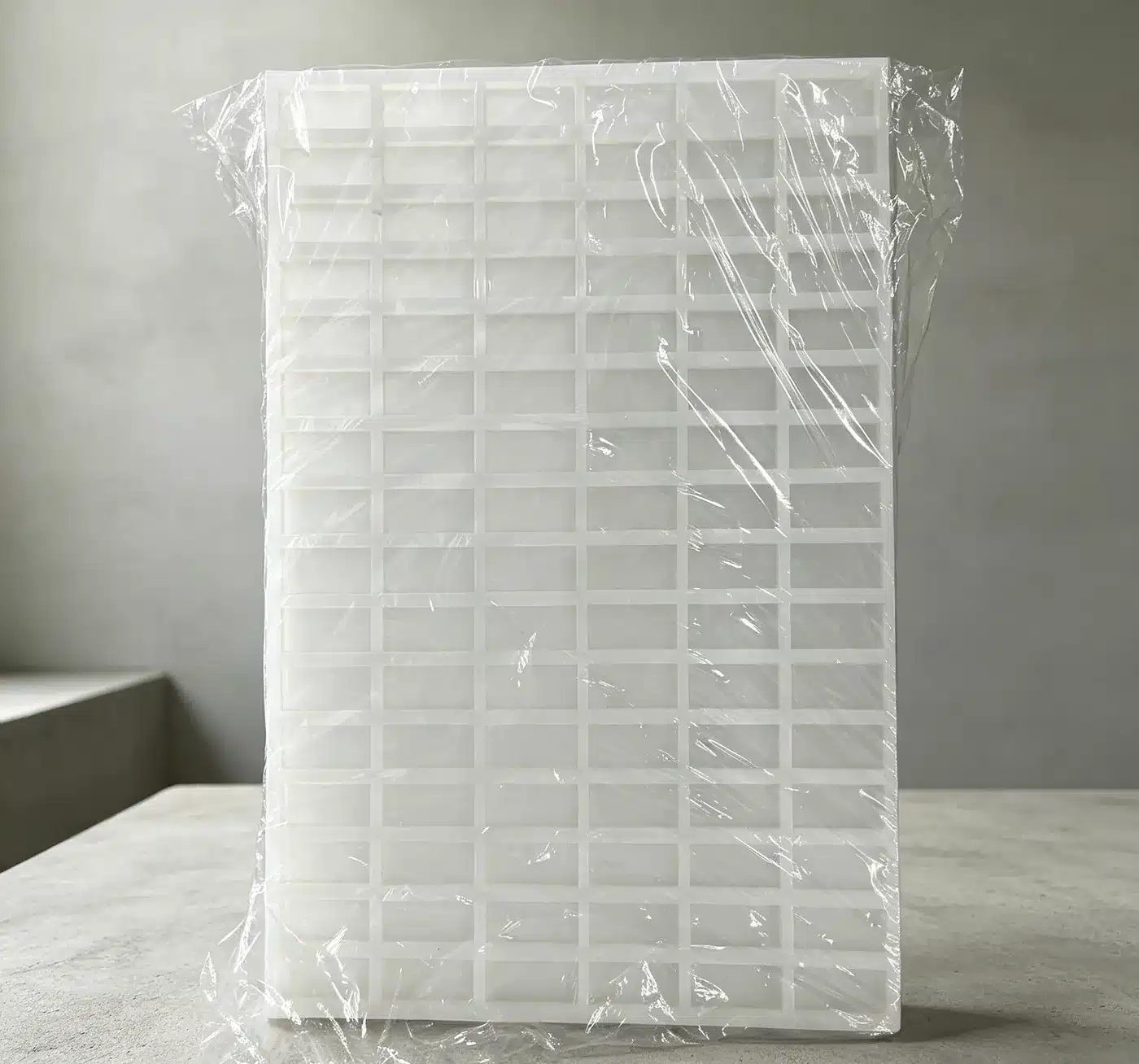
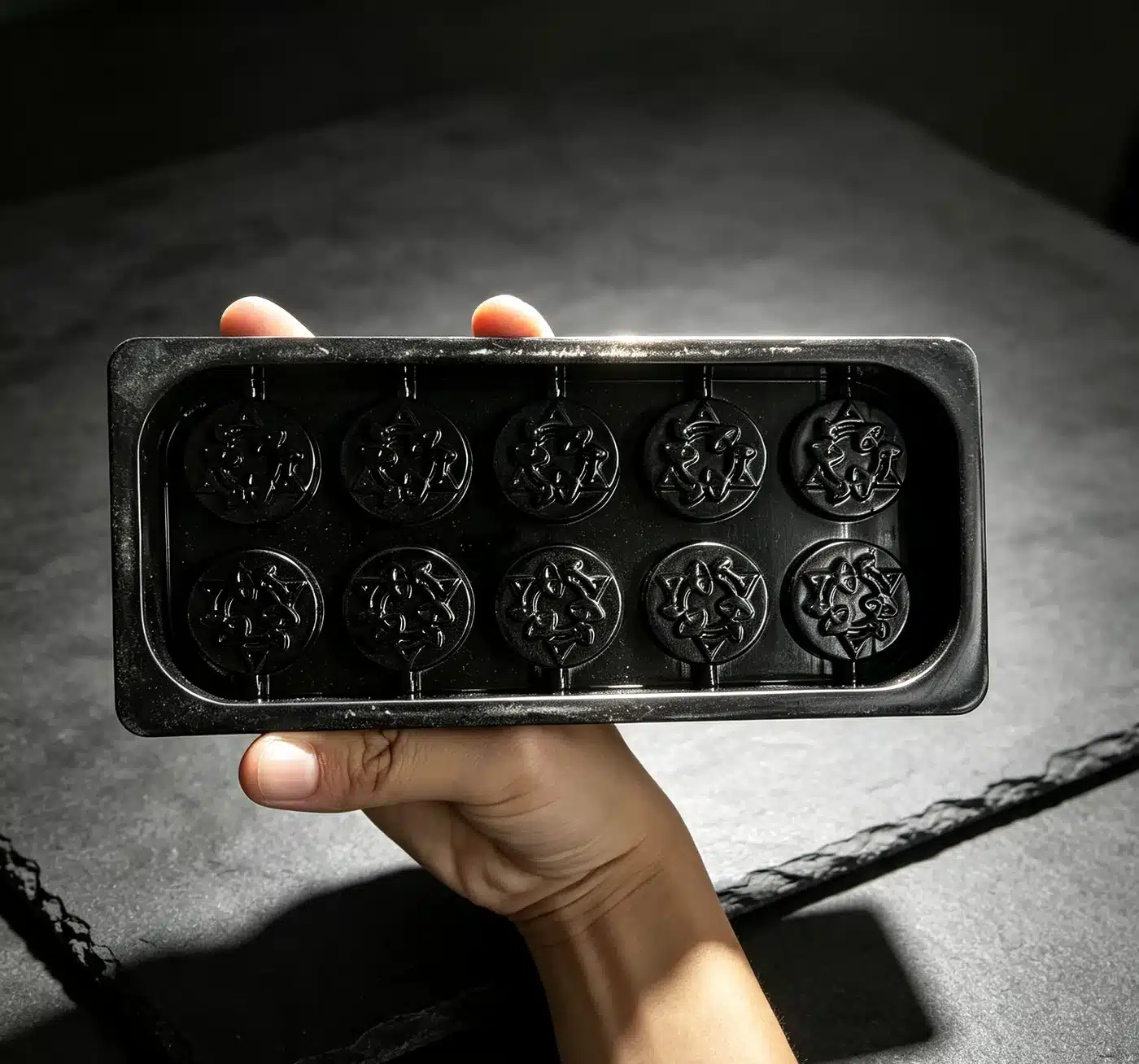
Chocolate brands pick silicone over steel when they need MOQ 50, a prototype in weeks, and a logo that survives temper demold. Steel still wins for huge identical runs; it loses when you are validating a seasonal bar or a Shopify launch.
Platinum-cure silicone handles temper temperatures (27-32°C) without warping. It releases cleanly when cavity finish and Shore A match the recipe. Wear is faster than steel - fine for seasonal and SKU tests, wrong if you need a decade of the same cavity at factory volume.
Below is the brief we walk on chocolate quotes: Shore band, spacing, logo depth limits, and which cert papers match your market - so the first RFQ does not bounce.
Shore A by Chocolate Type
Shore A decides whether your logo stays sharp and whether the chocolate pops out in one piece. Pick the wrong hardness and you get torn edges or soft imprints after 50 pulls.
| Chocolate Type | Shore A | Why |
|---|---|---|
| Logo bars / bonbons | 35-40A | Crisp edges, stable temper demold |
| Filled chocolates | 30-35A | Flex for demold without cracking shell |
| Seasonal / novelty shapes | 25-35A | Undercuts need softer silicone |
| High-volume production sheets | 35-45A | Stiffness prevents sheet warp under fill weight |
Deep dive: Shore hardness guide.
Cavity Layout & Spacing
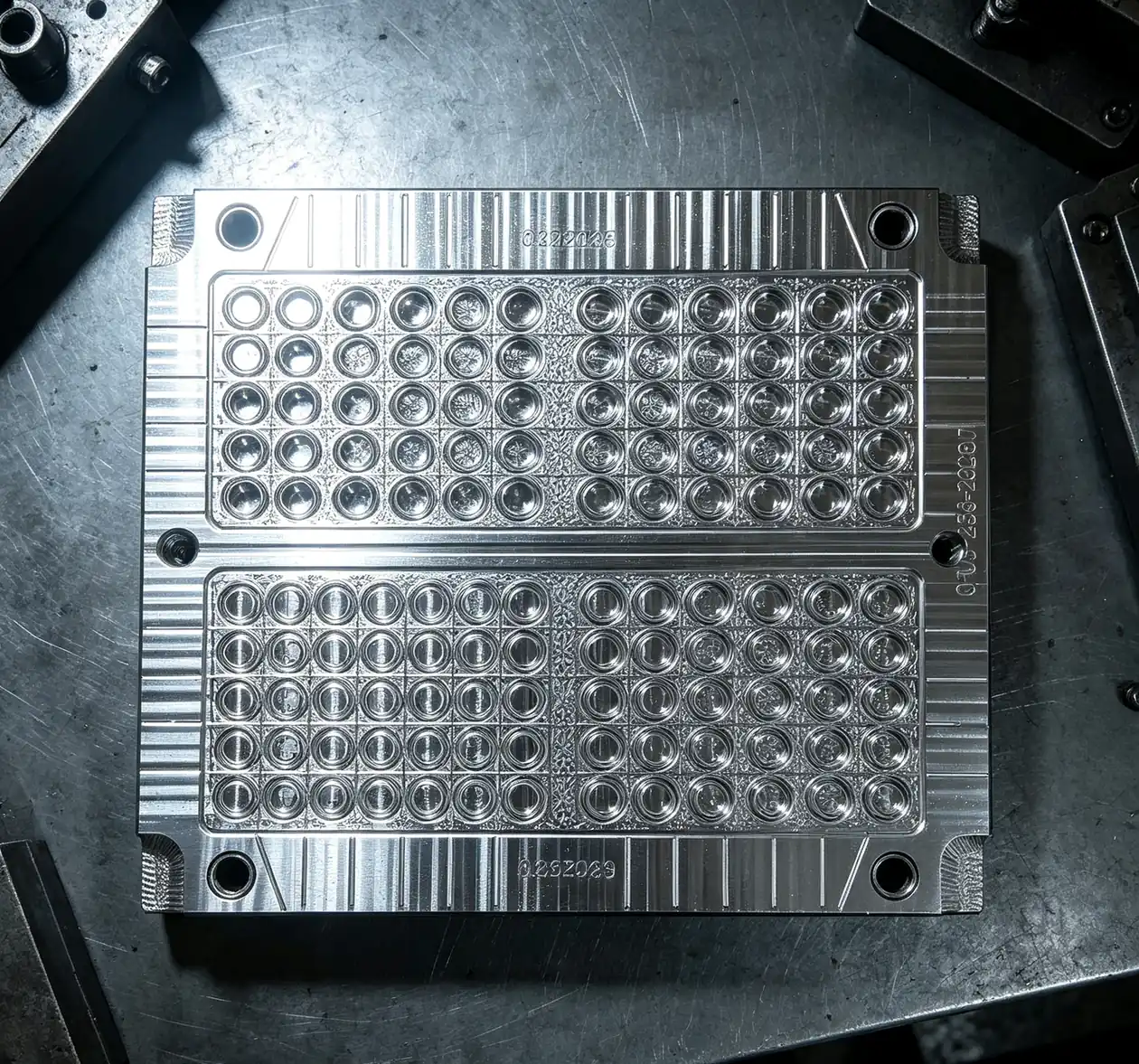
Cavity count is not about maximum density. It is about tray stiffness, demold path, and weight variance. A 24-cavity tray that flops during pour is worse than a 6-cavity tray that demolds cleanly.
| Layout Variable | Typical Range | What Breaks If Ignored |
|---|---|---|
| Edge-to-edge spacing | 8-15 mm | Thin walls tear; air traps in cavities |
| Outer rim | 10-20 mm | No grip; crushed edge cavities |
| Cavity depth / width ratio | 1:1 to 2:1 typical | Deep narrow cavities trap air; need vent channels |
Full layout guide: multi-cavity silicone mold layout.
Wall Thickness Rules
Wall thickness protects cavity life. Thin walls look efficient on a CAD render but tear at pull 60. RUUIPON production standard: 2.5-5 mm cavity walls, 4-8 mm frame walls depending on tray span.
Thin walls (<2 mm)
Fail early. Tear at undercut. Not recommended for production unless the geometry demands it.
Ready to order custom silicone molds?
Free quote for OEM/ODM projects. MOQ 20 · Prototype 3-7 days · FDA/LFGB available.