
Degas Silicone Without Vacuum: When Not To | RUUIPON
Thin craft pours may use a pressure pot and a brush coat. Food logos, thick skins, and production RTV still need vacuum — when we refuse to skip it.
 Kyler Yang · Founder8 min read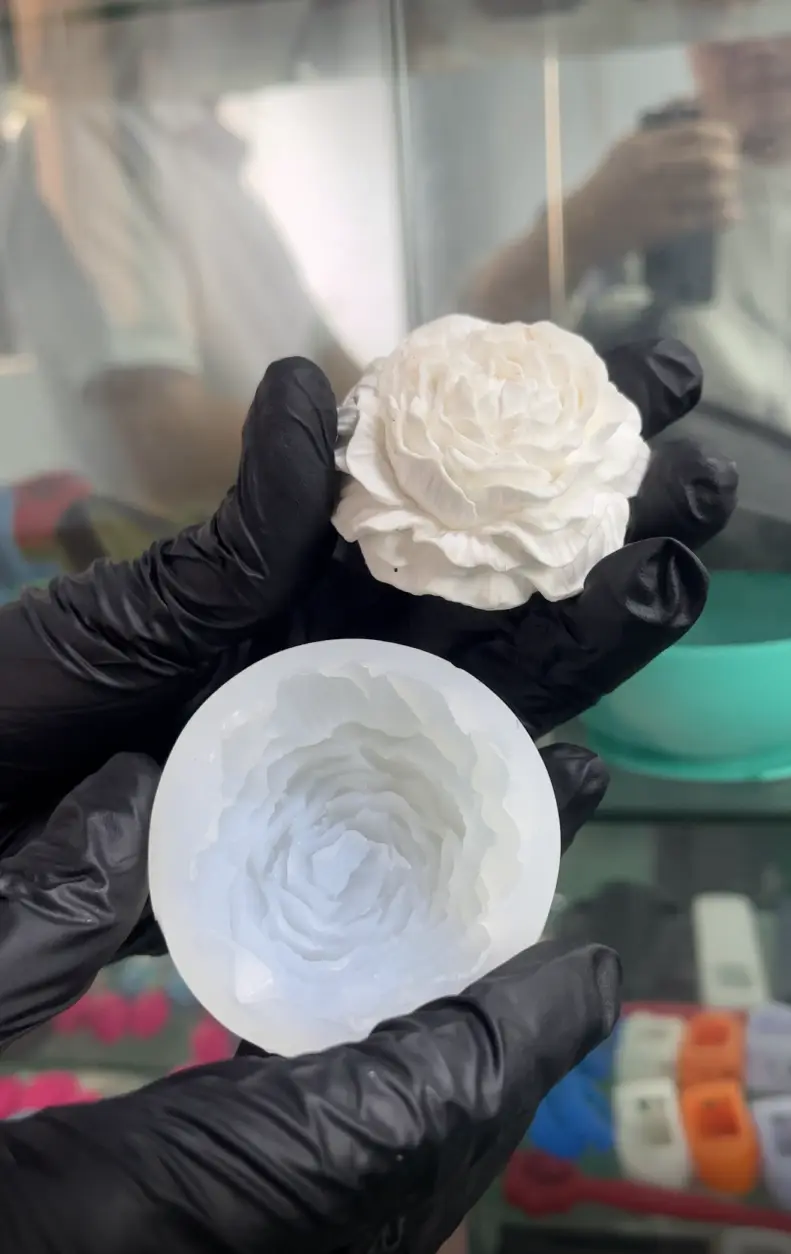
You can sometimes get a usable RTV skin without a vacuum chamber: a thin open-back craft coaster, a warm low-viscosity mix, a brushed detail coat, and a pressure pot on the pour. That is a hobby workaround, not our production default. We will not skip vacuum on a food-contact logo cavity, a thick glove mold, a transparent resin tool you will photograph, or any tray we are about to multiply to MOQ 20. Dissolved air that a pressure pot only shrinks will still seed pinholes on the next recast.

RUUIPON (Shajing, Bao'an, since 2018) vacuum-degases platinum A/B for custom tools. If your actual need is an LSR part in a heated steel cavity with a cold-runner, that is an HTV product RFQ here, or ask us for a high-volume LSR tool. not a no-pot RTV tip.
Does not apply when you are degassing *epoxy* for a jewelry pour (different viscosity, different pot), when the "bubbles" are inhibition craters, or when someone is asking us to ship a food tray that was poured in a garage without vacuum. We would not put that article on a 21 CFR 177.2600 path.
What actually substitutes — and what only looks like it
Warm the cups, mix slow, pour in a thin stream from height. Helps: lets some whipped air pop in a shallow, open pour. Fails: dissolved air, vertical logo wells, anything thicker than a few millimetres of skin. Confirm: if a raking light still shows a dust of pinholes on a witness slug from the same cup, you did not degas. You only stopped whipping.
Brush a detail coat, then pour the bulk. Helps: wets serifs so the bulk doesn't bridge. This is required *with or without* vacuum. Fails: as a vacuum replacement. A brushed coat can still be full of microbubbles if the cup was never pulled down. Confirm: cut the coat at a letter. Cloudy rubber under a shiny skin means you painted bubbles on.
Pressure pot the RTV while it cures in the box. Helps: shrinks remaining bubbles in a *closed* box for some craft skins. Fails: food trays we must document; deep undercuts the pressure can't wet; a box that isn't actually pressure-tight. Pressure does not remove air — it makes bubbles too small to see until the next thermal cycle. Confirm: post-cure or a hot dump that "grows" pinholes you didn't see at demold.
Vibration table or a trip to the garage compressor. Helps: large, obvious foam on a very thin pour. Fails: production repeatability. We would not spec vibration as the degas method on an RFQ.
Just pour and hope, then recast the bad ones. Fails as a plan once you asked for MOQ 20. Scrap rate belongs on our floor, not on your inbound.
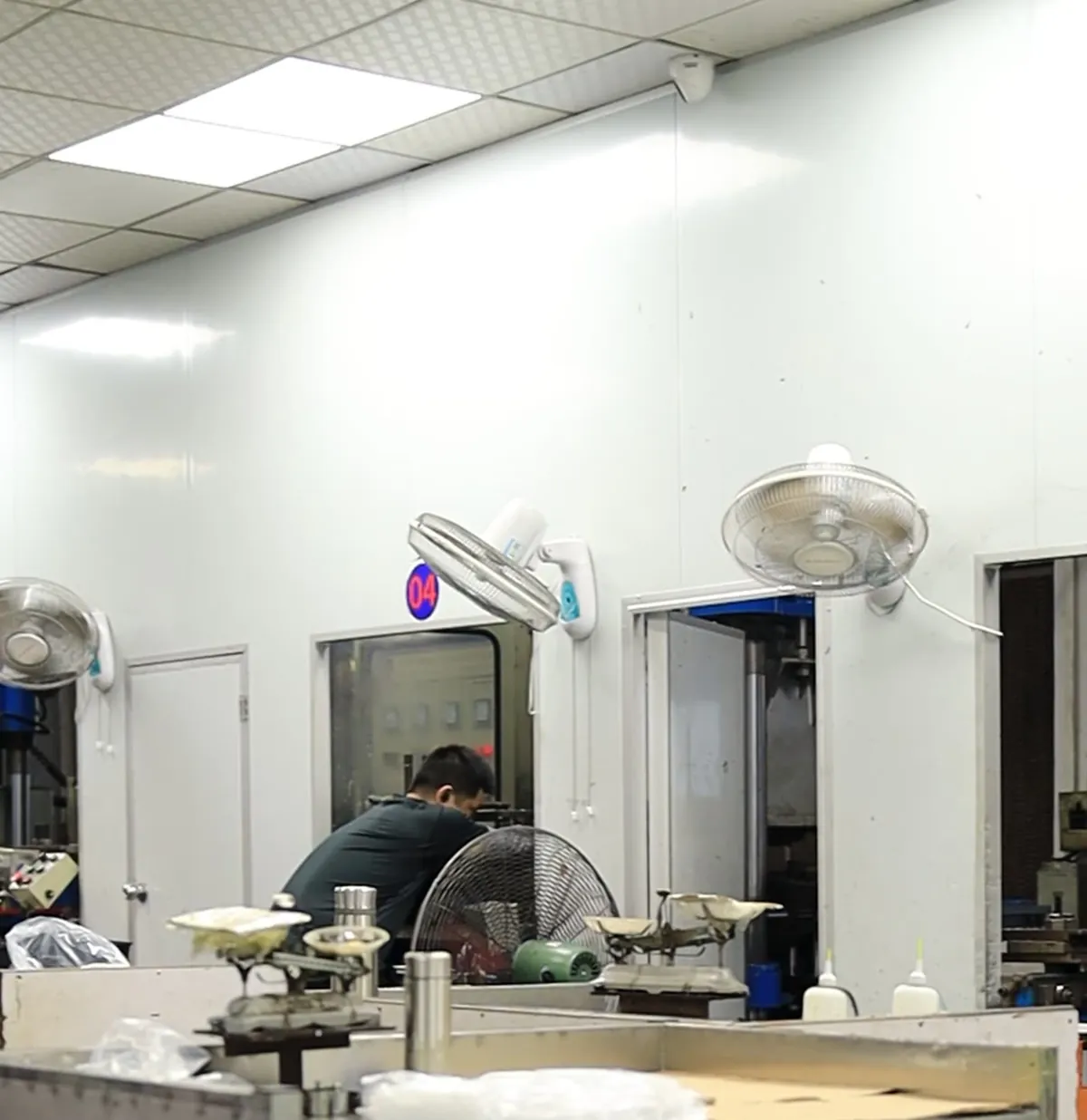
When we would not skip vacuum
Say this out loud on the RFQ if a trader offers a cheaper no-pot skin:
- Food-contact cavities (gummy, chocolate, baking, ice) headed to a 177.2600 or LFGB conversation.
- Any logo, serif, micro-texture, or hair vent you will photograph or sell as "crisp."
- Glove molds and thick jackets where the center of the pour cannot breathe.
- Transparent or translucent tools, where a bubble is a cosmetic reject.
- Production packs (MOQ 20 per design) even if the one-off sample looked fine.
- Platinum mixes we are already fighting for inhibition margin — extra air is not a second problem we accept.
CAD lock for us includes "this skin will be vacuumed." A $50 3D model that we then pour without vacuum is a wasted lock.
Typical shop values
Reference values only. Confirm material-specific limits against the supplier’s technical data and agree project acceptance criteria before production.
| Item | Typical shop value | No-pot relevance |
|---|---|---|
| Mix | 1:1 or 10:1 by weight | Volume marks add air *and* off-ratio |
| Vacuum | Foam up, collapse, short hold | Stopping at first rise is not a cycle |
| Platinum shrink | about 0.1–0.3% | Unrelated to bubble size; don't "compensate shrink" to hide pinholes |
| Open-back craft thickness | thin skin + jacket | Only geometry we will even discuss without a pot — and usually still vacuum |
| Prototype | 3–7 business days after CAD lock | Vacuum is inside that window, not an extra week |
| MOQ | 20 pieces per design | No-pot samples do not scale |
| Simple 3D | USD $50 when that CAD scope applies | Geometry lock first; then a real degas |
A photo that would prove a skipped pot: cross-section of the skin at a logo, cloudy bulk, shiny face, no vacuum note on the traveler. Send that if a previous vendor's "custom mold" is seeding your parts.
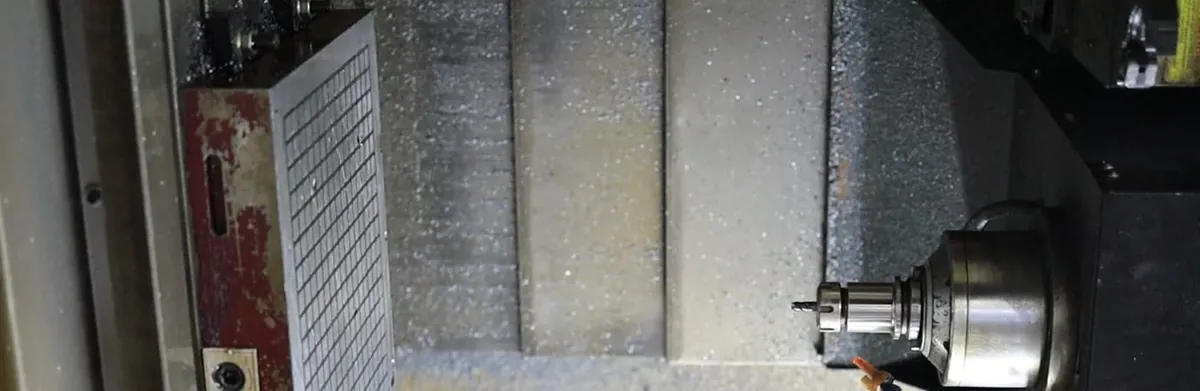
Worked example (anonymized)
A candle-pillar split, platinum ~30A, buyer asked to skip vacuum to save a day. We poured one witness with a brush coat and a pressure hold only. Face looked acceptable. First hot wax dump opened a line of pinholes along the split key. Second skin was vacuumed in the normal cycle; keys stayed clean. Lead time from CAD lock still landed inside 3–7 business days because the vacuum cycle is minutes, not days. The skipped pot was never the schedule.
One procurement mix-up
"Can you do it without vacuum like the YouTube maker?" is a process ask dressed as a cost ask. The minutes you save on the pot come back as recasts, rejected food photos, and a document pack you cannot stand behind. Price the vacuumed skin. Tooling charge still isn't unrestricted ownership of the master.
We would not recommend
We would not recommend skipping vacuum on a food logo tray.
We would not recommend a pressure pot as proof of degassing.
We would not recommend vibration plus a hair dryer as a factory method.
We would not recommend multiplying a no-pot sample to MOQ 20 because "the photo looked fine."
- Food-contact, logo, thick glove, clear tool, or MOQ 20? - Yes -> Do not skip vacuum
- Food-contact, logo, thick glove, clear tool, or MOQ 20? - Thin open craft one-off only -> Can you brush coat + weigh A/B?
- Can you brush coat + weigh A/B? - No -> Do not skip vacuum
- Can you brush coat + weigh A/B? - Yes -> Pressure-tight box available?
- Pressure-tight box available? - No -> Do not skip vacuum
- Pressure-tight box available? - Yes, buyer accepts risk -> Limited no-pot trial — witness slug required
- Limited no-pot trial — witness slug required -> Raking light pinholes or hot dump grows bubbles?
- Raking light pinholes or hot dump grows bubbles? - Yes -> Do not skip vacuum
- Raking light pinholes or hot dump grows bubbles? - No, buyer signs craft-only -> Still quote vacuum for any reorder
- Do not skip vacuum -> Mix 1:1 or 10:1 by weight → vacuum until foam collapses → detail coat → pour
What to ask when you're buying
- Is vacuum degassing included in the prototype that ships in 3–7 business days after CAD lock?
- Will they refuse a food PO that skips the pot?
- Detail coat on logos — yes or no?
- If you run a no-pot craft trial, is the production pack still vacuumed?
- Who owns the master if the first no-pot sample is scrap?
- ISO 3302-1 class on the drawing if you have one (M2 common default).
RFQ copy-pack
[email protected] · +86 135 3006 2969 · Licheng Technology Industry Park, Xinhe Blvd, Shajing, Baoan
RUUIPON degas RFQ Food-contact? yes / craft only Logo / micro-texture? yes / no Skin: open-back thin / glove / split + jacket Vacuum: required (default) / requesting craft trial Pressure pot on our side? yes / no Witness slug photo required: yes Qty: prototype / MOQ 20 CAD: STEP / $50 3D if needed Market: 177.2600 / LFGB / none
Matched next step: tell us the geometry and whether this is food. We will vacuum production skins. A no-pot conversation is only for a thin craft trial you are willing to scrap. Prototype 3–7 business days after CAD lock. MOQ 20 per design.
Related: bubbles in mold or cast, how custom molds are made, products by pour, contact.
FAQ
Can RUUIPON pour my production gummy trays without vacuum if I accept pinholes? No. We would not skip vacuum on a food-contact production pack. Accepting pinholes is not a document-path.
Is a pressure pot the same as vacuum degassing? No. Vacuum removes air from the mix. Pressure shrinks bubbles that are already in a closed box. They are complementary; they are not substitutes on a logo food tool.
Will warming the platinum mix replace a pot? It lowers viscosity so some whipped air pops. Dissolved air and deep wells stay. Use warmth *with* vacuum, not instead of it.
Why do YouTube coaster videos skip vacuum? Shallow, non-food, one-off geometry. Your MOQ 20 branded tray is not that video.
Does vacuum add a week? No. The cycle is part of the pour. Prototypes still commonly ship 3–7 business days after CAD lock. $50 3D applies only when we still need that CAD scope.
Custom silicone development · DFM & prototype support
CAD, drawing, photos or sample details