
Glove Mold Thickness Map, Not an Even Coat | RUUIPON
A glove wall is a millimetre map: face, undercut, lip, jacket land. Pin-gauge method, empty table. Typical shop. MOQ 20, $50 CAD when it applies.
 Kyler Yang · Founder7 min read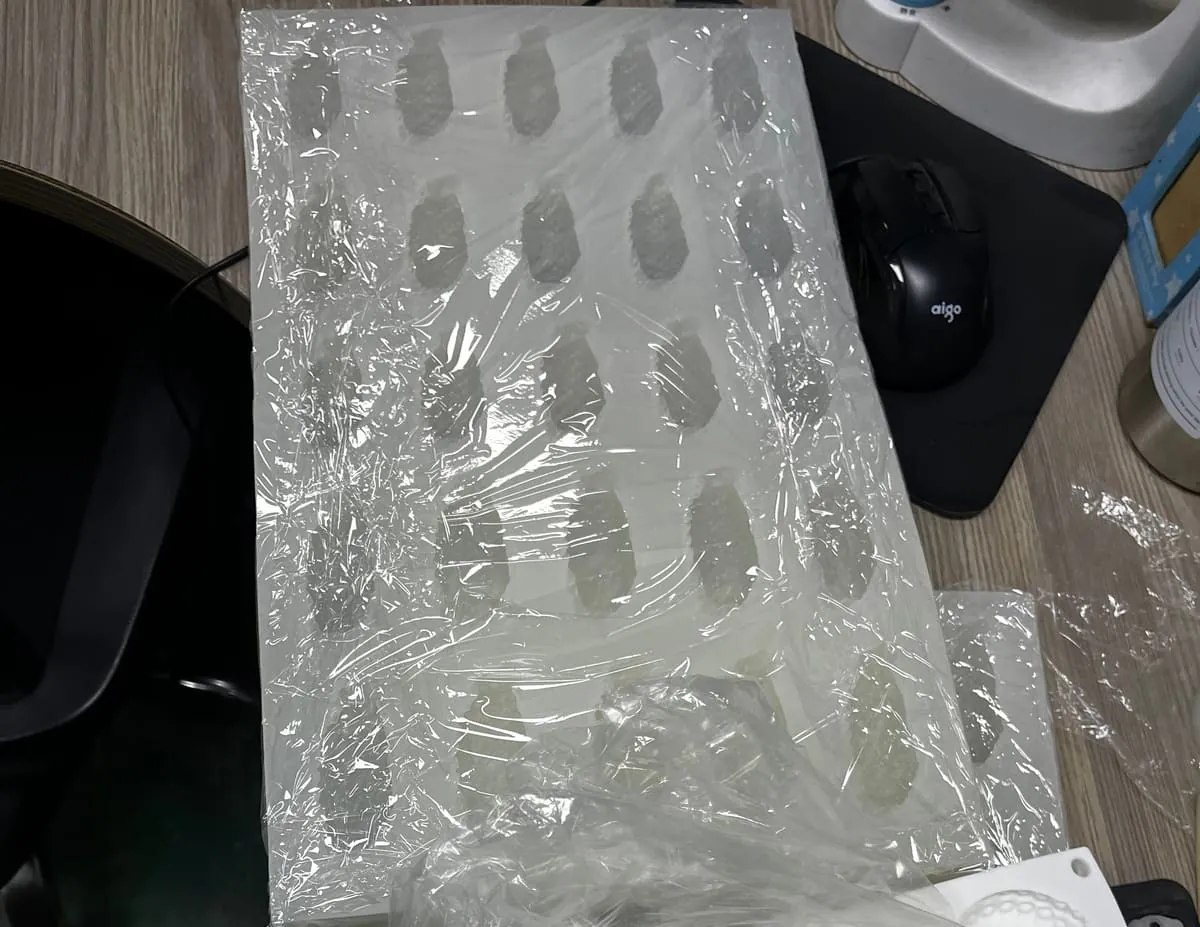
A glove mold fails when the wall is "even" in the artist's eye and starved in the hook. Spec a thickness *map*: face, undercut, lip, jacket land — each in millimetres — then measure a cut witness or a pin gauge on a hidden land. This is not the glove-versus-block chooser; that page already picked the glove. Here the glove already exists as the structure, and the question is where the rubber actually is. A 4 mm cheek and a 0.6 mm nostril is how the dump blows a hole. A fat even 8 mm with no extra on the jacket land is how plaster prints through.
On this site the path is photos, sketch, or CAD, then a 3D-printed pattern, often a temporary silicone flip, a resin production mother, then batch RTV. The mother is not the pattern. Free DFM. HTV/HCR compression mold tooling is also quoted on RUUIPON.
Does not apply when the tool is a poured block or an open-back food tray, when you meant Shore A as a wall, or when you wanted a steel cavity. We will not "feel" production gloves into spec.
Four lands, four jobs
Face. Copies the master. Often a built 3–6 mm band after a thin detail coat. Starved type is a hole. Puddled wells are sinks.
Undercut. Rubber pulls away as it gels. Extra passes or a local pad. This is where gloves tear on demold.
Lip. The open back you will stretch over the jacket. Too thin and it splits; too fat and it will not seat in the shell.
Jacket land. The back that sees plaster or FRP. A little extra so the jacket does not telegraph. Still millimetres, not a sausage bead.
Shore 10A–20A is common for peel. It does not replace the map. Loaded sag of about 0.5–1.5 mm on a small skin is a jacket conversation; at statue scale it is centimetres.
The photo that would prove a map: cut witness on a dummy land with a millimetre scale, pin gauge in the undercut, jacket seated. A painted mask on a wall does not prove 4 mm.
- Write map: face / undercut / lip / jacket land -> Detail coat, then build
- Detail coat, then build -> Pin gauge or cut witness
- Pin gauge or cut witness -> Undercut at map?
- Undercut at map? - no -> Local pad, recast if starved
- Undercut at map? - yes -> Jacket on the land
- Jacket on the land -> CAD lock, MOQ 20 path
How we measure (method, empty results)
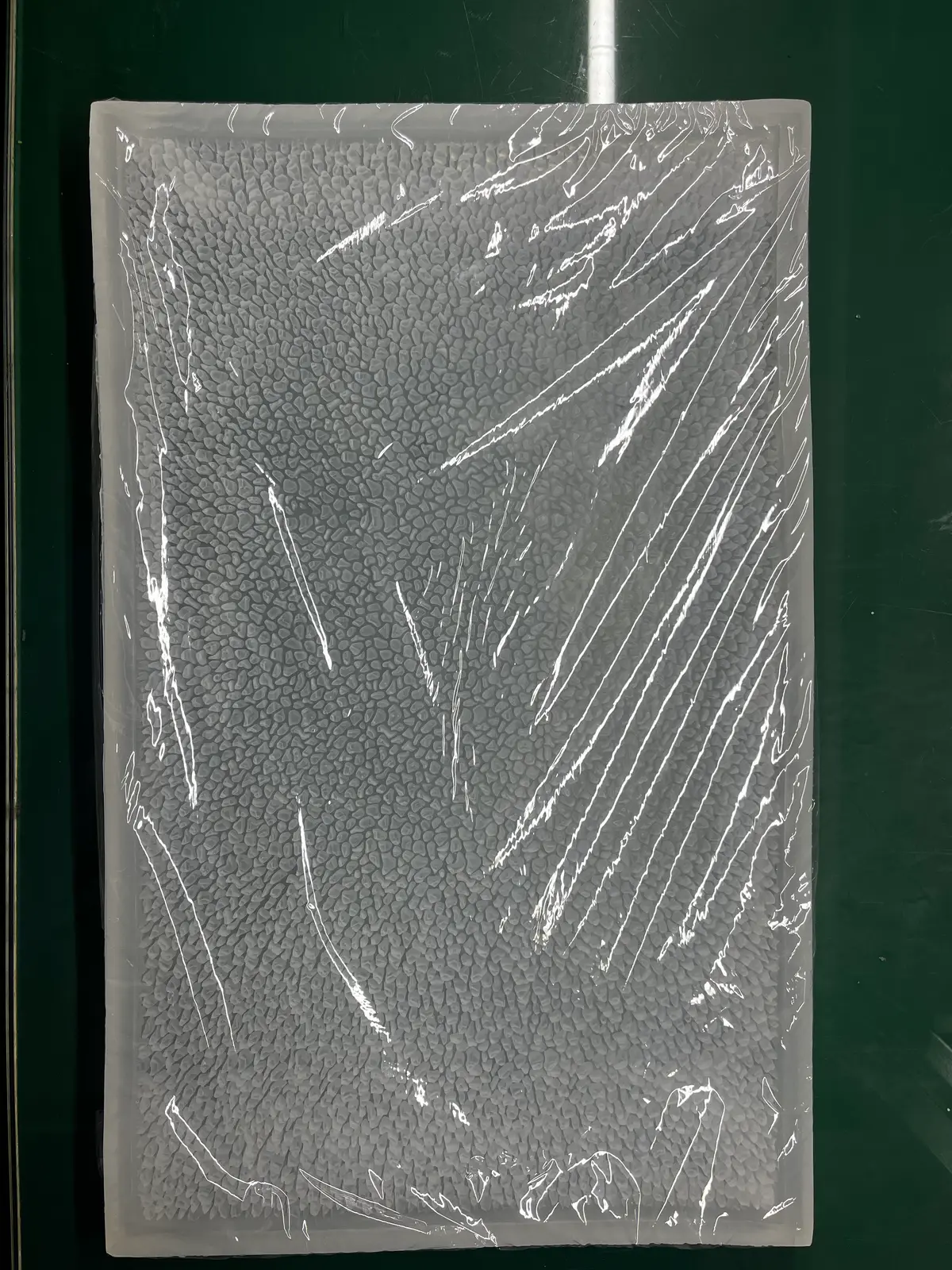
Method, not a named lot: after cure, pick hidden lands agreed on the RFQ. Pin gauge or a clean cut on a witness tab you designed into the lip. Record face / undercut / lip / jacket land. Caption any table as typical shop values until a real PO fills numbers. We will not invent millimetres from a photo.
ISO 3302-1 M2 is a rubber class on the dump if you spec it. It is not a glove-wall tolerance class.
CAD lock includes the map. The $50 3D, when that scope applies, is the master — the map is still shop work you approve.
A production glove you will recast next season also needs the map written on the traveler, not in a Slack screenshot. When the first skin stretches in a hot truck, the undercut lands go first. Measuring the stretched glove and "matching" it is how you lock a bad wall in. Measure the *witness tabs you designed*, then recast from the master. Tooling charge is not unrestricted ownership of the map CAD — say who keeps it.
Brush-coat millimetres (the first stipple) and glove-map millimetres (the finished wall) are easy to mash together on an RFQ. Coat 1 can be about 1 mm and still be correct; the finished face is the 3–6 mm band. If you only specify the first coat, we will not guess the jacket land.
Failure: even-looking glove, hole at the hook
Symptom: dump blows or the glove tears at an undercut; face looked opaque and "done."
Cause: visual opacity is not millimetres. Undercut thinned while the cheek built.
Confirm: pin gauge vs the map. If the hook is half the face, the map was never followed.
Fix: local pad if the grade will still bond, or recast. Do not raise Shore A to hide a 0.6 mm wall.
Typical shop values
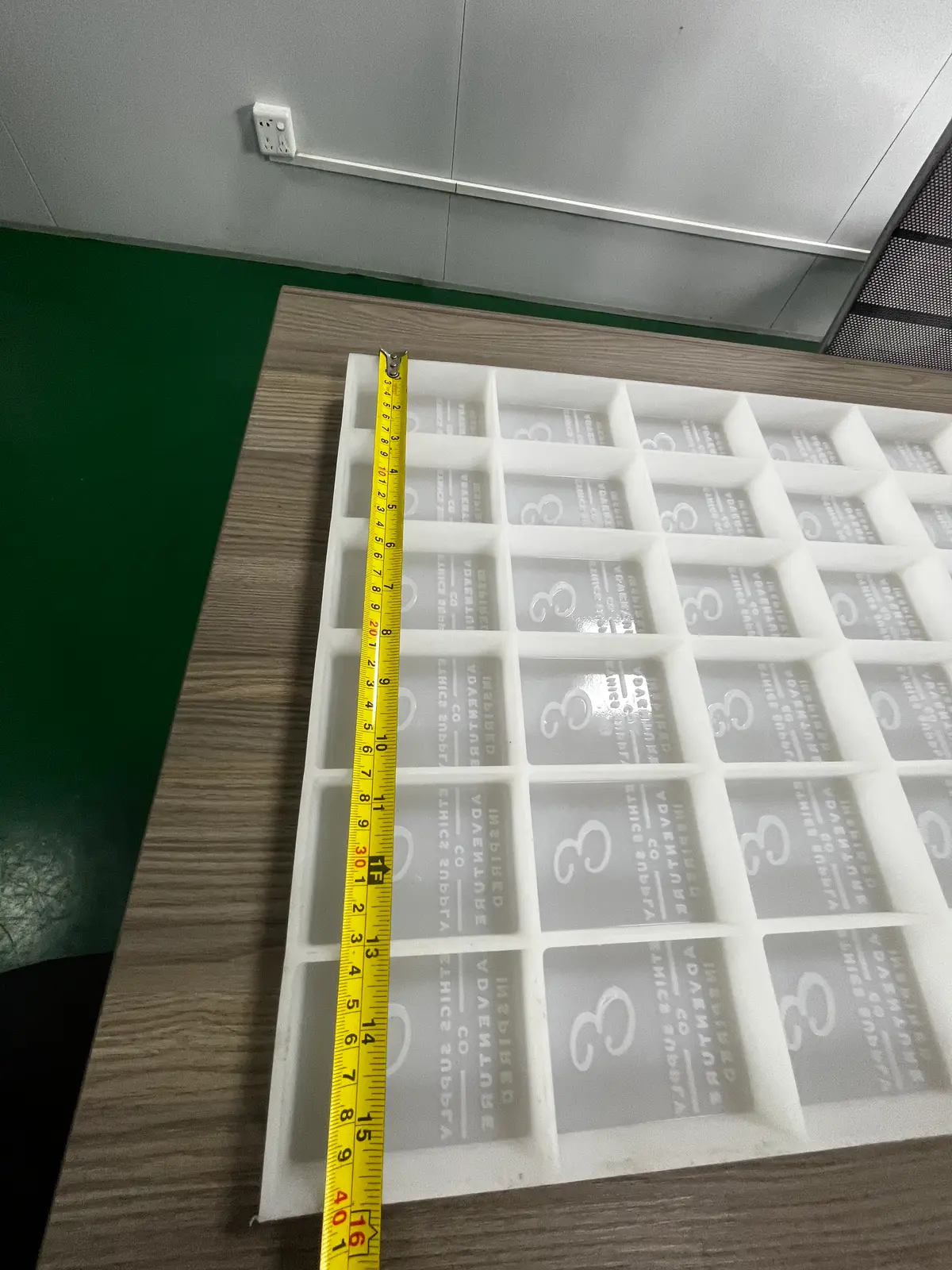
Reference values only. Confirm material-specific limits against the supplier’s technical data and agree project acceptance criteria before production.
| Land | Typical shop value |
|---|---|
| Mix / shrink | 1:1 or 10:1; platinum about 0.1–0.3% |
| Face | commonly a 3–6 mm built band |
| Undercut | extra vs face; do not starve |
| Lip / jacket land | mapped, not guessed |
| Cavity Shore | 10A–20A skins |
| Prototype | 3–7 business days after CAD lock |
| Production MOQ | 20 pieces per design |
| Simple 3D | USD $50 when that CAD scope applies |
Stay on this page / skip this page
Stay when the structure is already a glove and you need a millimetre map - face, undercut, lip, jacket land - not an even coat.
Skip if you still need the glove-versus-block chooser. Skip a poured block or an open-back food tray. Skip treating Shore A as wall thickness. Skip finished LSR/HCR parts - those cartons are an HTV product or mold RFQ here, or ask us if you need a high-volume LSR cold-runner tool. An HTV/HCR compression mold stays on a RUUIPON RFQ; this page does not price that tool.
We will not quote an "even coat" with no undercut callout. We will not judge thickness by looking through the glove at a window. We will not quote a jacket / mother-mold support shell on a 1 mm land. We will not replace the map with a Shore bump. We will not feel production gloves into spec.
Related: glove vs block, brush-coat thickness, contact.
Worked example: mask, 4 mm face, 0.7 mm nostril
PU mask, 220 mm, buyer said "4 mm all over." Dump punched the nostril. Pin gauge 0.7 mm in the hook, 4.2 mm on the cheek. We recast with a local pad to the map, plaster jacket. Prototype 3–7 business days after CAD lock of the map. $50 CAD applied because the nostril ID was not on the scan. Production MOQ 20 of that design.
If the dump is food, stop: a glove is rarely the right food tray. Open-back poured wells belong on the food path. Do not build a mapped glove, talc it, and then ask for a 177.2600 pack. Food trays are poured in a flask with a uniform wall you can weigh, not a stippled statue skin.
Mix-up: thickness = Shore
Shore is how the rubber feels. Millimetres are how much rubber is there. Related: mother-mold shell, contact.
What to ask when you're buying a mapped glove
- Four-land map in millimetres?
- How you will let us witness (tabs, pin gauge)?
- Dump kilograms — jacket yes/no?
- Recast from the sealed master, not from a stretched glove?
- After lock, 3–7 business days, then MOQ 20 / design?
RFQ copy-pack — glove thickness map
Paste into [email protected]:
Object: RTV glove with a thickness map, not an LSR/HCR part Map mm: face / undercut / lip / jacket land Dump chemistry and peak °C Jacket: plaster / FRP / printed File: STEP / STL / photos with a millimetre scale CAD: mold-ready OR USD $50 3D if that scope applies Prototype 3–7 business days after CAD lock, then MOQ 20 per design Who keeps the master
Send the four-land map, not "about 4 mm." We gauge the hook — not a blank quote request. Phone +86 135 3006 2969. Xinhe Blvd, Shajing, Bao'an. Shop since 2018.
FAQ
How thick should a silicone glove mold be? A face band commonly lands around 3–6 mm, with extra in undercuts and a defined jacket land. One even number is how hooks starve.
Can I check thickness by holding it to the light? Opacity lies. Pin gauge or a cut witness on a hidden land.
Does a thicker glove skip the jacket? No. Hydrostatic load still wants a mother mold. Extra 10A rubber sags.
Is the map in the $50 CAD? USD $50 when we must model the master. The map is part of CAD lock you approve. Clock is 3–7 business days after that lock.
What's MOQ on a mapped glove? 20 pieces per design after the witness. Recast from the sealed master, not from a stretched first glove. Mix 1:1 or 10:1.
Custom silicone development · DFM & prototype support
CAD, drawing, photos or sample details