
Hot-Glue Dams vs Clay Coil on an RTV Box | RUUIPON
Hot glue dams leak under vacuum; clay coils can sulfur-poison platinum. Pick the dam from the mix, not the craft aisle. Typical shop values. MOQ 20.
 Kyler Yang · Founder7 min read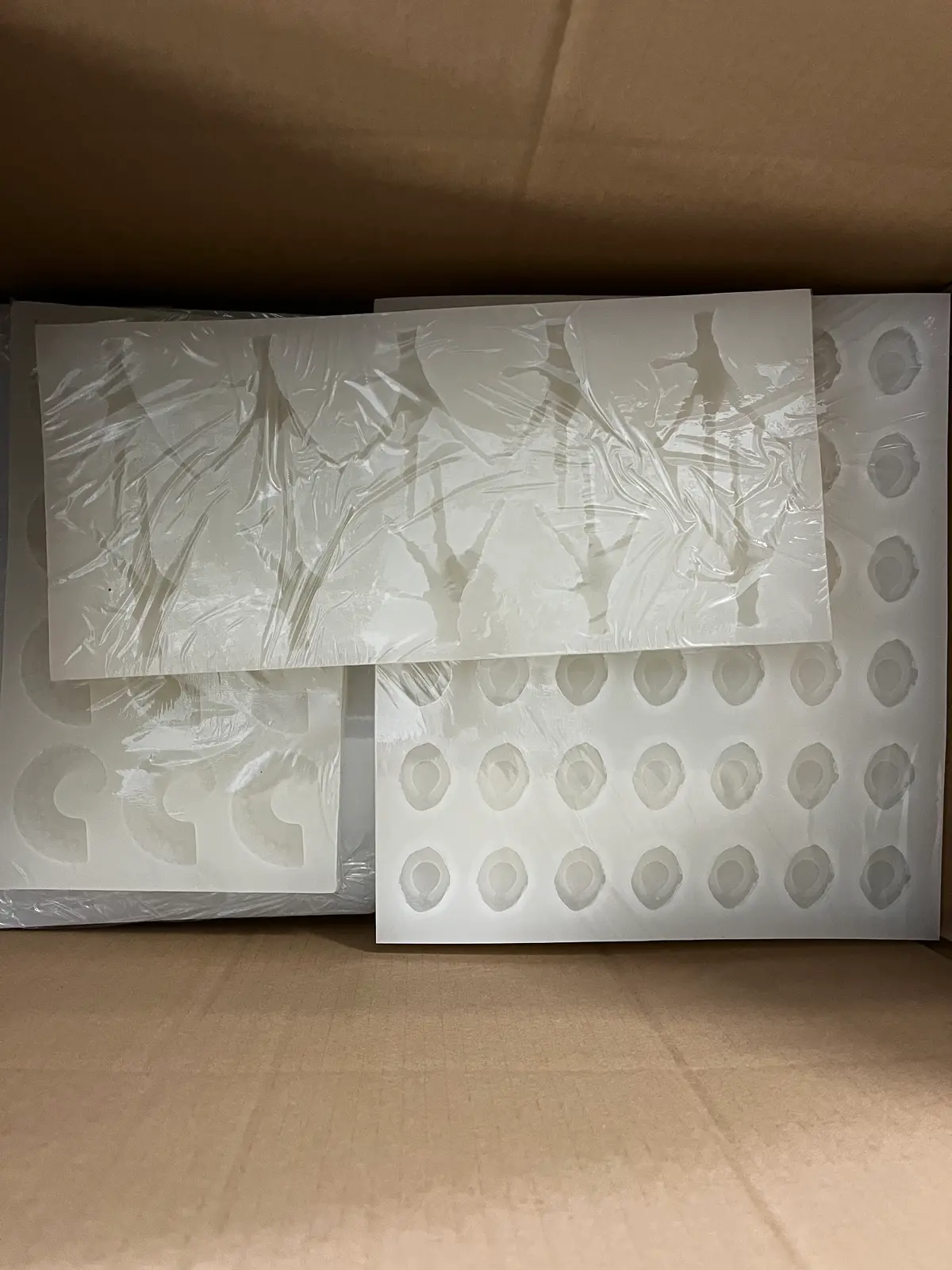
A dam is the temporary wall that keeps mixed platinum from running off the board or out of a split. Hot-glue beads are fast and then fail under vacuum or against a warm cup. Oil-based or sulfur clays that "always worked with tin kits" can leave a platinum face tacky while the jacket cures — inhibition, not a leak. Pick the dam from the rubber family and the process: platinum wants sulfur-free, wax, or tape dams we have already slug-tested; vacuum wants a dam that doesn't whistle; food pours want a dam that never becomes a grease film in the well. We would not spec a sulfur clay dam against a chocolate master.
RUUIPON sets dams in Bao'an since 2018. On this site the path is photos, sketch, or CAD, then a 3D-printed pattern, often a temporary silicone flip, a resin production mother, then batch RTV. The mother is not the pattern. Free DFM. HTV/HCR compression mold tooling is also quoted on RUUIPON.
Does not apply when the flask is already a rigid four-wall box with gaskets (no coil needed), when you are building a plaster-bandage mother over a cured glove, or when the "clay" is the *master*. Don't treat a craft-store clay as 177.2600.
Match the dam to the failure you cannot afford
Hot glue, gravity pour, cool board. Can work for a short open-back wall. Failures: gaps at start/stop, peel-up when the platinum is still liquid, brittle chips in a food well. Vacuum: the bead lifts and sucks air along the line. Pressure pot: not a vessel seal.
Sulfur clay coil. Forgiving fillet against an irregular master. Against platinum: run a 20 g inhibitor slug on that clay first. If the slug stays tacky, that clay is off the platinum bench. Tin leftover plus sulfur clay is a craft conversation we still will not walk into a chocolate cabinet.
Sulfur-free wax or named plastiline. Usual platinum dam. Still keep it off the cavity face. A smear in a gummy well is a film you then have to wash, and we would not grease to hide it.
Tape and foam gasket on a square flask. Production default. Boring, leak-tight, no sulfur.
Food cavities: no grease, no tin, no clay crumbs in the serif. Craft PU can live with a named wax dam.
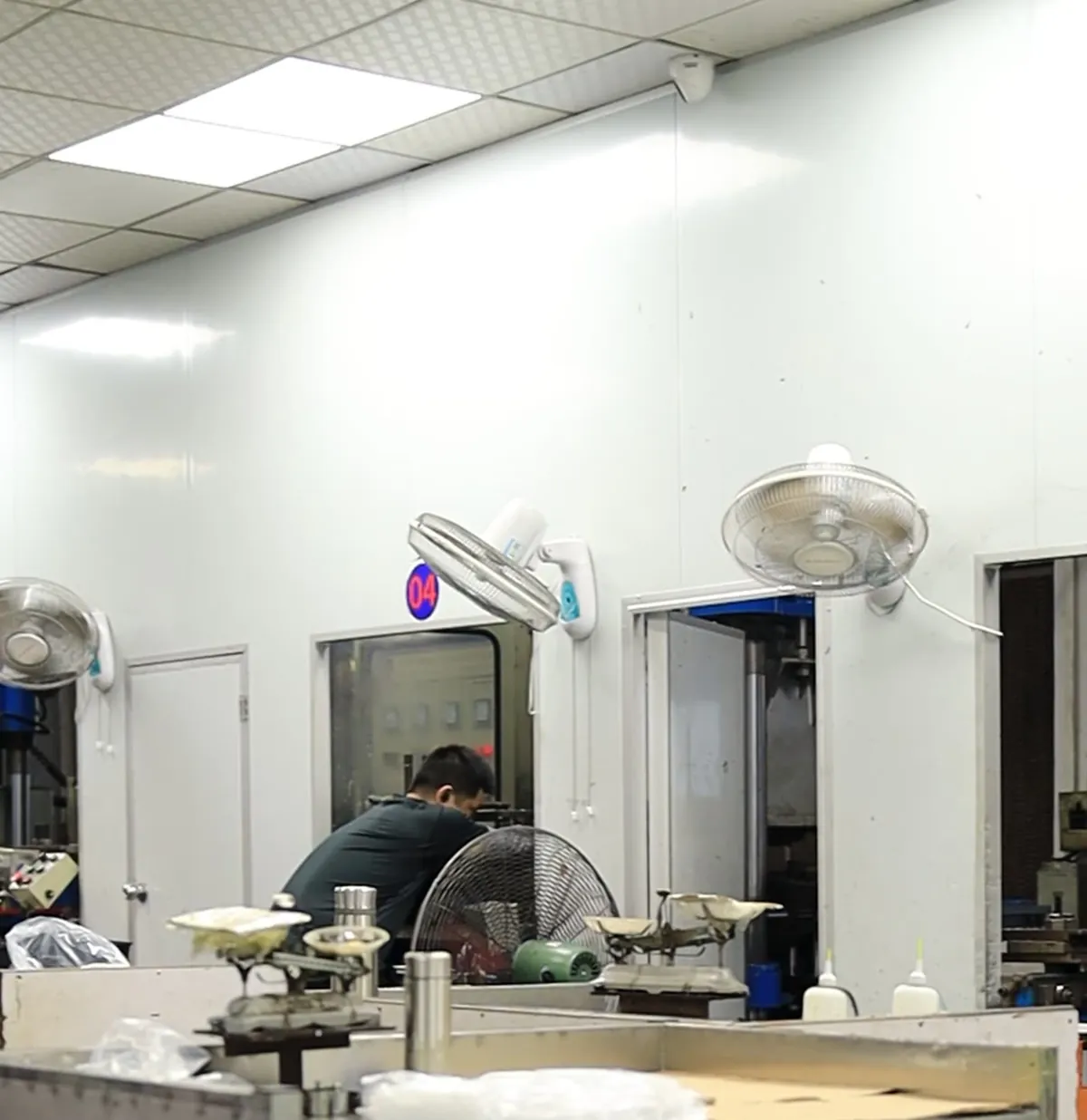
Inhibition slug before you coil a metre of mystery clay
A 20 g platinum coupon on a smear of the dam material, next to a coupon on a clean card. Both should cure dry. If only the clay coupon is tacky, you found the poison. Don't "just brush a thicker detail coat" — inhibition is chemistry, not thickness.
- Platinum food tool? - yes -> Sulfur-free / tape flask; slug-test anything else
- Platinum food tool? - craft tin named -> Clay may be in play — still keep crumbs out of face
- Sulfur-free / tape flask; slug-test anything else -> Vacuum on the pour?
- Vacuum on the pour? - yes -> No hot-glue bead as the seal
- Vacuum on the pour? - no gravity -> Tape, wax, or tested coil
- No hot-glue bead as the seal -> Witness, then MOQ 20
- Tape, wax, or tested coil -> Witness, then MOQ 20
The photo that would prove the dam: bead or coil in section next to a cured slug labeled pass/fail, cavity face clean. A glue-gun action shot is not that photo.
Typical shop values
Reference values only. Confirm material-specific limits against the supplier’s technical data and agree project acceptance criteria before production.
| Item | Typical shop value |
|---|---|
| Food / platinum dam | sulfur-free wax, tape, gasketed flask |
| Inhibitor check | 20 g slug on the dam material |
| Mix | platinum 1:1 or 10:1 by weight |
| Platinum shrink | about 0.1–0.3% after full cure |
| Hot glue under vacuum | we would not as the seal |
| Food well | no grease, no tin, no clay crumbs |
| Prototype | 3–7 business days after CAD lock |
| Production MOQ | 20 pieces per design |
| Simple 3D | USD $50 when that CAD scope applies |
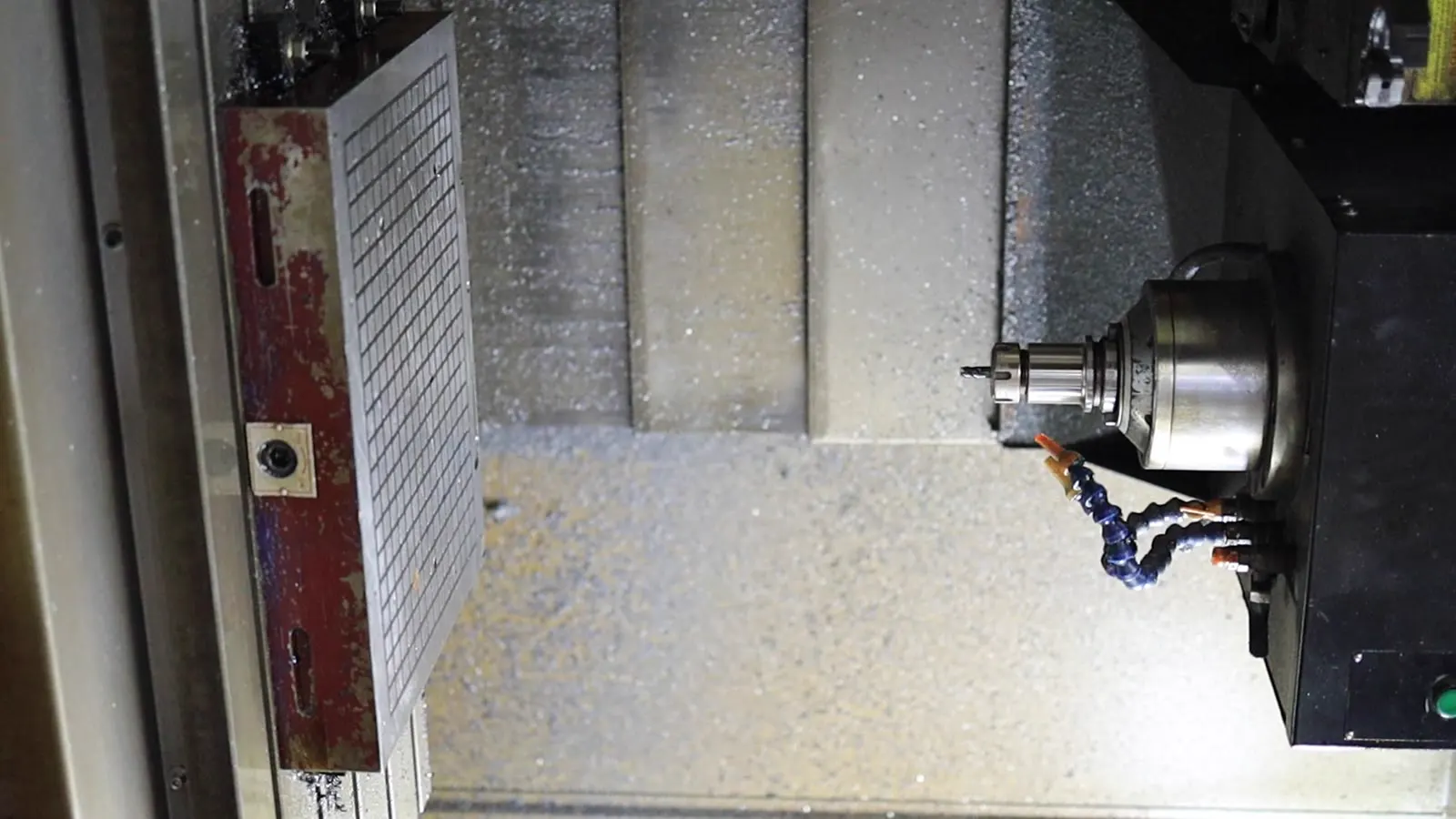
Parting-land dams are not flask walls
A coil along a figurine equator is a parting dam: it defines the shut. A coil around a tray is a flask wall. Mixing those jobs is how sulfur clay ends up on a chocolate serif "because we always coil." For a designed split, CAD the land, pour in a flask, and keep mystery clay off platinum food tools. For a one-off craft relief, a sulfur-free wax fillet can still be the right parting dam after a passing slug.
Hot glue as a parting dam prints a glossy ridge that becomes flash. If you already glued a land, expect to recast after we cut a real seam or model one. USD $50 when that CAD scope applies. MOQ 20 after the witness, not after the glue-gun session.
Food reminder: crumbs, glue chips, and clay smear are films. Dry well. No tin. No grease to "float them out."
Worked example (anonymized)
Split figurine, buyer coiled sulfur clay as the parting, poured platinum. Face tacky on the clay side, jacket cured. We recast against a sealed master with a sulfur-free wax land and a flask. $50 CAD because the land needed a designed flash fence. MOQ 20. Their clay stayed on the tin craft shelf. Chocolate was a separate SKU, dry well.
Latex gloves plus sulfur clay is a stacked platinum tax
Operators who coil clay in latex and then mix platinum without a glove change stack two inhibitors. The dam slug might pass and the mix still dies from the gloves. Change gloves, or use nitrile, after clay work. Food tools get that discipline; craft tin is more forgiving and still is not a chocolate path.
One procurement mix-up
"Clay is clay." Sulfur content is the platinum line. A tin-kit tutorial is not a food dam SOP. Tooling charge is not ownership of a poisoned master you then ask us to keep pouring against.
Stay on this page / skip this page
Stay when you need a temporary dam that will not whistle under vacuum or inhibit a platinum face.
Skip if you already have a leak-tight shop flask and no parting-land dam. Skip a steel press flash land. Skip finished parts - a different RFQ - ask us. Skip pitching clay coils as a master / box / keys / jacket buy list.
We will not quote sulfur clay against platinum food tools. We will not quote hot glue as a vacuum seal. We will not grease a clay smear out of a chocolate serif and call it released. We will not skip the 20 g slug to save ten minutes.
What to ask when you're buying
- Platinum or tin, in writing?
- Gravity pour or vacuum in the box?
- Dam material named, and has a slug passed?
- Food vs craft cabinet?
- Designed flask instead of a coil?
RFQ copy-pack
Send to [email protected] · +86 135 3006 2969 · Xinhe Blvd, Shajing, Bao'an.
RUUIPON dam-material RFQ Rubber: platinum / tin Dump: food / craft Dam you use today: hot glue / sulfur clay / wax / tape / unknown Slug test done? yes / no Vacuum in the box? yes / no Qty: witness / MOQ 20 CAD: locked / $50 3D if parting land must be designed
Matched next step: name the dam material and the rubber family. We slug-test mystery clays and pour in flasks that don't whistle. We will not coil sulfur clay against a chocolate master. Prototype 3–7 business days after CAD lock. MOQ 20 per design.
Related: sulfur clay and tin vs platinum, sticky uncured / inhibition, how to build a mold box, contact.
FAQ
The clay says "sulfur-free" on the pack. Do I still slug-test? Yes. Labels drift. A 20 g slug is cheaper than a tacky food skin.
Can I dam a gummy tray with hot glue because it's "food-adjacent plastic"? We would not. Glue chips in a well are a film. Use a flask. Dry cavity, no tin.
Will more thixo let me skip the dam? Thixo is for hanging coats, not for replacing a flask on a box pour.
If the dam inhibited the face, can I post-cure the tack away? No. That skin is scrap for food. Recast from a cleaned master.
Does CAD include the dam? CAD is the cavity and, when needed, the parting land. Tape and flask are process. $50 when geometry is still open.
Custom silicone development · DFM & prototype support
CAD, drawing, photos or sample details