
How to Choose Gummy Molds for Deposit and Dump Lines
Choose gummy molds from depositor pitch, dump method, and piece volume, not the cartoon. Starch, plastic, and platinum RTV trays are different line tools.
 Kyler Yang · Founder9 min read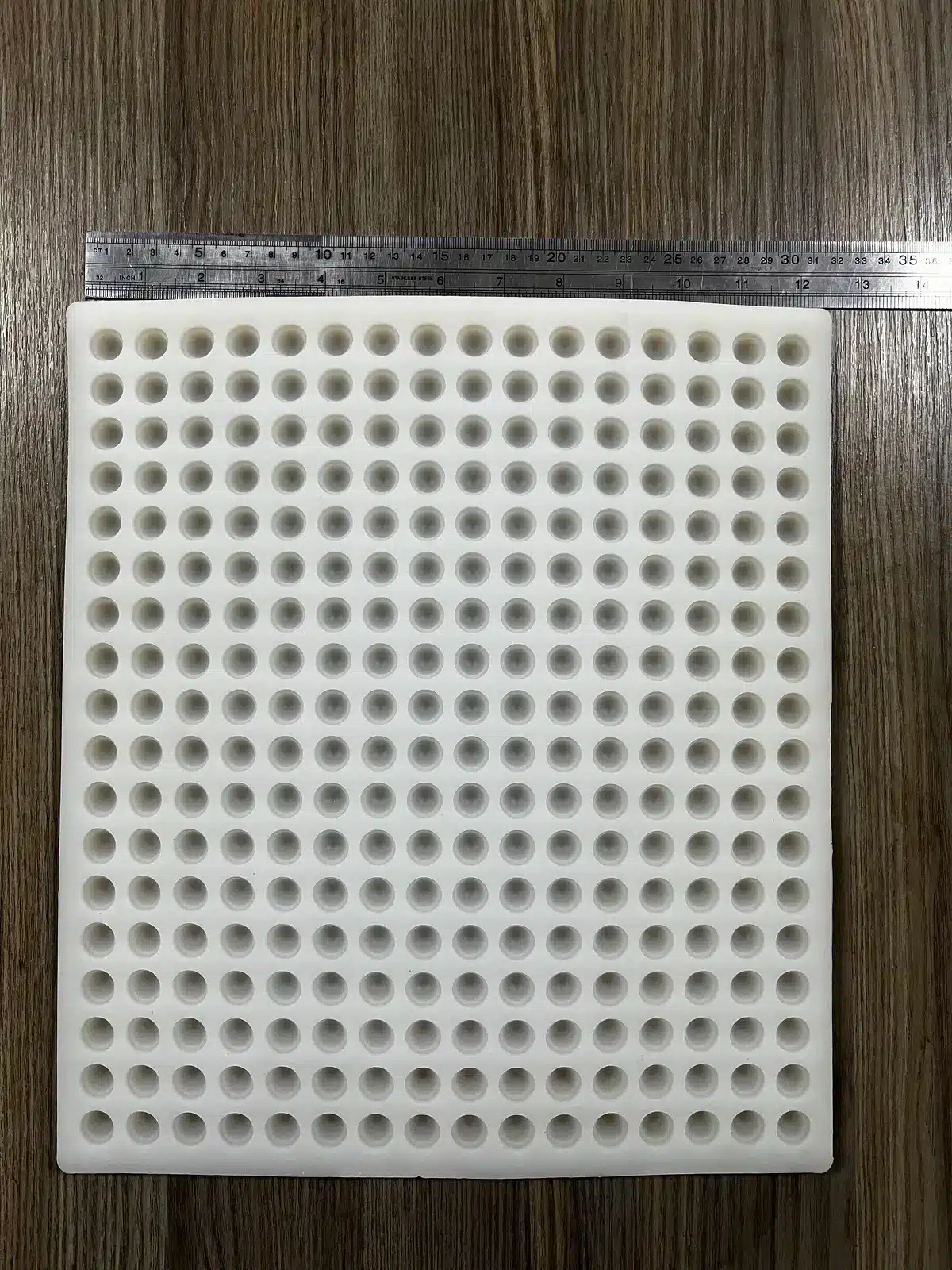
Choose a gummy mold from the line you already have, not from the mascot on the marketing deck.
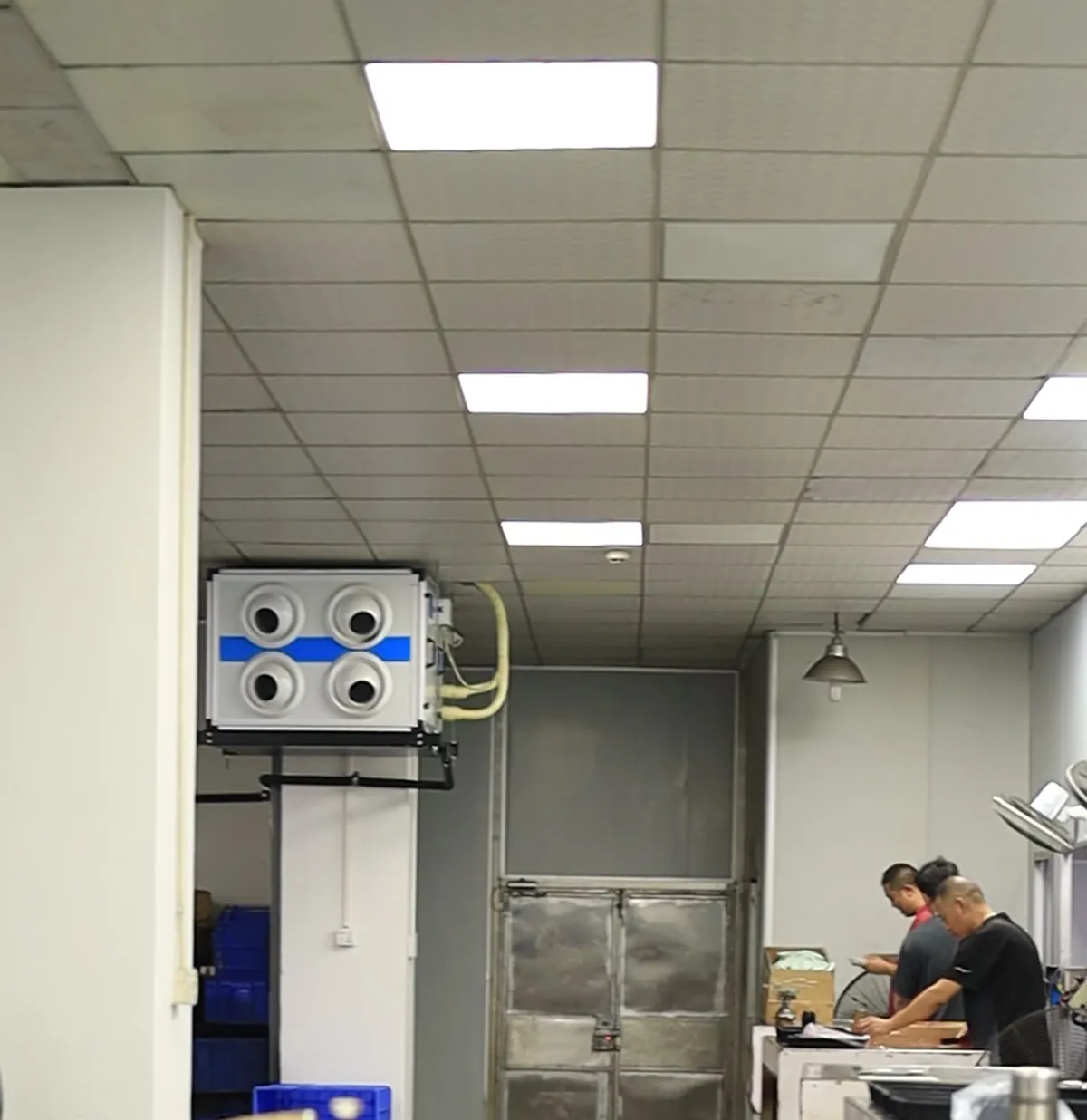
The depositor pitch, dump station, wash rack, and target piece volume decide the tool. Starch mogul, rigid plastic, or platinum RTV tray are three answers to those constraints. A kitchen tray is a fourth: useful for a bench formula, useless as a production plate. Food-contact on a reusable RTV tray is still 21 CFR 177.2600 extractives and LFGB/BfR XV on the finished article.
Here's the part that usually bites people: you pick the cartoon first, then discover the head can't hit that grid.
Copy the depositor before you pick a cartoon
If the plant already runs a depositor, the mold is a slave to that machine. Copy center-to-center pitch, tray envelope and thickness, locating pins or edges, how the tray enters the cooling belt or stacker, and dump (invert-and-knock, flex roller, manual peel, or a hybrid eject).
A 2 mm pitch error is scrap, not a "close" sample. Custom shapes still have to sit on that grid. If you're buying the depositor and the mold together, freeze the grid first, then the mascot. If there isn't a depositor yet, say so — we can tool a one-up and a small array for a bench head or a pipette trial. That's a prototype program, not a 4×12 production tray.
Starch, PC, or platinum RTV
Starch mogul. Default for many candy bears at volume. The mold is the starch. Choose it when the SKU is drafted, dust is acceptable, and you already own mogul know-how — not because an RTV quote looked expensive.
Rigid plastic (often polycarbonate). Simple cups, invert dump, stiffness. Choose it when undercuts are absent, logos are shallow, and the line already knocks PC. Plastic food-contact files aren't silicone 177.2600 reports.
Platinum RTV, usually jacketed. Choose it when you need flex dump, a peelable undercut, a sharp reverse logo, a rubber face in a metal or PC frame, or a vitamin room that won't take starch. Shore A is a dump-and-stiffness choice, not a flavor. Too soft without a jacket, the tray wrinkles and misses nozzles. Too hard, undercuts won't leave. Mid Shore faces (often 20A–30A) behind a rigid jacket, or a slightly softer skin against a firmer RTV back, are the usual conversation.
Tin-cure from a craft bottle isn't a candidate. An LSR injection quote with a cold-runner is a molded *part* quote; ask us to requote a poured RTV tray if that's what the line will dump into.
Common mix-up: Shore copied from a muffin pan
A lot of RFQs treat "Shore 20A, like our baking molds" as a gummy spec. In the shop that usually means a tray that peels nicely in a kitchen and flops under a servo head. Prototype one-ups can be 10A–20A because a human peels them. Don't freeze production Shore from that peel unless you're also specifying the jacket.
Piece-weight starts as cavity volume
Vitamin and supplement buyers shop gummy molds because each piece is a dose *form*. We still don't set milligrams of a nutrient. We set cavity volume and a fill line the depositor can repeat. Density then makes mass. If QC will weigh every tenth piece, the RFQ needs target mass, allowed range, and whether the cavity is fill-to-brim or fill-to-line.
Starved ears and overfilled bellies look like "inconsistent dose" on a scale. Geometry first (radii into thin features, no air traps, draft that dumps), then depositor tuning. Don't buy a 50-cavity tray to average out a bad one-up. Prove one cavity in the real slurry, then cavitate.
What to ask when you're comparing two quotes
If you're lining up suppliers, send the same packet:
- Process: starch / PC / platinum RTV / jacketed hybrid / not sure, and why?
- Depositor envelope, pin pattern, pitch — or a statement that this is still bench?
- Cavity CAD or artwork plus target volume and piece-weight range?
- Slurry family (gelatin, pectin, high acid, inclusions) as fill/dump notes, not as a formula ask?
- Dump method, and are undercuts actually required?
- Array and annual impressions as an order of magnitude, not a fake cycle life?
- Food-contact markets, and is the *tray* the article (177.2600 extractives / LFGB, not "FDA approved")?
- Wash temperature, chemistry, stacking — will cavities oval?
- Who owns the master, the jacket, and recast rights?
Ignore advertised non-stick-forever, a Shore copied from Amazon, and any quote that prints dump count as a material property. Gel strength, dump temperature, and wash own most of the life you'll see. Hygiene crevices (faces glued with kitchen RTV, unsealed jackets) are how a "family SKU" fails QA; design a bead, don't smear tin-cure.
Example
A vitamin line that already owns a 400 mm depositor usually lands on a 24-cavity platinum RTV oval, 2.0 ml, invert dump of about 180°, Shore 25A in an aluminum jacket, plus one spare tray for the washer. The cartoon can still be a leaf or a bottle as long as the milliliters and the pin pattern stay frozen.
When this buying memo doesn't apply
If the hall already runs a mogul, dust is allowed, and the shape is a drafted cup, stay on starch — don't "choose RTV" because this page exists. If the cavity is a simple knock-dump cup and you already handle PC chocolate plates, PC is usually the first pick. If you need molded silicone *parts*, that's an LSR/HCR parts quote with a cold-runner, not a depositing tray.
Related reading: what gummy molds actually are, starch vs PC vs RTV, multi-cavity pitch, gummy trays.
RFQ packet we can price without guessing
Copy this. Two shops quoting this packet are comparable; two shops quoting "a bear" aren't.
- Process choice (or "not sure, starch dust is / isn't allowed")
- Nozzle pitch, pins, tray size / envelope
- Target grams or ml, fill line, slurry family (gelatin/pectin, inclusions as dump notes)
- Dump motion and whether undercuts are real
- Shore target if you have one, plus jacket yes/no
- Wash temperature and chemistry SDS
- 177.2600 extractives and/or LFGB on *this* article
- Master / jacket / recast ownership
Send grams, formula family, nozzle pitch, and tray envelope. We'll pick starch vs PC vs jacketed platinum RTV against that line, not against a cartoon.
We would not recommend choosing the cartoon first
We would not recommend picking a mascot, then discovering the head can't hit that grid. Copy depositor pitch, tray envelope, and dump motion before Shore A. We would not freeze production Shore from a 10A kitchen peel unless the jacket is in the same sentence. We would not "choose RTV" because this page exists if the hall already runs a mogul and dust is allowed.
- Have a depositor drawing? - yes -> Copy pitch, pins, envelope, dump
- Copy pitch, pins, envelope, dump -> Starch dust allowed and shape drafted?
- Starch dust allowed and shape drafted? - yes -> Stay on mogul
- Starch dust allowed and shape drafted? - no -> Undercut or reverse logo?
- Undercut or reverse logo? - no, knock cup -> PC plate
- Undercut or reverse logo? - yes or flex dump -> Jacketed platinum RTV
Typical shop values: first production choose-the-tool tray
| Item | Typical shop value | | --- | --- | | Piece-weight target | 4.0 g (cavity volume × measured slurry density; fill-to-brim or fill-to-line stated) | | Outer-row vs center | 3–6% heavy if the loaded tray sags under the nozzles | | Loaded-tray edge sag | 0.5–1.5 mm without a flat jacket | | Cavity Shore | 10A–20A platinum RTV skin + rigid jacket | | Platinum linear shrink | 0.1–0.3% (cut the master so poured pitch lands) | | Mix | Platinum 1:1 or 10:1 if the cell is RTV | | Depositor copy | Pitch error of ~2 mm is scrap, not a close sample |
Reference values only. Confirm material-specific limits against the supplier’s technical data and agree project acceptance criteria before production.
FAQ
Should a vitamin brand start in starch to save tooling? Only if the plant already runs a mogul and starch on the piece is acceptable. Many supplement rooms won't take dust. A small platinum RTV array with proven cavity volume is usually the cleaner first production tool. A kitchen tray isn't a substitute.
How do I choose Shore A for an RTV gummy tray? From dump and tray stiffness, not from a baking catalog. Soft enough to flex-dump the undercut you actually have; firm enough, or jacketed, so the tray stays flat under the depositor. A 10A–20A skin with a rigid jacket is common when one Shore can't do both.
Is polycarbonate always cheaper than RTV? Depends on cavitation, the master, and whether you already own PC handling. Geometry is the first filter: peelable undercut, PC loses. Simple cup and a knock dump, PC often stays.
What piece-weight tolerance belongs in a mold RFQ? State target mass, slurry density if known, and whether the cavity is fill-to-brim. We own volume and fillability. You own density and depositor repeatability. Don't ask us for milligrams of a vitamin.
Do I need both 21 CFR 177.2600 and LFGB? You need the reports that match the markets the tray will enter, on the article you'll run. US-only can be 177.2600 extractives. Germany/EU buyers often want LFGB/BfR XV. Dual-market retail usually wants both. A shop that says "FDA approved" without a method is the fail.
Custom silicone development · DFM & prototype support
CAD, drawing, photos or sample details