
OEM vs Custom RTV Silicone Molds
Custom RTV means this cavity did not exist as a tray. OEM is who runs your brand. Living-mother ownership assigns the risk, not the word partnership.
 Kyler Yang · Founder10 min read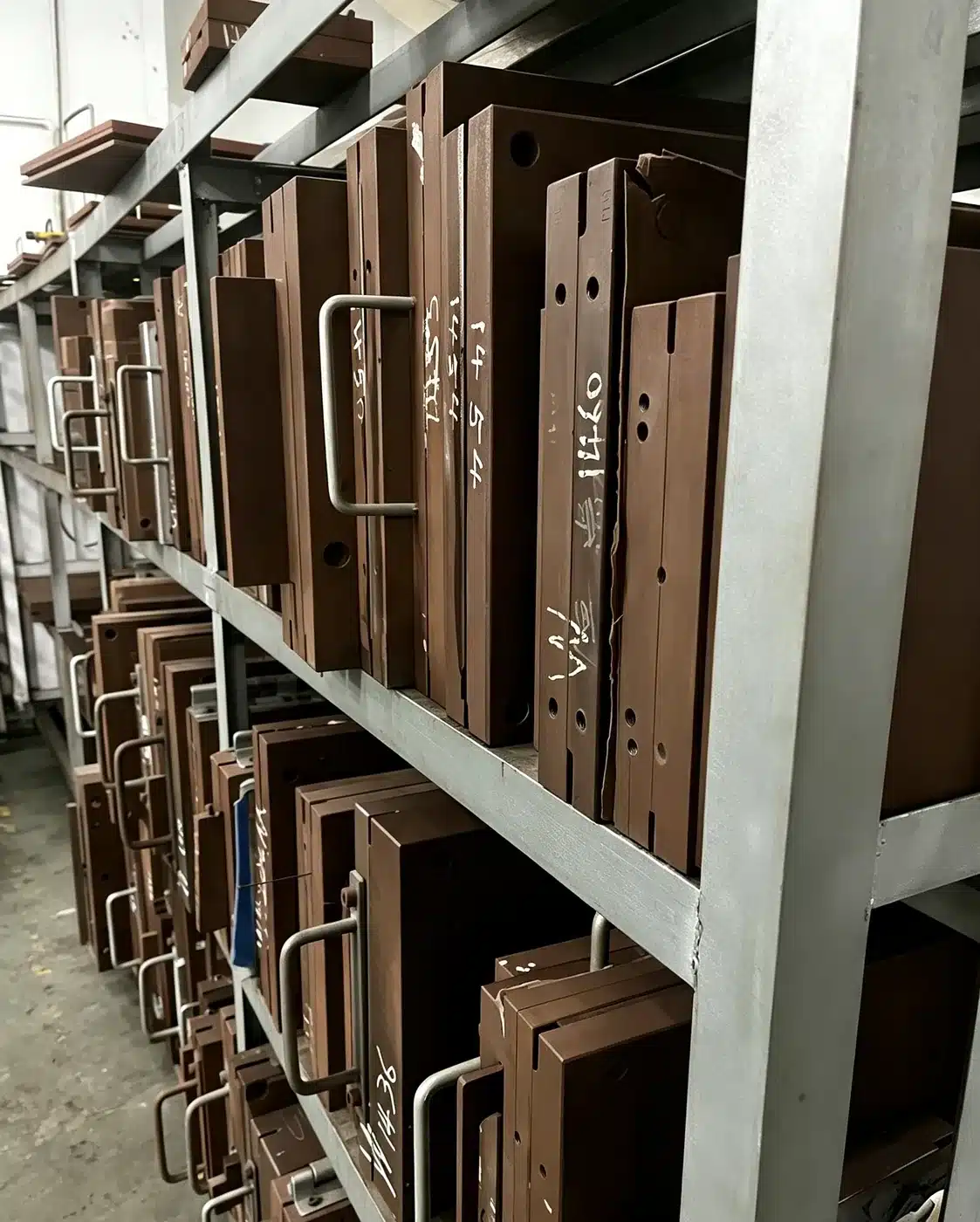
If you are writing OEM versus custom on an RTV mold RFQ, it is a contract split, not a chemistry split. OEM in silicone usually means a factory manufactures to your drawing and brand, on a process you jointly pick. Custom means the cavity was not a catalog insert: someone pours it for this pocket. You can have custom RTV tooling inside an OEM relationship. You can also buy a custom mold as a one-off with no OEM program behind it. Mixing the words is how living-mother ownership disappears.
On this site custom still walks photos, sketch, or CAD, then a 3D-printed pattern, often a temporary silicone flip, a resin production mother, then batch RTV. The mother is not the pattern. Free DFM. CAD revision about USD 50 when we edit your 3D. Prototype usually 3-7 business days after CAD lock. Production MOQ 20 pieces per design. Bao'an since 2018. RUUIPON also quotes HTV/HCR compression mold tooling - the steel/compression tool for solid silicone. High-volume LSR cold-runner or steel gummy *part* tools are a different RFQ - ask us. Do not send the compression-mold RFQ as an HTV product RFQ here, or ask us for a high-volume LSR tool.
OEM is a relationship; custom is a drawing
A catalog ice sheet with your pad-printed carton can be OEM and still not custom. A one-off mascot tray with no reorder clause can be custom and still not OEM. Overlay the catalog pocket on your CAD. If the lip already matches, you are shopping color and a contract. If the mascot is yours, the RFQ is custom RTV even if you never say OEM.
If your email still says "master, box, keys, jacket" as the difference between OEM and custom, you are listing shop furniture. The difference is who owns the pocket and who may recast it.
Who owns the living mother and the compound file
Write who archives the resin production mother, who may recast the skin, and who holds the compound lot file. Paying a tooling charge still does not, by itself, confer unrestricted transfer rights. Customer-owned mothers with shop-owned support shells, or the reverse, are common unless the PO says otherwise.
Common mix-up: tooling-included as a title deed
A lot of RFQs treat tooling-included as a title deed. In the shop that usually means you can pull a crate of skins and cannot pull the living mother when the relationship ends. Put title, storage, and recast in the PO. Catalog copy that says CAD, then resin, then RTV - skipping the flip - treats the first hard copy as if it were already the production mother. We will not quote that shortened sentence as the shop path.
Typical shop values
Reference values only. Confirm material-specific limits against the supplier’s technical data and agree project acceptance criteria before production.
| You have | Buy |
|---|---|
| Catalog pocket overlays CAD; you need color / carton mark | OEM on a stock tray |
| Pocket, logo, or undercut is yours | Custom RTV: pattern / flip / resin mother / batch RTV |
| Custom pocket plus a reorder / brand program | Custom RTV inside an OEM relationship |
| Steel/compression tool for solid silicone | RUUIPON HTV/HCR mold RFQ |
| Vulcanized silicone parts | RUUIPON / ask us |
| DFM / CAD / proto / MOQ | Free DFM; USD 50 when we edit 3D; 3-7 days after CAD lock; 20 pcs/design |
Worked example: private-label ice vs custom mascot
A kitchen brand wanted a 50 mm ice sphere that already existed as a catalog hemisphere - OEM color and a printed carton. A sister SKU wanted a registered equator and a pull core. That second job was custom RTV: free DFM, CAD lock, pattern, often a flip, resin production mother, two-part platinum, jacket / mother-mold support shell. The PO named the buyer as archive for the living mother. The catalog hemisphere never needed that sentence.
Stay on this page / skip this page
Stay when you need the nouns OEM and custom pulled apart before you sign a PO.
Skip if you already know you need the tray OEM packet - OEM gummy mold services. Skip finished parts - a different RFQ - ask us. Skip if you only needed a catalog overlay.
We will not treat tooling-included as a title deed. We will not mix OEM and custom so the living mother has two owners. We will not quote CAD, then resin, then RTV-only as the shop path.
Related: what custom molds are, ownership and maintenance, contact.
What to send
- Catalog overlay vs your pocket CAD
- Who should archive the living mother
- Reorder horizon; recast yes/no
- Dump material; food-contact path if needed
- Object: RTV cavity, HTV/HCR tool, or finished part
Send the split to [email protected] or contact.
- Catalog overlay? - yes, color only -> OEM stock tray
- Catalog overlay? - no, pocket is yours -> Custom RTV
- Custom RTV -> Write mother archive on the PO
FAQ
Can a mold be both OEM and custom? Yes. OEM is the relationship. Custom is this pocket. Write both if both are true.
Does custom mean I own the mother? Only if the PO says so. Custom describes the cavity, not the title.
Is OEM a chemistry? No. Platinum vs tin is chemistry. OEM is who runs your brand.
Where do finished OEM silicone parts go? an HTV product or mold RFQ here, or ask us if you need a high-volume LSR cold-runner tool. An HTV/HCR compression mold RFQ stays on RUUIPON.
What is MOQ on a custom RTV design? MOQ 20 pieces per design after approval. Prototype usually 3-7 business days after CAD lock. DFM free. CAD about USD 50 when we edit 3D.
Custom silicone development · DFM & prototype support
CAD, drawing, photos or sample details