
One-Part vs Two-Part RTV Mold Structures | RUUIPON
Open-back tray or keyed two-part split? Walk the Mold Structure Decision before you pour platinum RTV. Jacket, flash land, MOQ 20, $50 CAD when it applies.
 Kyler Yang · Founder10 min read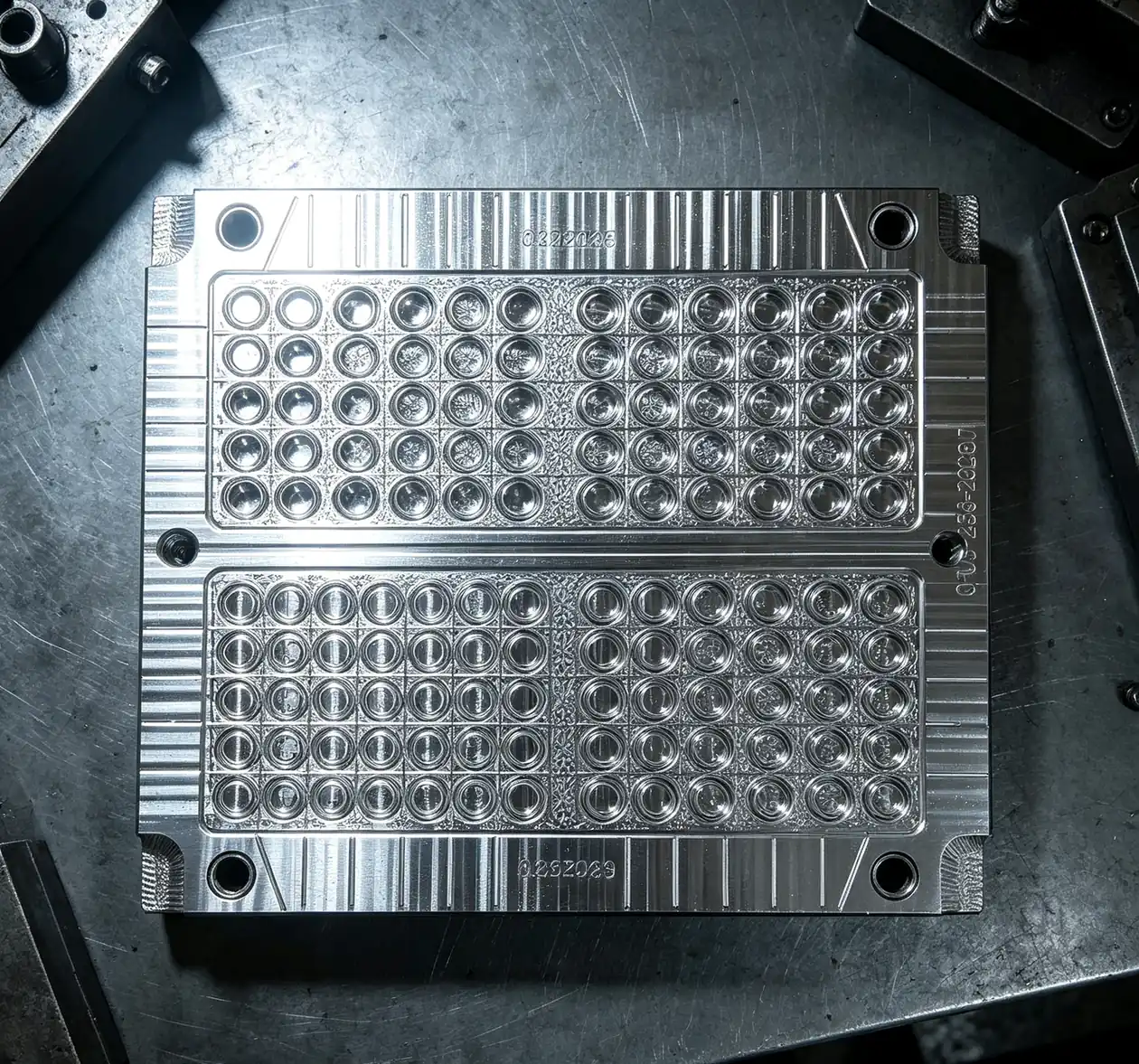
A one-part RTV mold is an open-back tray: every working face sits on one side, you dump into pockets, and you peel or invert. A two-part RTV mold is a keyed split: the dump leaves a closed envelope, flash lives on a parting land, and registration keys find the halves every cycle. You pick that structure from geometry, not from a kit name. Walk the RUUIPON Mold Structure Decision first. Flat back? Open-back. Deep undercuts that a 10A–20A peel cannot survive? Keyed two-part, a plug, or a core. Large wet casting still wants a mother mold behind the skin.
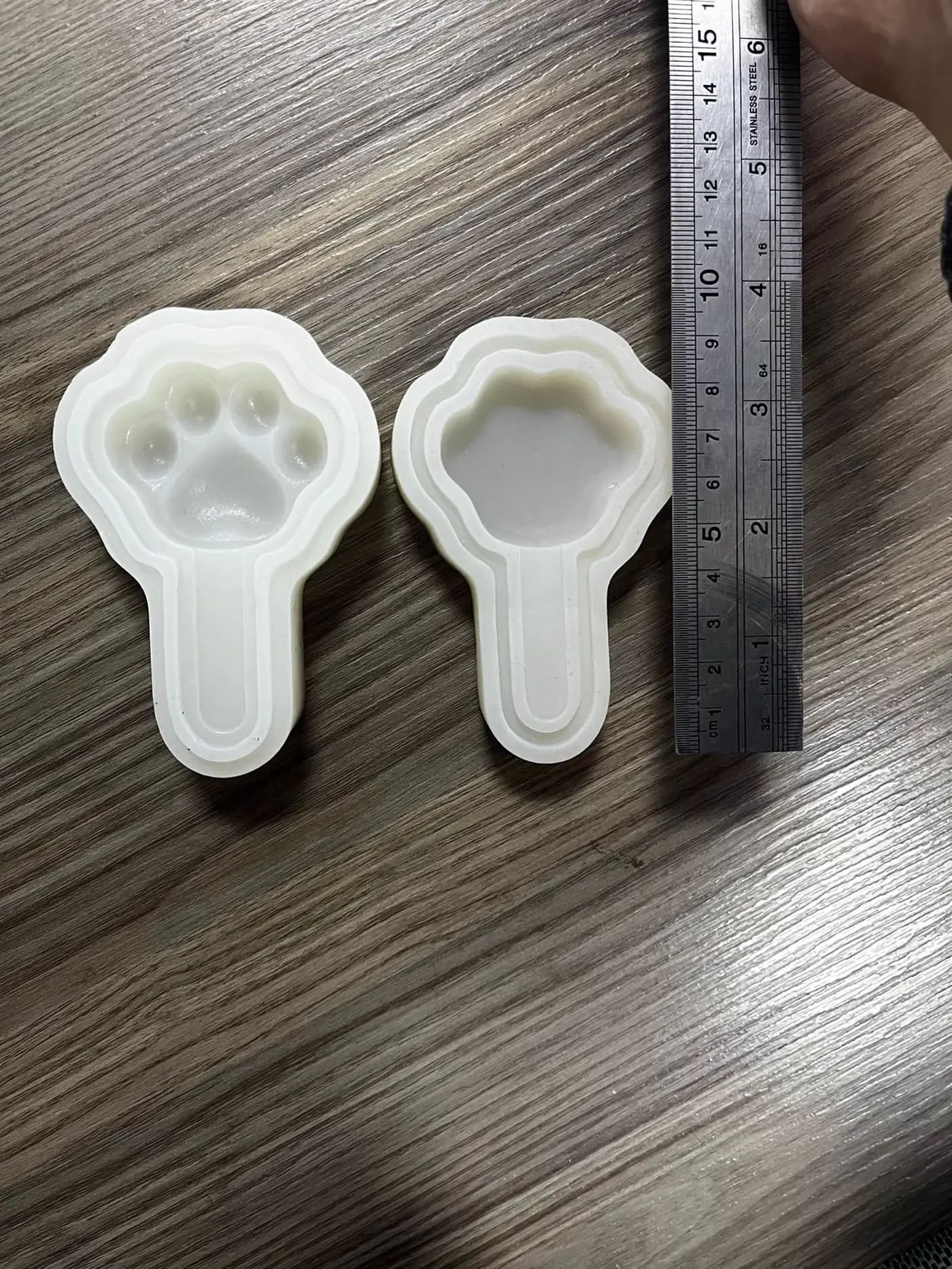
RUUIPON pours the tool in Bao'an / Shajing since 2018: resin master to RTV casting mold. Prototype is 3–7 business days after CAD lock. Production MOQ is 20 pieces per design. Simple 3D is USD $50 when that CAD scope applies. Mix is 1:1 or 10:1 by grade, by weight. Platinum linear shrink after a full cure is typically about 0.1–0.3%.
Does not apply when the silicone *is* the product (a gasket, a teether, an LSR keypad). That is a steel or aluminum tool and a an HTV product RFQ here. parts quote. It also does not apply when you already own a rigid polycarbonate chocolate tool and only want us to copy the shut — that is a copy job, not a structure call.
Walk the Mold Structure Decision before anyone weighs A/B
Start with the back of the part. If every face you care about sits on one side and the dump face is flat, we pour an open-back platinum tray. No keys. No split flash. That is the honest structure for a logo bar, a gummy pocket, a wax-melt slab, a shallow soap stamp.
If the part is two-sided, a hook closes, a neck is smaller than the body, or a letter counter would tear a one-piece lip, you leave the glove. The next question is peel, not "can silicone stretch." Platinum RTV at 10A–20A will stretch a surprising amount. It will also tear at a thin lip in the third week you run it. We mark OPEN-BACK / SPLIT / PLUG / CORE on the 2D and we say why.
A split is not an upsell. It is the structure that lets a closed envelope leave without stretching the cavity around a lock. Keys — hemispheres, sockets, a fence — find the halves. The jacket keeps a wet dump from ballooning the seam. A one-part glove with a "just flex it" note is how a 68 mm figurine loses an arm on dump twelve.
- Flat back, all detail on one face? - yes -> Open-back RTV tray
- Flat back, all detail on one face? - no -> Can 10A-20A peel without tearing cavity or dump?
- Can 10A-20A peel without tearing cavity or dump? - yes -> Open-back RTV tray
- Can 10A-20A peel without tearing cavity or dump? - no -> Is the lock local?
- Is the lock local? - yes one pocket or letter -> Removable plug
- Is the lock local? - no closed envelope -> Keyed two-part
- Is the lock local? - hollow wall is a CTQ -> Inner core, registered
- Open-back RTV tray -> Large wet mass or soft skin?
- Removable plug -> Large wet mass or soft skin?
- Keyed two-part -> Large wet mass or soft skin?
- Inner core, registered -> Large wet mass or soft skin?
- Large wet mass or soft skin? - yes -> Mother mold / rigid jacket
- Large wet mass or soft skin? - tiny shallow tray -> Skin only
The photo that would prove the call: master on the bench with the undercut taped, the same geometry as a one-piece glove torn at the lip, then the recast as a keyed two-part with the flash land off the show face. Until that set exists on your SKU, treat the flowchart as the decision.
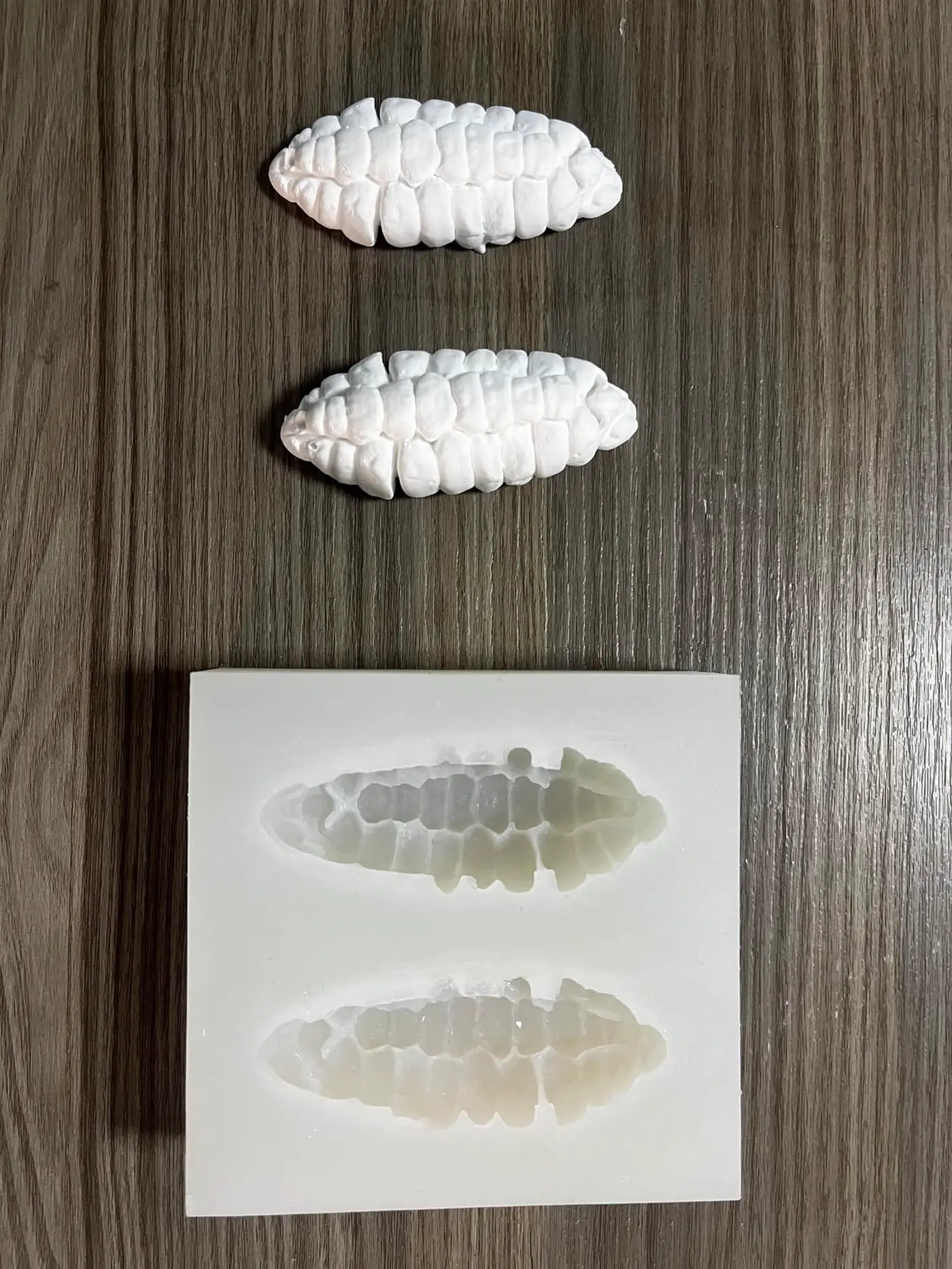
What actually ships: tray, glove, or keyed split
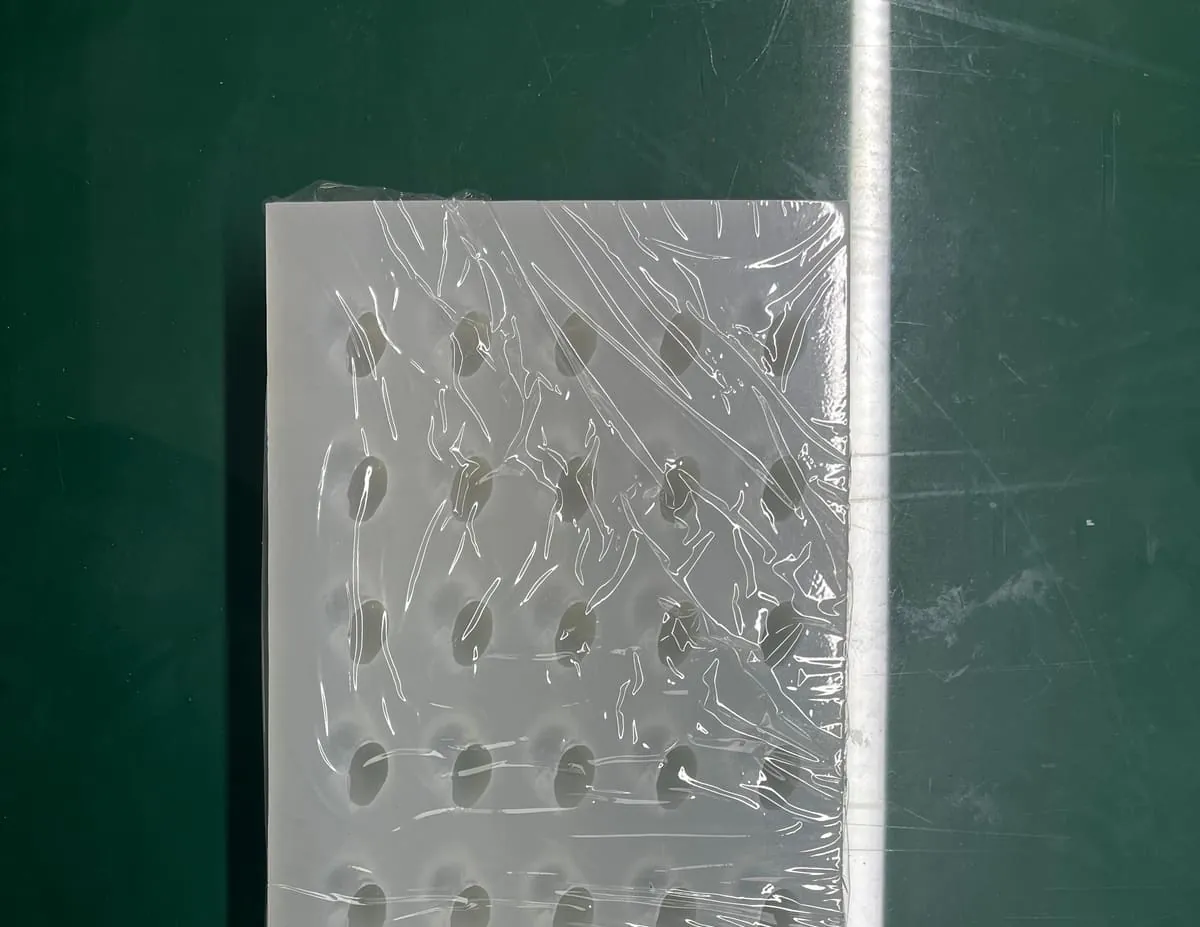
Open-back tray. Cavities face up. Operator dumps, scrapes or nozzles, chills or sets, then peels or inverts. No shut line on the show face. This is most food trays and most wax-melt boards.
One-part glove / block. You bury the master, demold, and stretch the rubber off a one-sided or lightly undercut object. Fine for a shallow craft token. Wrong for a closed bail.
Keyed two-part. Two cavity faces, a parting land, keys in the rubber or the jacket, clamps or straps for the dump. Flash is a process, not a defect, if the land sits off the logo. See registration keys before you treat flash as "the shop missed."
Jacket is a separate line. A split without a jacket will balloon on a wet pour. A jacket without a split will not save a hook you cannot peel. That fork lives on when you need a mother mold.
ISO 3302-1 M2 is a common default *drawing class* for a rubber article. It does not pick one-part or two-part, and it is not another word for precision.
Shop numbers we use on this structure call
Reference values only. Confirm material-specific limits against the supplier’s technical data and agree project acceptance criteria before production.
| Item | Typical shop value |
|---|---|
| Cavity Shore | 10A–20A platinum RTV skin; 20A–40A on a shallow food tray |
| Mix / shrink | 1:1 or 10:1 by weight; platinum about 0.1–0.3% linear |
| Loaded edge sag without jacket | about 0.5–1.5 mm |
| Prototype | 3–7 business days after CAD lock |
| Production MOQ | 20 pieces per design |
| Simple 3D | USD $50 when that CAD scope applies |
| Drawing class | ISO 3302-1 M2 as a common default — a class, not "precision" |
Where a one-part quote is the wrong PO
We would not recommend stretching a one-piece glove around a closed hook and calling the weekly tear "consumable tooling." Recast the structure.
We would not recommend a three-piece mother mold on a shallow open-back bar because a sales PDF listed "split mold" as an upgrade.
We would not recommend raising Shore to 40A so a one-piece "still works." Harder rubber grabs an undercut more, then tears the dump or the lip.
We would not recommend tin-cure for a food-contact cavity you handle as a split every dump. Name 21 CFR 177.2600 extraction on the finished article and/or LFGB / BfR XV — not a factory stamp.
A tooling charge is not unrestricted ownership of the master, the jacket, or the CAD. If you need the pattern in your custody for a recast, say so on the PO.
Worked example: 68 mm figurine asked as a glove
A craft brand sent a 68 mm resin figurine, arms folded, a 4 mm bail at the neck, about 120 pours a month. They asked for a one-piece platinum glove "like the YouTube kit." We marked the bail as a tear site and the folded arms as a lock. CAD lock used a keyed two-part with the parting land down the side seam, plus a small neck plug so the bail would not force a third plate. Jacket outside because the dump was full-volume epoxy. Prototype 3–7 business days after lock; they signed the second dump. Production at MOQ 20 of that design. Simple 3D was USD $50 because they had photos plus one caliper height, not a watertight STEP.
A second RFQ the same month: a 12-up chocolate bar, all detail on one face, flat back. We poured an open-back platinum tray. No keys. No split. Jacket optional because the sheet was small. $50 3D did not apply — they sent a millimetre STEP.
Mix-up: "one-part" means cheaper and "two-part" means professional
Purchasing bins the quotes that way because kit shelves are labeled one-part caulk versus two-part A/B. Those labels are chemistry drums, not mold structure. A two-part *mix* (1:1 or 10:1 platinum) still pours an open-back tray. A one-part *glove* can still be a two-component rubber. Ask "open-back or keyed split?" not "one-part or two-part kit?"
The other mix-up is lining a one-piece RTV glove against a steel side-action *part* tool because both PDFs say "undercut." Paying a tooling charge does not give you unrestricted ownership of master, jacket, or CAD, and it does not turn this shop into an LSR press. Steel/LSR parts leave this site.
Questions that settle the structure before rubber
- Will this dump peel as a one-piece, or do you mark SPLIT / PLUG / CORE on the 2D before rubber?
- Where does flash land — show face, logo, or sealing rim?
- How do the halves find each other, and can the operator assemble them backwards?
- If there is a core, how is it keyed against buoyancy, and how do you measure wall on the first dump?
- Who keeps the master after the tooling charge, and may the shop keep a copy for recast?
Related: undercuts and split molds, inner cores, custom figurine molds, contact.
RFQ copy-pack — open-back vs split
Paste into [email protected]:
Object: RTV mold I pour into, not an LSR/HCR part File: STEP / STL / photos with a millimetre scale Pour material and peak temperature: Back of the part: flat / two-sided / hollow Undercuts I can see (hook, bail, closed letter, hollow wall): Preferred structure: open-back / keyed split / plug / core / you mark it Jacket: yes / no / you tell us Target size or grams, first qty, monthly dumps Food-contact path: 177.2600 / LFGB / BfR XV / craft-only CAD: mold-ready STEP OR USD $50 3D if that scope applies Prototype 3–7 business days after CAD lock, then MOQ 20 per design Mark OPEN-BACK / SPLIT / PLUG / CORE on the 2D before you pour
Send the drawing and the pour. We return the Structure Decision marked on your 2D — not a blank "free quote." Phone +86 135 3006 2969. Licheng Technology Industry Park, Xinhe Blvd, Shajing, Bao'an. Shop since 2018.
FAQ
Is a two-part mold the same as a two-part silicone kit? No. Two-part *silicone* is A/B mix (1:1 or 10:1). A two-part *mold* is a keyed split. You can mix two-part platinum and still pour an open-back tray.
Can a very soft Shore replace a split? Soft rubber peels a shallow undercut. A closed hook still locks. Structure first; Shore after the peel path is honest.
Will split flash sit on a chocolate or resin face? Flash lives on the parting land. Place that land off the show face and off the logo. Keys belong in the jacket or on a fence.
Do I own the split mold after I pay tooling? A tooling charge is not unrestricted ownership of master, jacket, CAD, or the right to have a second shop recast from our files. Write who keeps what on the PO.
Can you copy a one-piece YouTube glove that already tears? We can recast it as a split or a plug. We would not copy a torn glove as production structure. Send the part or a scaled photo pack.
Custom silicone development · DFM & prototype support
CAD, drawing, photos or sample details