
Pressure-Cast Resin Into Finished RTV Tools | RUUIPON
A pressure pot on the dump shrinks bubbles in your resin, not in the RTV face. Rated vessel only; open-back limits; food no. Typical shop values. MOQ 20.
 Kyler Yang · Founder7 min read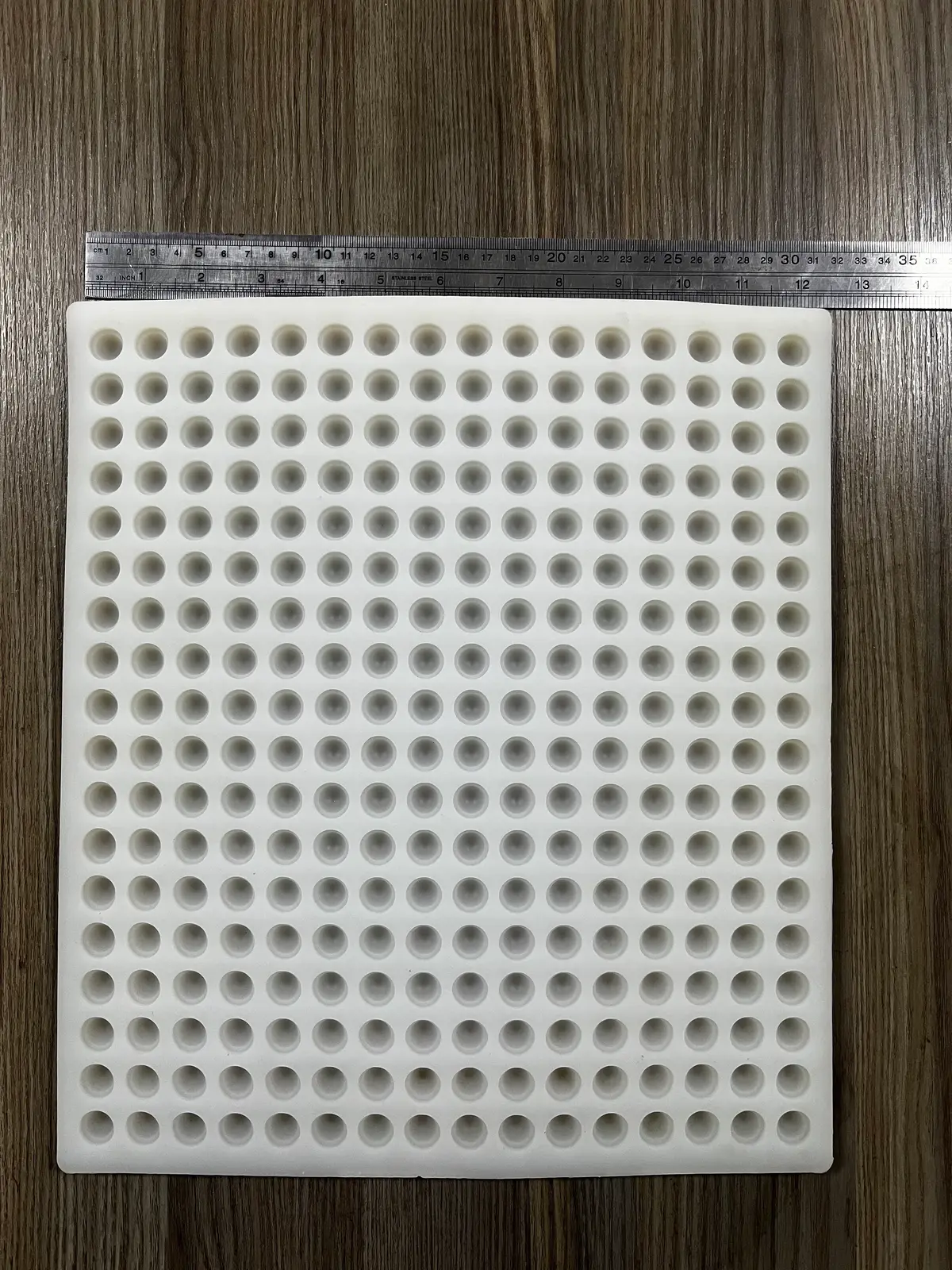
A pressure pot on a finished platinum mold shrinks leftover bubbles in *your* resin, wax, or PU while that dump gels. It does not pull air out of the RTV that already cured, and it will not erase craters that were poured into the cavity face. The tool has to live in a vessel rated for the pressure you intend — typical craft talk is often a 40–60 psi conversation on equipment built for it, never a plywood box with a hot-glue dam. Open-back trays need a lid or a jacket that actually seals. Food cavities are not pressure-cast: chocolate and gummies are not pot cycles, and we will not grease a well to "help the pot."
On this site the path is photos, sketch, or CAD, then a 3D-printed pattern, often a temporary silicone flip, a resin production mother, then batch RTV. The mother is not the pattern. Free DFM. HTV/HCR compression mold tooling is also quoted on RUUIPON.
Does not apply when you meant vacuum-degassing mixed rubber before it sees the master (different machine, different page), when the box cannot be sealed, or when you want us to pressure-cast couverture. Autoclaves for composites are a different RFQ.
What the pot can and cannot fix
Can: shrink microbubbles in a degassed or mixed resin sitting in a glossy, already-correct cavity, if the mold and jacket fit the pot and the pressure is inside the vessel rating.
Cannot: open an undercut, cool an 18 mm exotherm brick, turn a cratered RTV face into a smooth one, or convert an unrated flask into a pressure vessel.
If the empty well is pocked, the pot will print those pocks in miniature, sometimes smaller, still there. Recast the skin with proper vacuum on the *rubber*. If the empty well is glossy and the part is pocked, change *your* mix, your pot cycle, or your resin.
Open-back food trays and open-back chocolate bars are the wrong geometry for a pot unless you add a sealed lid you then have to clean. We will not design a chocolate SKU around 50 psi. Ice and gummy dumps similarly stay at atmosphere.
Jacketed gloves: the mother must take the load. Plaster bandage can crush. FRP or a printed shell with bolts is the usual craft answer. Run the RUUIPON Mold Structure Decision first: flat back → open-back (pot only with a lid). Else split / plug. Large wet dump → mother mold.
Rated vessel versus a leaking flask
A pot is a pressure vessel. Plywood, foamcore, Lego, and hot-glue dams are not. If the box flexes, the shut opens and you flash the dump into the pot, then you own a cleanup and a recast. Keys in the rubber should not be the only thing holding halves under psi — move register into the jacket when you know the SKU will live in a pot.
ISO 3302-1 M2 is a drawing class on the dump, not a psi spec. Don't write M2 as a substitute for a vessel rating.
- Food cavity? - yes -> No pot, no grease, no tin — atmospheric dump
- Food cavity? - no craft -> Empty RTV well already glossy?
- Empty RTV well already glossy? - no pocked -> Recast skin with vacuum on the rubber — pot will not erase craters
- Empty RTV well already glossy? - yes -> Mold plus jacket rated and sealable in your vessel?
- Mold plus jacket rated and sealable in your vessel? - no plywood / hot glue -> Not a pressure vessel
- Mold plus jacket rated and sealable in your vessel? - yes -> Pot the dump at a named psi inside the rating
The photo that would prove readiness: mold in the pot with the lid off, jacket bolts visible, empty well raking-light glossy, pressure gauge on the rated vessel. A catalog pot with a toy mold is not that photo.
Typical shop values
Reference values only. Confirm material-specific limits against the supplier’s technical data and agree project acceptance criteria before production.
| Item | Typical shop value |
|---|---|
| Tool rubber | platinum RTV, vacuum-degassed at mix, 1:1 or 10:1 |
| Platinum shrink | about 0.1–0.3% after full cure |
| Craft pot talk | often 40–60 psi on *rated* equipment |
| Unrated box | not a vessel — we will not |
| Food cavity | atmospheric; no pot, no grease, no tin |
| Prototype | 3–7 business days after CAD lock |
| Production MOQ | 20 pieces per design |
| Simple 3D | USD $50 when that CAD scope applies |
Food, chocolate, and why the pot stays off that cabinet
A pressure cycle on couverture is a temper wreck and a film risk. We will not grease the well "so the pot works." We will not spec tin because a hobby video showed a pot. Chocolate, gummy, ice, baking, popsicle: atmospheric dump, platinum skin, dry cavity. If you need bubble control on a food piece, that is a depositor / temper / de-bubble kettle conversation, not 50 psi on the tray.
Craft PU dice and jewelry blanks can live in a pot when the well is glossy and the jacket is rigid. Keep those skins out of the food tote. A well that saw PU is retired from food even if you never cranked the gauge.
Worked example (anonymized)
Jewelry PU in a two-part platinum ~20A block. Buyer pressure-cast in a rated pot; parts still pocked. Empty well had pinholes from an undegassed rubber pour they had made in-house. We recast the skin with vacuum on A/B, same unsanded master, no $50 CAD. Their pot cycle then printed clean. MOQ 20. We did not raise Shore and we did not tell them to crank psi on a pocked face.
One procurement mix-up
Buying a pressure pot "instead of asking the factory to vacuum the silicone." Those are opposite steps. Vacuum on mixed RTV is our default on food logos and clear resin faces. The pot is your dump. Tooling charge is not a pot, and it is not unrestricted ownership of a recast after you over-press an unrated box and blow a seam.
Stay on this page / skip this page
Stay when you pressure-cast resin, wax, or PU into a finished platinum tool in a rated vessel - and need the open-back and food limits.
Skip if you meant vacuum-degassing mixed rubber (cousin page). Skip an unrated plywood flask. Skip pressure-casting couverture. Skip finished LSR/HCR parts - a different RFQ - ask us.
We will not quote pressure-casting food. We will not quote a plywood flask in a pot. We will not crank psi to hide a cratered cavity. We will not quote plaster-bandage jackets under pot load. We will not grease a well so the pot works. We will not design a chocolate SKU around 50 psi.
Related: vacuum-cast into RTV, vacuum chamber size, contact.
What to ask when you're buying
- Is the pot for the dump or did someone skip vacuum on the rubber?
- Vessel rating and target psi — named, not guessed?
- Jacket that can take that load?
- Open-back vs split — how will it seal?
- Food vs craft — stay split?
RFQ copy-pack
Send to [email protected] · +86 135 3006 2969 · Xinhe Blvd, Shajing, Bao'an.
RUUIPON pressure-cast dump RFQ Dump: PU / epoxy / wax / food (food = no pot) Empty well: glossy / pocked (photo) Vessel: rated yes / no; target psi if known Geometry: split / open-back / glove Jacket: FRP / printed / plaster / none Qty: witness / MOQ 20 CAD: locked / $50 3D if lid or split needed
Matched next step: send empty-well photos and whether your vessel is rated. We recast pocked skins and build jackets that can live in a pot. We will not pot chocolate. Prototype 3–7 business days after CAD lock. MOQ 20 per design.
Related: pressure pot vs vacuum for molds, custom resin molds, vacuum-degassed platinum, contact.
FAQ
Can I put an open-back gummy tray in my pot to de-bubble pectin? We will not. Food dumps stay atmospheric. Pectin and pressure vessels are not a pairing we spec. No grease, no tin.
If I pot the RTV while it cures, can I skip vacuum? Compressed air stays in the mass and can grow later. Food trays get cup vacuum. Don't treat a pot as the food degas method.
Will 80 psi give a glossier dice face? Only if the well is already glossy and the vessel is rated. Extra psi on a pocked face prints smaller pocks. Recast the skin.
Does ISO 3302-1 M2 change when I pressure-cast? M2 is a drawing class on the rubber dump dimensions, not a psi spec. Don't write M2 as a substitute for a vessel rating.
Do I pay CAD to add a pot lid to an open-back? USD $50 when that CAD scope applies. A lid is geometry. Production after approval is still MOQ 20 per design.
Custom silicone development · DFM & prototype support
CAD, drawing, photos or sample details