
RTV Removable Core or Plug: Structure Call | RUUIPON
Use a removable plug when a hole or undercut will not peel. Structure Decision: open-back, split, or core — not a harder Shore. Typical shop. MOQ 20.
 Kyler Yang · Founder8 min read
A removable core or plug is how you mold a through-hole, a bottle neck, a planter drain, or a jewelry bail that would tear a one-piece glove. You are not asking for "stronger silicone." You are asking for a piece of the tool that comes out along its own axis so the RTV skin never has to stretch around a hook. Run the RUUIPON Mold Structure Decision before you type a new Shore A into the chat: flat back → open-back tray. Deep undercuts that will not peel → two-part, or a plug/core. Large wet casting → mother mold on top of that. A plug is a structure line on the RFQ, with its own draft, keys, and a note that it is not the jacket.
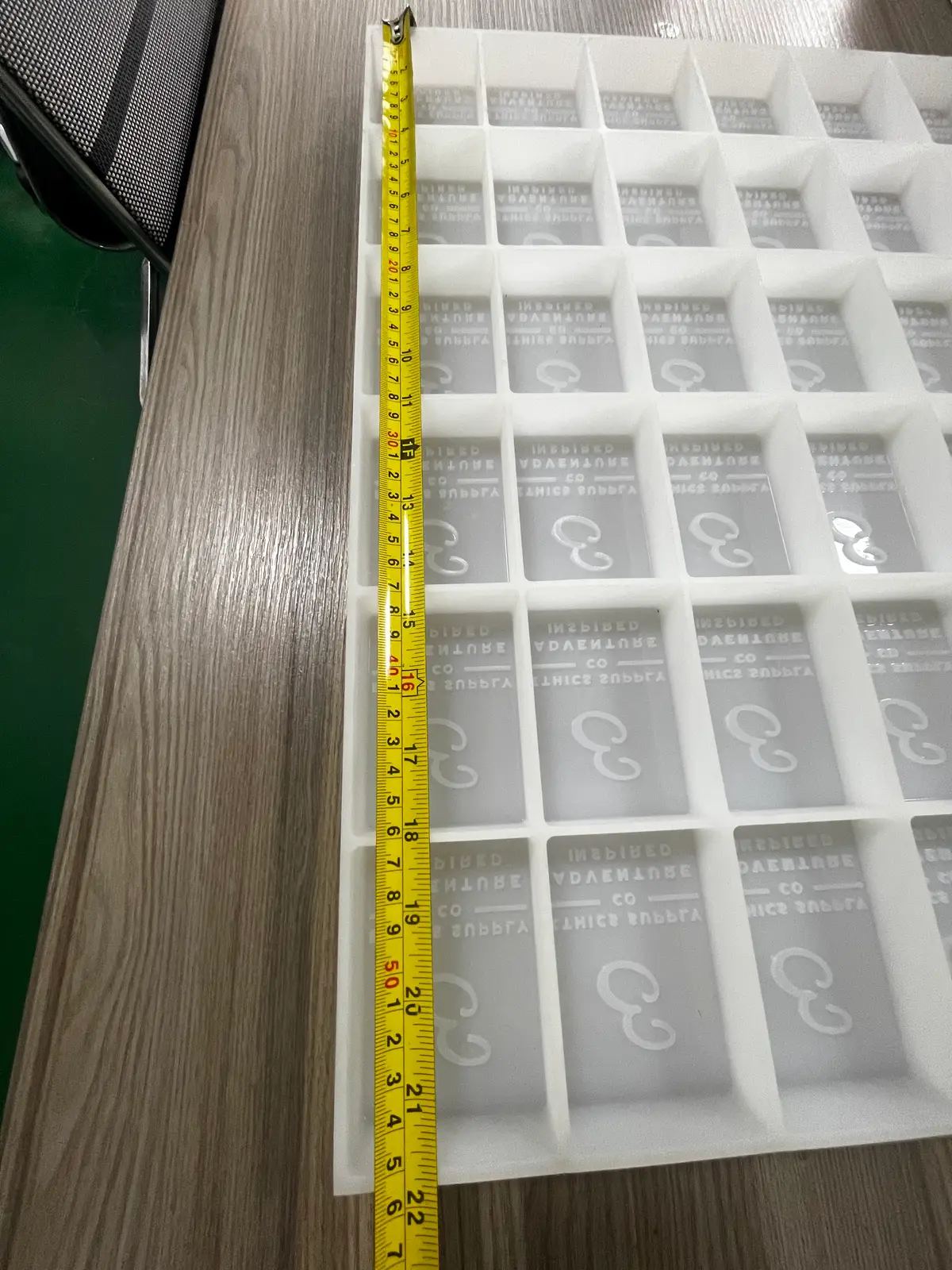
RUUIPON builds plug and inner-core platinum tools in Bao'an since 2018. Prototype is 3–7 business days after CAD lock. Production is MOQ 20 pieces per design. Simple 3D is USD $50 when that CAD scope applies. Steel cores in an LSR tool are an HTV product RFQ here. Inner-core design: inner core. One-piece vs split service: one-piece vs split.
Does not apply when the hole can be drilled after the cast (often cheaper on jewelry), when you meant a mother-mold jacket (the jacket is outside; the plug is inside the cavity), or when the "core" is an LSR cold-runner insert. Food through-holes still need a food-path platinum skin — a craft plug in a chocolate well is not a 177.2600 argument. Concrete planters and lost-wax jewelry cores are not food.
Structure Decision: when the plug is the answer
Walk the part the way the operator will demold.
- Flat back, open cavity, no hook. Open-back skin. No plug.
- Two-sided part, peel possible along one equator. Keyed two-part. Still no plug if arms and holes release.
- A feature that is a tunnel, a neck, or a bail the rubber would have to invert through. Removable plug or core, drafted along the extract axis, keyed so it returns to the same shut.
- Wet, tall, or 10A–20A with hydrostatic load. Mother mold / jacket *in addition* to the plug. Extra rubber wall is usually the wrong substitute.
A plug can be rigid (printed and sealed, CNC plastic, aluminum) or a second RTV hardness. Rigid plugs hold a round hole. Soft plugs can flex out of a mild undercut and then you argue about ovality. We would not spec a floppy 10A plug as the diameter of a bottle neck you will sell as round.
Draft on the plug is real draft, often more than people put on the outer split, because the operator is pulling a stick out of rubber. Polish the plug if the hole is a show surface. Seal an SLA plug or platinum will inhibit at the bore.
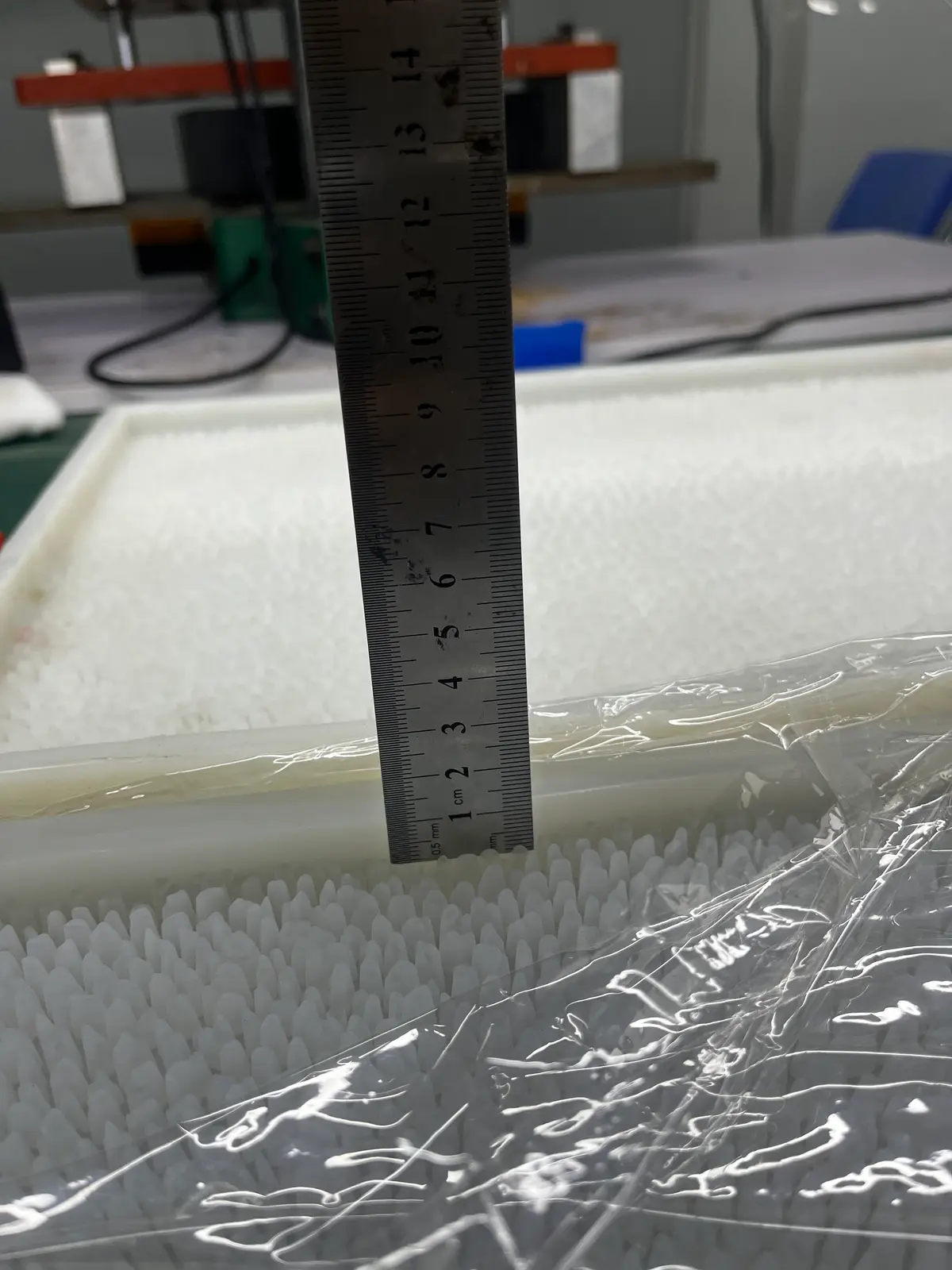
The photo that would prove a plug tool is the core on its axis next to the open skin, a witness cast with a clean bore, and paint marks that match keys. A screwdriver in a torn glove hole is the failure photo.
Plug versus split versus glove — do not stack all three by accident
Glove (open-back wrap) is cheapest in rubber grams and fails on two-sided undercuts. Split locates a parting on the equator. Plug exists for the feature that is *inside* after the split is open. Buyers ask for a two-part *and* a glove *and* three plugs because a render looked complex. Walk one demold path. Extra plugs are extra flash rings and extra tear sites.
Keys on a plug are not mushroom pips in a 10A film. Drafted bosses, enough wall, same open-vector rules as a two-part flange.
Food cavities with a plug (a filled chocolate sphere that needs a fill hole) still follow platinum + extraction docs. We would not patch a torn plug well with Sil-Poxy and keep that food path.
Typical shop values
Reference values only. Confirm material-specific limits against the supplier’s technical data and agree project acceptance criteria before production.
| Item | Typical shop value |
|---|---|
| When to plug | Tunnel / neck / bail that will not peel |
| Plug material | Sealed print, CNC plastic, or aluminum — not mystery foam |
| Skin Shore | 10A–20A common; plug is rigid |
| Mix / shrink | platinum 1:1 or 10:1; about 0.1–0.3% — compensate the master *and* the plug |
| Jacket | still required on tall wet dumps; sag often 0.5–1.5 mm without it |
| Drawing class | ISO 3302-1 M2 unless the print says otherwise |
| Prototype | 3–7 business days after CAD lock |
| Production | MOQ 20 pieces per design |
| CAD | USD $50 when modeling applies |
Common mix-up: core equals jacket equals "just raise Shore"
A jacket is the mother mold outside the skin. A core/plug is the piece that makes the hole. Raising Shore so a glove can invert through a neck usually locks the pour in the well or tears the lip. The cousin mix-up is printing a plug in raw SLA and pouring platinum against it. Inhibition at the bore looks like a sticky tunnel you cannot wash into a food pack.
Worked example (anonymized)
A resin planter, drain hole through the floor, mild undercut rim. First RFQ asked for a one-piece glove in 30A "so the hole pops." We ran Structure Decision: rim wanted a split or a stretch that would oval the drain; drain wanted a drafted rigid plug from the floor; wet dump wanted a jacket. Quoted platinum ~15A skin, CNC plastic plug with draft, resin jacket, USD $50 CAD because the STL was hollow and the hole was a surface, not a solid. Proto 3–7 business days after lock. Production MOQ 20 of that stack. Planter is not a food cavity.
We would not recommend
We would not recommend inverting a one-piece glove through a neck to avoid a plug.
We would not recommend a 10A rubber plug as a diameter spec.
We would not recommend an unsealed SLA plug on a platinum food bore.
We would not recommend treating the jacket quote as if it included cores.
- Flat back, no hook? - yes -> Open-back
- Flat back, no hook? - no -> Will silicone peel the undercut safely?
- Will silicone peel the undercut safely? - yes -> Two-part keyed split
- Will silicone peel the undercut safely? - no — tunnel/neck/bail -> Removable plug or inner core
- Removable plug or inner core -> Large wet dump?
- Two-part keyed split -> Large wet dump?
- Open-back -> Large wet dump?
- Large wet dump? - yes -> Add mother-mold jacket
- Large wet dump? - no -> CAD lock → 3–7 days → MOQ 20
- Add mother-mold jacket -> CAD lock → 3–7 days → MOQ 20
What to ask when you're buying a plug tool
- Is the hole as-molded, or cheaper to drill after the cast?
- Plug axis and draft — in the CAD, not "shop will figure it out"?
- Rigid plug or a second rubber, and who owns ovality?
- Jacket in addition to the plug?
- Food vs craft (jewelry/concrete are not food)?
Related: split mold, planters, contact.
RFQ copy-pack — plug as a structure line
Email [email protected]:
Structure Decision outcome: open-back / two-part / plug / jacket Hole or neck: as-molded vs drill after Plug: rigid CNC or sealed print — drafted in CAD Skin: platinum 1:1 or 10:1, Shore band Duty: food / resin planter / jewelry bail (jewelry is not food) CAD: locked / USD $50 if you model the plug Prototype 3–7 business days after CAD lock, then MOQ 20 / design
Send the hole axis and whether it must be as-molded. We will quote a plug, not a harder glove. Phone +86 135 3006 2969. Xinhe Blvd, Shajing, Bao'an, since 2018.
FAQ
Do I always need a removable core if there is a hole? No. Many jewelry holes are drilled after. Mold the plug when the bore is a show surface or a neck you cannot drill straight.
Is a plug the same as a mother mold? No. Jacket is outside. Plug is inside. Tall wet parts often need both.
Can the plug be 3D printed? Yes after wash, UV, and a seal if it sees platinum. Raw SLA is an inhibition risk, especially on a food bore.
Will a plug stop flash on the split? Only at the bore. Split flash is keys and shut. Do not expect one plug to replace a two-part when the equator still needs a seam.
If the plug sticks, should I raise Shore on the skin? Usually no. Add draft, a polish, or a *craft* release on the plug. Food bores: do not oil a chocolate well to hide missing draft. Recast the plug CAD.
Custom silicone development · DFM & prototype support
CAD, drawing, photos or sample details