
RTV Silicone vs Compression Silicone Molds: Which Process Fits Your Order
RTV silicone vs compression silicone molds compared for custom trays: process, MOQ, detail, cycle life, and when each path makes sense for chocolate, resin, and candy brands.
 Kyler Yang · Founder5 min read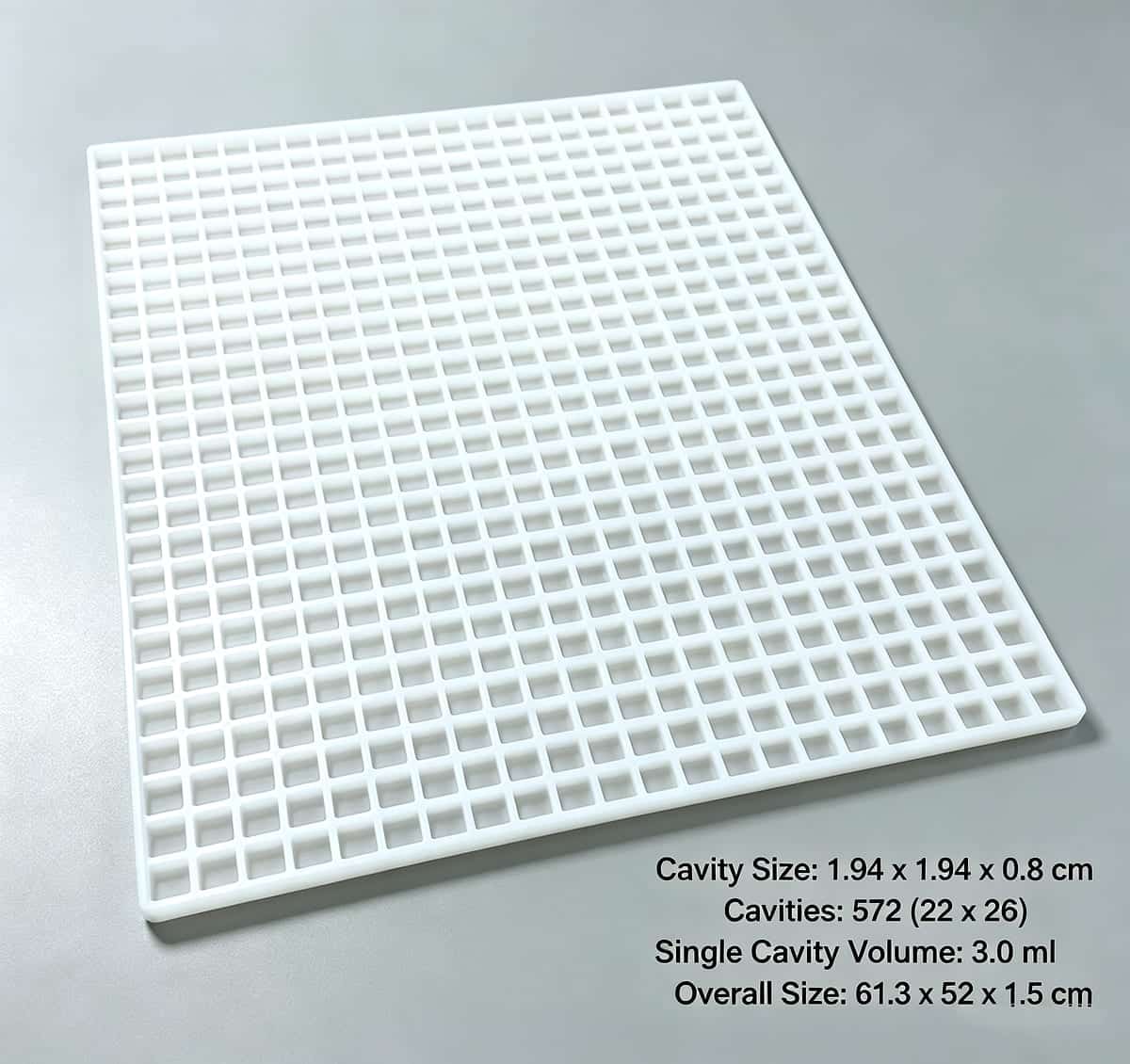
On this page
Buyers often ask for "silicone molds" without naming the process. In the factory, that usually means one of two paths: RTV (room-temperature vulcanizing) cast silicone or compression-molded silicone. They both make flexible cavities. They do not behave the same on price, MOQ, revision speed, or how long a tray survives on a busy line.
This guide is the comparison we walk through on quote calls - so you do not buy a compression quote when you needed an RTV sample set, or the reverse.
Quick Answer
Choose RTV silicone molds when: you need custom geometry fast, expect design tweaks, want MOQ around 50, and are pouring chocolate, resin, wax, soap, or short-run candy trays by hand or semi-auto.
Choose compression silicone when: the shape is frozen, you need hundreds or thousands of identical molded silicone parts (or high-volume identical trays) from heated steel tooling, and revision cost must be amortized over a long SKU life.
RUUIPON is built around the RTV path: platinum-cure production molds, vacuum degassing, prototype in 3-7 days, quotes in about 24 hours, MOQ 50.
How Each Process Works
RTV silicone (cast molds)
- Make or finish a master (CNC, 3D print, or sample).
- Mix platinum (or tin) RTV silicone, vacuum degas, pour around the master.
- Cure at or near room temperature (sometimes mild heat assist).
- Demold, trim, inspect cavities, ship as flexible trays or blocks.
No heated press is required to form each mold. That is why small custom runs stay affordable and revisable. Process detail: vacuum degassing and platinum vs tin cure.
Compression silicone
- Cut a steel (or aluminum) mold cavity for the silicone part itself.
- Place a measured silicone charge into the heated tool.
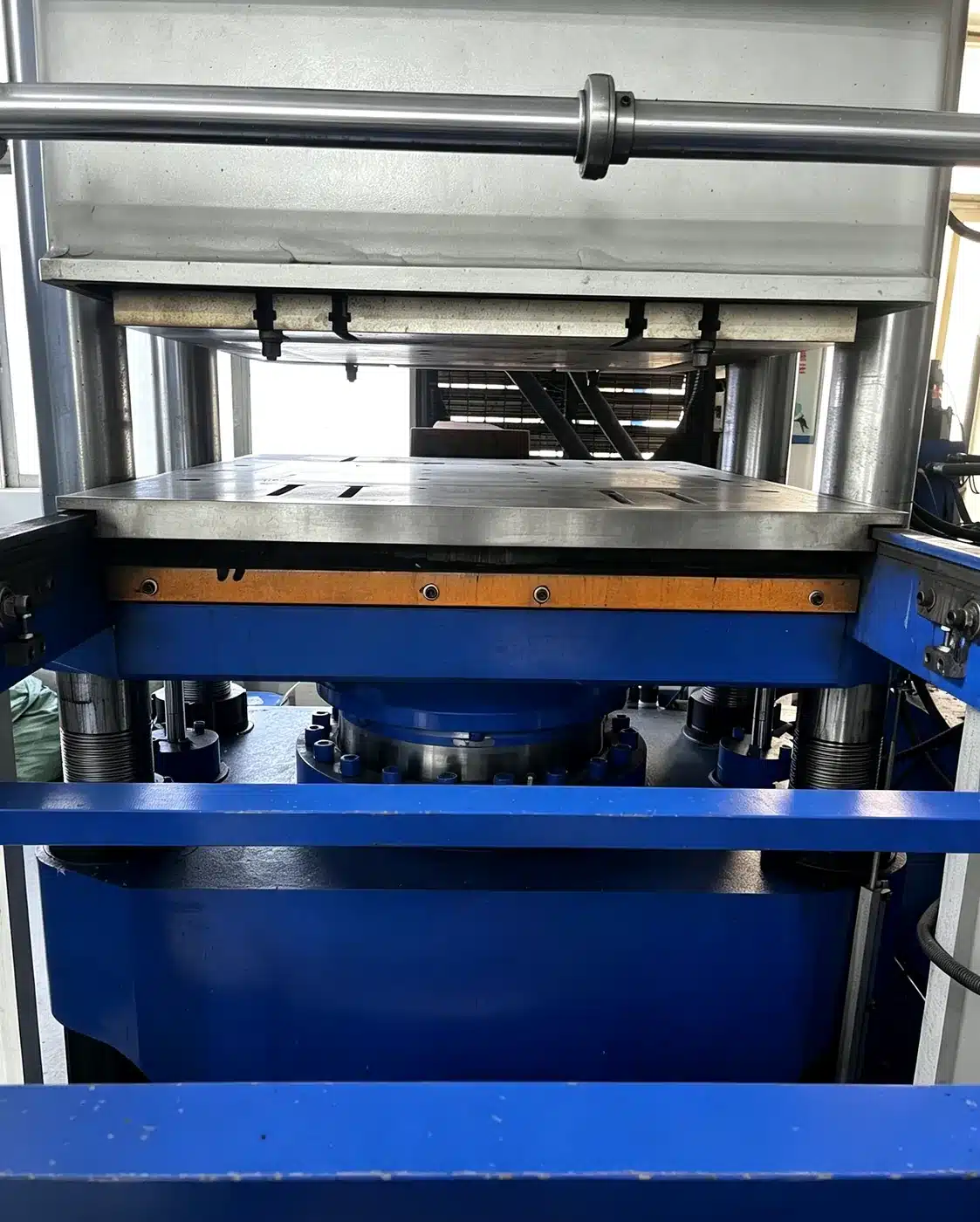
- Close the press; heat + pressure vulcanize the part.
- Open, demold, flash trim, inspect.
You are paying for metal tooling first, then for press time per shot. That path shines when you need many identical silicone articles - seals, buttons, consumer parts - or when a factory has already committed to a fixed tray geometry at high annual volume.
Cost, MOQ & Lead Time
| Factor | RTV cast molds | Compression silicone |
|---|---|---|
| Upfront tooling | Master + pour fixtures (lower) | Heated metal mold (higher NRE) |
| Typical first MOQ | 50 molds (RUUIPON) | Often hundreds-thousands of parts |
| Prototype speed | 3-7 days common | Weeks after steel is cut |
| Design change | Remake silicone shell - days | Re-machine steel - expensive |
| Unit cost at low volume | Predictable at MOQ 50 | NRE dominates until volume is high |
If your P&L still has "might change logo depth next month," RTV is the rational spend. Compression only looks cheap after the metal tool is paid for and the shape is locked. For line-item quoting on RTV runs, see our custom silicone mold cost guide.
Detail, Tolerance & Cycle Life
- Detail transfer: RTV with proper degassing copies fine logos and textures for chocolate, resin, and candle work. Compression also holds detail well - but only after the steel cavity is polished and proven.
- Dimensional control: Both need shrink planning. RTV trays flex in use; plan finished cast size with tolerance and shrinkage in mind. Compression parts from a press are more "part-like" (gaskets, buttons) than "tray-like."
- Cycle life as a casting mold: Food-grade platinum RTV trays commonly deliver thousands of careful pours when washed and stored correctly. Compression-made silicone parts are often the end product, not the mold - do not mix those two use cases when comparing quotes.
When to Choose Which
| Your situation | Better fit |
|---|---|
| Etsy / Shopify launch, unknown sell-through | RTV |
| Chocolate, resin, candle, soap custom trays | RTV |
| Need 50 matched molds for a season | RTV |
| Shape changes every quarter | RTV |
| High-volume identical silicone consumer parts | Compression |
| Frozen geometry, press already in the BOM | Compression |
| Need bridge tooling before any press investment | RTV first |
Category examples on RTV: chocolate molds, resin molds, gummy molds, candle molds.
What RUUIPON Runs (and What We Do Not)
We manufacture custom RTV silicone molds - platinum-cure for food and most craft projects, vacuum-degassed, inspected with test casts. MOQ 50 keeps capital light while you validate a shape.
We do not position as a compression-molding press house for high-volume silicone parts. If your RFQ is clearly compression (steel tool + press + 5,000 buttons), we will say so early so you are not comparing unlike quotes. If your RFQ is custom casting trays for chocolate or resin, RTV is the path we quote.
Email [email protected] or WhatsApp +86 135 3006 2969 with shape, quantity, and whether you need a mold (to cast into) or a molded silicone part (the product itself). That one distinction prevents most process mix-ups.
Frequently Asked Questions
Is RTV the same as liquid silicone rubber (LSR) injection?
No. LSR injection uses a different machine and usually a cold-runner steel tool. RTV is poured/cast around a master. Compression is a heated press with a preform. Three different factories in practice.
Can compression make the same chocolate tray as RTV?
Sometimes, after steel tooling. For custom seasonal shapes at MOQ 50, RTV is almost always faster and cheaper to first usable set.
Which has better food contact for molds?
Both can use food-grade compounds. For casting molds we run platinum RTV with documentation suited to the market. Ask for the grade on the quote - do not assume "silicone = food safe" without a cert path.
Which lasts longer?
A compression tool (the steel) can last for years of shots. An RTV tray is a consumable tool with finite pour life. Compare cost per season, not only invoice line one.
Can I start RTV then move to compression later?
Yes for some products - use RTV to freeze geometry and market fit, then decide if press tooling is worth NRE. Many craft and DTC brands never leave RTV; they duplicate trays instead.
What should I put on my RFQ?
"Need RTV cast silicone molds, MOQ 50, platinum food-grade if food contact, cavity count, target Shore A if known." That wording stops factories from quoting compression by default.
Ready to order custom silicone molds?
Free quote for OEM/ODM projects. MOQ 20 · Prototype 3-7 days · FDA/LFGB available.