
Scale Division for 10:1 Platinum RTV Mixes | RUUIPON
10:1 RTV needs a scale that resolves 0.1 g on B, or a larger A shot. A 1 g round-off is off-ratio tack. Typical shop values. MOQ 20, $50 CAD.
 Kyler Yang · Founder8 min read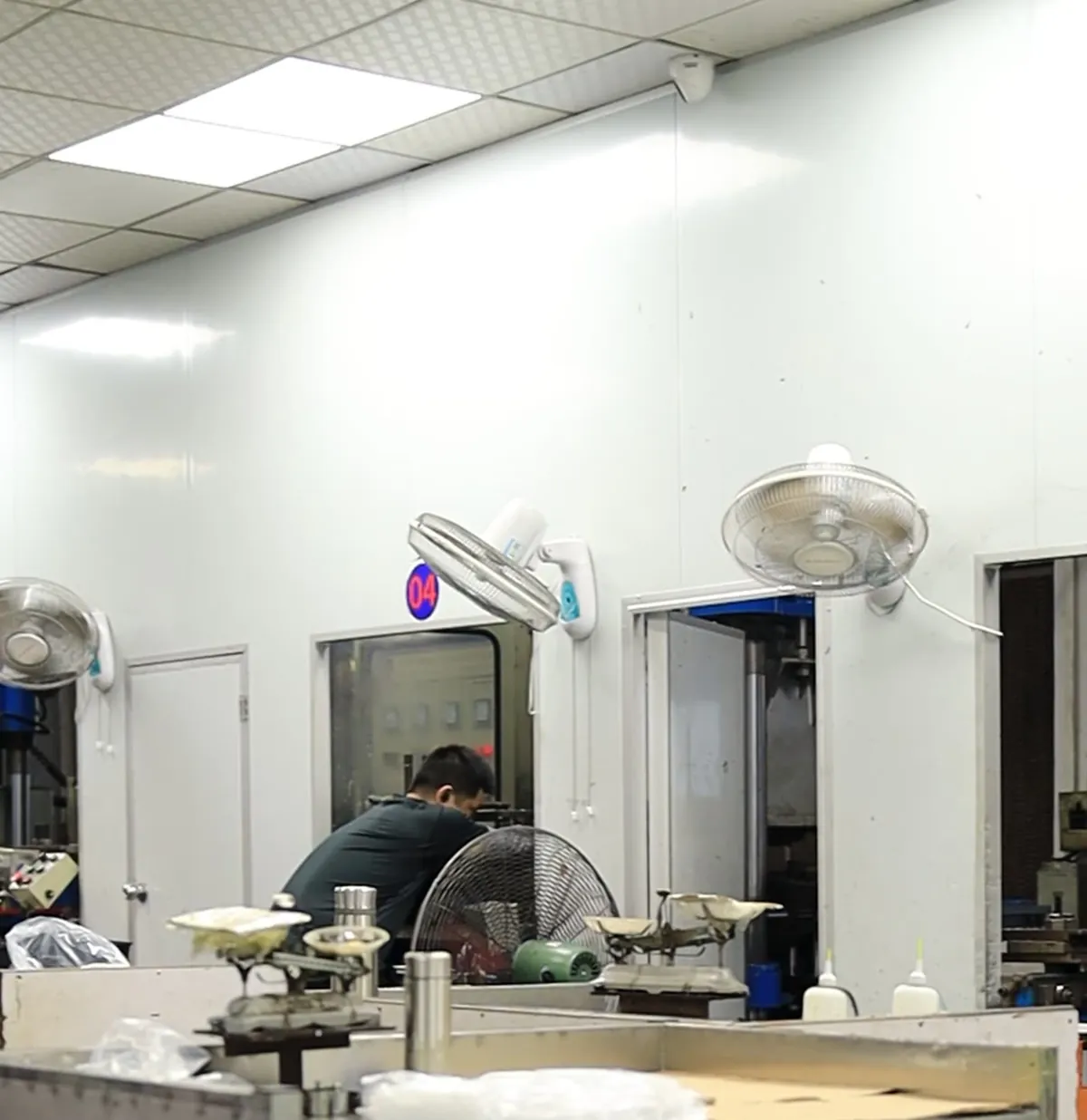
10:1 platinum is 100 g A with 10 g B, by weight, on a scale that actually resolves the B part. A kitchen scale that jumps 1 g turns 10 g B into 9 or 11, which is a 10% ratio error before you have stirred. On a 30 g A jewelry shot, B is 3 g; a 1 g round-off is a third of the catalyst. The face stays wet or the block goes brittle. 1:1 grades forgive a cheap scale longer because A and B are the same mass. They still want grams, not cups. If your flask only needs 40 g total of a 10:1 grade, either use d=0.1 g (or better) or batch a larger shot and accept heel, or switch the RFQ to a 1:1 grade we will actually mix.
RUUIPON weighs A/B in Bao'an, Xinhe Blvd, Shajing, since 2018. Prototype is 3–7 business days after CAD lock. Production is MOQ 20 pieces per design. Simple 3D is USD $50 when that CAD scope applies. Platinum shrink after a full cure is typically about 0.1–0.3%. LSR/HCR *parts* are not cup-weighed: an HTV product RFQ here. Cups vs weight: mix-ratio mistakes.
Does not apply when you are only dumping chocolate into a finished tray. It also does not apply to a 5 kg 1:1 block where even a 1 g scale is fine. Tin 10:1 craft kits still need a real scale; we still would not spec them for food.
Tare, d, and the smallest B you will trust
Read the scale's d (division). d=1 g is a 1 kg kitchen unit. d=0.1 g is a jeweler's unit. d=0.01 g is how you weigh 2 g B without arguing. Tare the cup. Add A. Tare or note. Add B. Do not pour B "until it looks pink" on a 10:1 drum that is not color-indicating.
Mass of the cup matters if you tare wrong. A 12 g cup tared as 10 g throws a small 10:1 shot immediately. Write empty-cup grams on the traveler for recasts.
- 10:1 and B under about 5 g? - yes -> Use d=0.1 g or mix a larger A
- 10:1 and B under about 5 g? - no, 1:1 or large B -> d=1 g may suffice
- Use d=0.1 g or mix a larger A -> Tare cup, weigh A, weigh B
- d=1 g may suffice -> Tare cup, weigh A, weigh B
- Tare cup, weigh A, weigh B -> Fold, vacuum, pour
- Fold, vacuum, pour -> Face tacky, back cured?
- Face tacky, back cured? - yes, ratio suspect -> Recast with a real scale — do not add extra B
- Face tacky, back cured? - yes, master side only -> Inhibition path
The photo that would prove a scale call: scale display showing 0.1 g, cup with A, then B, traveler with both grams. A kit photo with "easy mix" does not prove d.
ISO 3302-1 M2 is a dump class. It is not a scale spec. CAD lock does not wait on your kitchen scale, but a self-pour RFQ should name d.
Vacuum does not fix ratio. A perfect degas of a 12:1 accident is still a 12:1 accident.
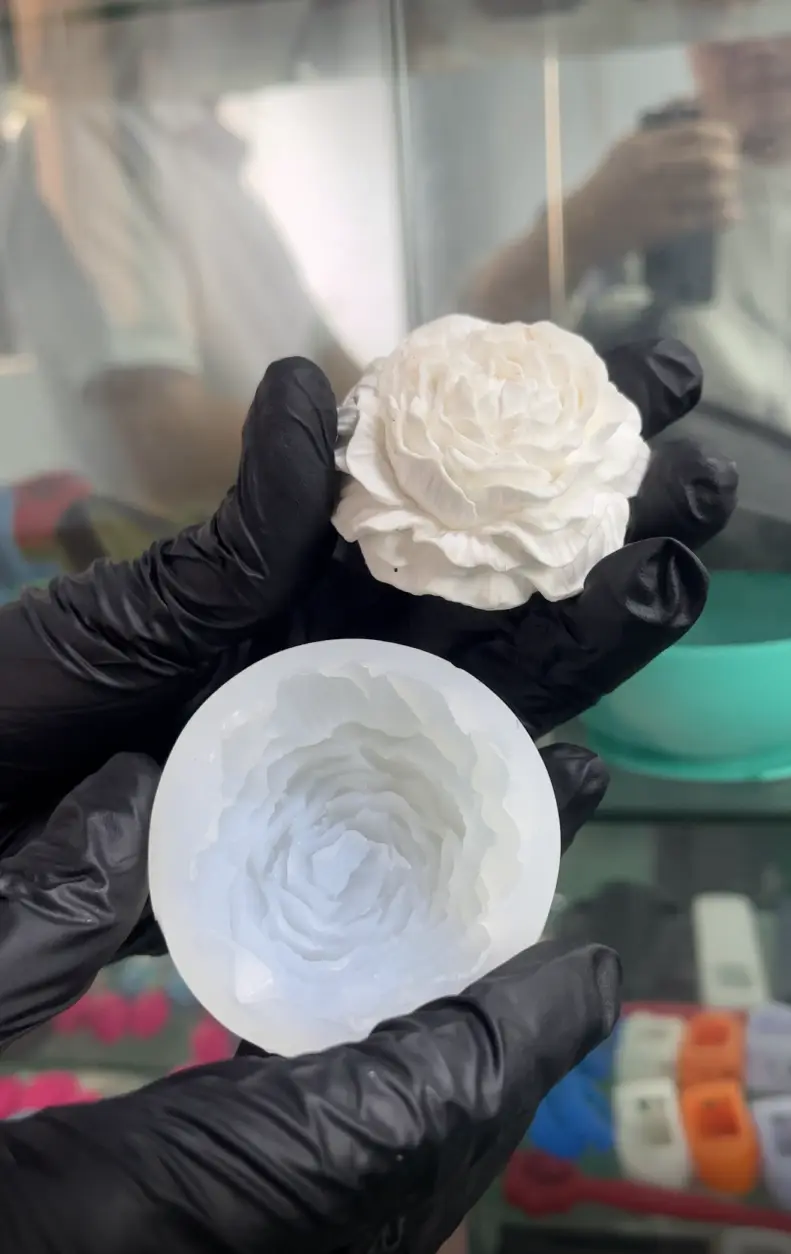
Failure: tacky 10:1 jewelry skin, "the kit is bad"
Symptom: small open-back still greasy at 24 h; slug in a large cup from the same kit cures.
Cause: B rounded off; cup not tared; pigment counted as free.
Confirm: weigh a 20 g 10:1 slug on d=0.1 g. If that slug cures, the production shot was the scale.
Fix: recast on a real scale. Do not heat-gun the face. Do not add a "drop more B."
Pigment paste is mass. If you add 2 g of color to 10 g B, you changed 10:1. Plan colorant in the TDS, or color the dump.
Typical shop values
Reference values only. Confirm material-specific limits against the supplier’s technical data and agree project acceptance criteria before production.
| Item | Typical shop value |
|---|---|
| Mix / shrink | 1:1 or 10:1 by weight; platinum about 0.1–0.3% |
| Scale for B under ~5 g | d=0.1 g or better |
| Cavity Shore | 10A–20A skins; 20A–40A trays |
| Heel | weigh it — see the heel page |
| Prototype | 3–7 business days after CAD lock |
| Production MOQ | 20 pieces per design |
| Simple 3D | USD $50 when that CAD scope applies |
| Drawing class | ISO 3302-1 M2 as a common default |
Scale habits we would not trust
We would not recommend volume cups on 10:1, even if A and B look similar.
We would not recommend a 1 g scale for a 30 g 10:1 jewelry shot.
We would not recommend "a little extra B so it cures in winter."
We would not recommend mixing food 10:1 on a scale that last weighed sulfur clay.
A tooling charge is not unrestricted ownership of our weigh SOP. Ask for the grade if you recast.
Loaded-tray jackets and sag (~0.5–1.5 mm) are still real. A perfect ratio on a floppy sheet still dishes. Do not let scale talk hide a missing jacket.
If you will mix at your bench, put scale d on the RFQ so we do not quote a 10:1 grade you cannot weigh. We would rather pour a 1:1 food tray here than watch a 10:1 kit fail on a kitchen scale and come back as "bad silicone."
Worked example: 35 g 10:1 charm, d=1 g scale
Charm master, 35 g mixed 10:1, buyer kitchen scale d=1 g. B displayed 3 g or 4 g depending on the pour. Face stayed wet. Recast at RUUIPON on d=0.1 g, vacuum, full cure before resin. Prototype 3–7 business days after CAD lock. $50 CAD applied (photos). Production MOQ 20 of that design. Related: jewelry resin.
Battery-low scales drift d without telling you. If B grams jump around on the same pour, change the battery before you change the grade. A drafty bench next to a loading door also moves a 0.01 g unit; park 10:1 weighing away from the vacuum pump exhaust. We would not certify a buyer's scale. We will ask for d on a self-pour RFQ so the grade and the instrument match.
A 10:1 drum with a color-indicating B still wants the scale. Color is a mix-completeness hint, not a mass. Streaks of unmixed B are a fold problem, which is different from 9 g B instead of 10 g. Fix both. Food 10:1 on a dirty scale platter that last held tin clay is a contamination-plus-ratio stack — see the cup page and this page together, not as a single "sticky" complaint. Two slugs: new cup on a real scale versus the production cup on the kitchen scale.
Mix-up: 10:1 means ten cups to one cup
10:1 is weight. Specific gravity of A and B is often close and still not an excuse. The other mix-up is taring with the stick in the cup, then stirring with a second stick that adds mass you never weighed.
What to ask when you're buying a 10:1 job
- 1:1 or 10:1, and scale d at the mix bench?
- Smallest shot mass, and heel plan?
- Who mixes — RUUIPON or you?
- Food vs craft?
- After CAD lock, 3–7 business days, then MOQ 20 / design?
Related: how much silicone, contact.
RFQ copy-pack — scale d on 10:1
Paste into [email protected]:
Object: platinum RTV (not an LSR/HCR part) Grade: 1:1 or 10:1 if specified Who mixes; scale d if you mix Shot estimate or flask mm Dump chemistry File: STEP / STL / photos with a millimetre scale CAD: mold-ready STEP OR USD $50 3D if that scope applies Prototype 3–7 business days after CAD lock, then MOQ 20 per design
Send scale d if you mix 10:1, not "we have a kitchen scale." We weigh B so it exists — not a blank free quote. Phone +86 135 3006 2969. Licheng Technology Industry Park, Xinhe Blvd, Shajing, Bao'an. Shop since 2018.
FAQ
What scale do I need for 10:1 RTV? One that resolves 0.1 g when B is small, or mix a larger A so B is several grams on a coarser scale.
Can I mix 10:1 by volume in equal-looking bottles? We would not. Weight only.
Why did a tiny 10:1 mold stay tacky when a big block from the same kit was fine? The tiny B part was a rounding error. The block had enough B to survive d=1 g.
Does 1:1 need d=0.1 g? Less often. Still grams, still tare. 1:1 is more forgiving, not cup-based.
Will you switch me to 1:1 so my kitchen scale works? Sometimes, if the grade family still fits the dump. Ask on the RFQ. MOQ 20 per design after CAD lock, 3–7 business days.
Custom silicone development · DFM & prototype support
CAD, drawing, photos or sample details