
RTV Silicone Mold Maintenance: Clean, Store, Recast
Maintain RTV molds with chemistry that does not swell the face, unstressed dark storage, and recast triggers at tears - not steel oil.
 Kyler Yang · Founder8 min read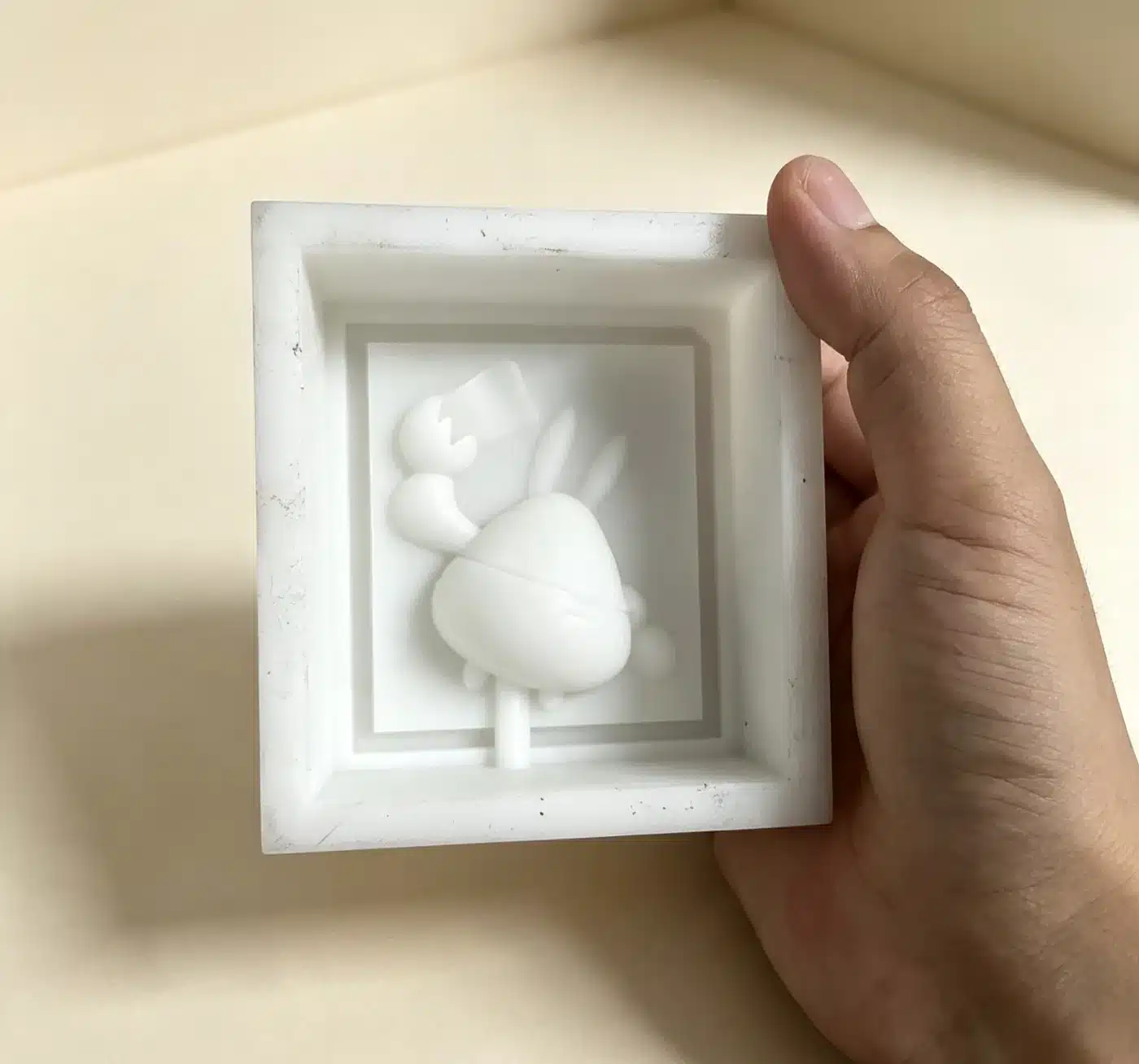
If you are maintaining a custom RTV silicone mold, you are doing daily face care plus a scheduled look at the jacket / mother-mold support shell - not a laminated steel PM slogan. Daily work keeps sugar, pectin, and cocoa butter off the split. Scheduled work photographs the pour face, checks support-shell rock, and recasts the skin against the living resin production mother before the weekend scrap spike.
On this site the path is photos, sketch, or CAD, then a 3D-printed pattern, often a temporary silicone flip, a resin production mother, then batch RTV. The mother is not the pattern. Free DFM. HTV/HCR compression mold tooling is also quoted on RUUIPON.
The object on this page
Daily (or each shift): clean the split of crumbs; look at flash at the named split (growing flash is a recast or support-shell work order); confirm you are on the mix traveler; keep cavity IDs with the dumps. Scheduled: inspect tears at logos, support-shell rock, sticky-face check; do not brighten a specified grain with abrasive. Recast triggers: tear to logo, tin size drift, warped shell. If PM only happens after a customer reject, you do not have PM.
Use cleaners the RTV and the dump can stand. Food-contact tools have a shorter list. Write the allowed chemistry on the traveler. Do not sand a textured cavity to clean it. Do not round a split with a steel scraper. Release sprays, if used at all, are a process input. They are contamination on certified lots.
Who is allowed to recast should be named. A press-side repair with kitchen silicone at 2 a.m. is how a split becomes a ridge. Crumb removal is operator work. Recast is pour-shop work against the unsanded living mother, followed by a mini first-dump pack. If the dump changed to a hotter or more aggressive recipe after SOP, reopen the PM plan.
Common mix-up
A lot of RFQs treat rust preventive as universal mold care. In the shop that usually means you have swollen a food cavity. Platinum RTV: clean of cure poisons, store unstressed, cool, dark, away from sulfur. Tin-cure: assume dimensional drift with age. Neither type wants the steel-tool oil ritual. Water-out-of-circuits checklists do not apply - there are no circuits. If your email still says "master, box, keys, jacket" as the buy, you are listing shop furniture, not the object. Catalog copy that says cut a resin master skips the pattern-vs-mother split. We will not quote that sentence.
Typical shop values
Reference values only. Confirm material-specific limits against the supplier’s technical data and agree project acceptance criteria before production.
| Item | Typical shop value |
|---|---|
| Cavity Shore | 10A-20A platinum skin, jacket / mother-mold support shell behind it |
| Mix (at recast) | Platinum 1:1 or 10:1 by grade; vacuum degas until the foam collapses |
| Platinum shrink after full cure | About 0.1-0.3%; tin assumes drift with age |
| Stacked-shell edge sag | About 0.5-1.5 mm |
| Outer-row gummy vs center if the shell crept | Edge often 3-6% heavy |
| Production look cadence | Tied to flash width / dump temperature, not a brochure shot count |
| Start-up after storage | Each cavity vs retain at 23 C; not mixed into sale cartons |
| DFM / CAD / proto / MOQ | Free DFM; USD 50 when we edit 3D; 3-7 days after a new CAD lock; 20 pcs/design |
Worked example
A 24-cavity gummy, 22 mm, platinum skin, fiberglass support shell, a few thousand dumps a month. PM got real when they stopped stacking shells in a warm packing room, wrote a food-safe cleaner (no sink powder), and recast two torn ears against the still-registered living mother instead of running mixed bags. Incoming pour-face photos made the recast argument short. Oil from a steel-tool crib was the contamination that started the sticky-face week.
Stay on this page / skip this page
Stay when you need daily plus scheduled care for a poured RTV cavity.
Skip steel LSR/HCR land, heater, and water PM - finished parts are an HTV product or mold RFQ here, or a different LSR-tool RFQ - ask us. A 15-dump tin art glove can skip a production traveler if you write the kill date. Geometry can override cadence: hot pectin on a 24-cavity bear needs a shorter look than a room-temperature resin jewelry glove.
We will not oil RTV like a steel plate. We will not recommend rust preventive, sink powder, or a 2 a.m. kitchen-silicone repair on a food cavity. We will not sand a textured face to clean it. We will not mix start-up dumps after storage into sale cartons. We will not cut a resin master as the written shop path.
Related: extend mold life, food-grade molds, contact.
What to send
- Current cleaner and storage photos
- Tear / pour-face pictures vs incoming
- Whether the living mother still exists and is unsanded
- Dump chemistry and temperature if it changed after SOP
- Food-contact: start-up dumps after storage not mixed into sale cartons
Send the pack to [email protected] or contact.
- Daily: split clean, flash look, cavity IDs -> Scheduled: pour-face photos vs incoming, shell rock, sticky check
- Scheduled: pour-face photos vs incoming, shell rock, sticky check -> Trigger?
- Trigger? - tear -> Recast while living mother registers
- Trigger? - shell warp -> New jacket / mother-mold support shell; do not tape
- Trigger? - wrong cleaner / oil -> Stop chemistry; start-up dumps not for sale
- Trigger? - tin size drift -> Platinum recast or retire
FAQ
How do I set a PM cadence without a fake dump count? Tie it to observations: flash width, support-shell rock, dump temperature. Start conservative after freeze, then stretch only if those stay still. We do not sell a cycle warranty.
Can I use the same rust preventive I use on steel tools? Usually no. Many preventives contaminate food-contact dumps and swell RTV. Prefer dry, closed, dark, unstressed storage.
What should a start-up dump after storage include? Support-shell rock, pour-face look, then dumps from each cavity compared to the retain for flash, appearance, and size at 23 C. If a cavity is wild, stop; do not blend it.
Is ultrasonic cleaning safe on textured RTV? Sometimes, if chemistry does not swell the face or round the grain. Test on a non-show pocket first.
Do I maintain a printed-pattern prototype the same way? You maintain it as a short-life bridge. The print is a pattern, not the living mother. Expect to recast against a mother once the pocket is locked. Clean and store the support shell.
Custom silicone development · DFM & prototype support
CAD, drawing, photos or sample details