
Soft Candy Mold Production Beyond One Cavity
Soft candy molds cover gummies, jellies, and pectin cups. Starch moguls and platinum RTV trays are different deposit-set-dump systems, not one cavity.
 Kyler Yang · Founder8 min read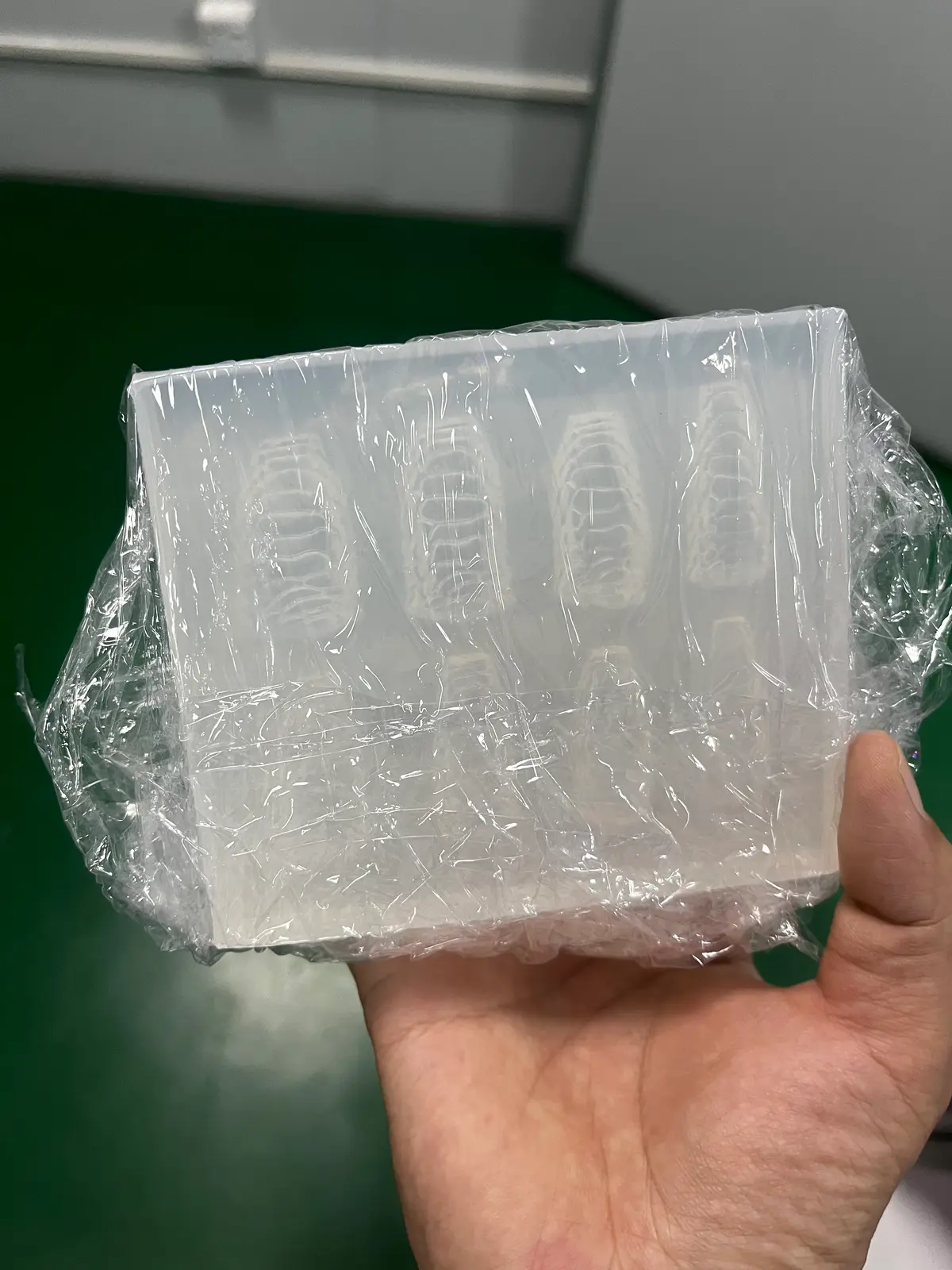
If you are producing molds for soft candy, you are tooling deposit, set, and dump for gummies, jellies, pectin cups, or other gelled sweets - not one cavity style. A starch mogul bear, a platinum RTV pectin fruit, and a rigid jelly cup are three systems. Gelatin and pectin disagree at dump. Vitamin SKUs add piece-weight. An RFQ that just says soft candy mold without a gel and a motion will get a kitchen heart tray.

On this site the path is photos, sketch, or CAD, then a 3D-printed pattern, often a temporary silicone flip, a resin production mother, then batch RTV. The mother is not the pattern. Free DFM. HTV/HCR compression mold tooling is also quoted on RUUIPON.
The object on this page
Gummy in plant talk often means a chewy gelatin or hybrid piece with a 3D mascot - deep cavities, ears, logos, dump is the hard part. Jelly may be a shallower cup. Pectin pieces can be stickier and more temperature-sensitive at dump; high polish a gelatin bear loved can smear pectin. Foam, marshmallow, and aerated masses compress and rebound - say so; a bear tray is the wrong analog.
Industrial soft candy still runs heavily on starch moguls: print, deposit, set in starch, demold, recycle starch. Production of that mold is the stamp, not an RTV pour. Platinum RTV tray production (pattern, often a flip, resin production mother, batch RTV, support shell, post-cure) shows up when starch dust is unwelcome, logos or undercuts exceed what starch prints, runs are short and branded, or the plant already owns a plate depositor. Mixed production is normal. Do not drop an RTV tray onto a mogul line without changing deposit and dump. If your email still says "master, box, keys, jacket" as the buy, you are listing shop furniture, not the object.
Common mix-up
A lot of RFQs treat gelatin gummies and pectin jellies as the same first article. In the shop that usually means you have frozen a glossy gelatin dump and you will smear pectin at scale. Prove both. Volume and dump have to work for the stickier case. Water-fill maps catch mother scatter; slurry trials catch physics. Set is cooling; tray thermal mass is second-order - do not sell a compound as a cooker. Catalog copy that says cut a resin master skips the pattern-vs-mother split. We will not quote that sentence.
Typical shop values
Reference values only. Confirm material-specific limits against the supplier’s technical data and agree project acceptance criteria before production.
| Item | Typical shop value |
|---|---|
| Path (RTV tray) | Photos / sketch / CAD, 3D-printed pattern, often a flip, resin production mother, batch RTV |
| Piece-weight target | 4.0 g (cavity volume x measured slurry density) |
| Outer-row vs center | 3-6% heavy if the loaded tray sags |
| Loaded-tray edge sag | 0.5-1.5 mm without a flat support shell |
| Cavity Shore | 10A-20A platinum RTV skin + jacket / mother-mold support shell |
| Platinum linear shrink | 0.1-0.3% |
| Mix | Platinum 1:1 or 10:1; pigment identity per color |
| Worst-case dump | Prove the stickier gel on the same envelope |
| DFM / CAD / proto / MOQ | Free DFM; USD 50 when we edit 3D; 3-7 days after CAD lock; 20 pcs/design |
Worked example
A pectin fruit 24-cavity RTV tray, 12 mm dump depth, 2.3 ml, Shore 10A-20A in a resin support shell, proven after gelatin bears already ran on a 40-cavity 18 mm invert tray. Same envelope, different face, stickier dump, more draft. After CAD lock: pattern, often a flip, living mother, batch RTV. Acid or color staining the next farm is wash and crevice design; a plate that smells is article sensory and a 177.2600 / LFGB conversation - split those tickets.
Stay on this page / skip this page
Stay when you need a map of forming systems for soft candy before anyone pours a heart.
Skip aerated or hollow shell candies until you tell us fill geometry - a dense gummy CAD will lie. Kitchen hearts belong on the bench, not the depositor. LSR injection of silicone parts is a different RFQ - ask us. If Halloween is six weeks out and the envelope was not frozen in January, you are buying panic, not a face set.
We will not recommend one first article for gelatin and pectin. We will not drop an RTV tray onto a mogul line without changing deposit and dump. We will not sell a compound as a cooker. We will not cut a resin master as the written shop path.
Related: what gummy molds are, gummy trays, contact.
What to send
- Named gel and dump motion
- Target grams / ml, inclusions, aerated yes/no
- Nozzle pitch, tray envelope, spare count
- Starch vs RTV vs PC, and why
- Food-contact method on the article that touches candy
- One-up in the stickier slurry before the array
Send the pack to [email protected] or contact.
- Named gel - pectin / sticky dump -> More draft; prove on one-up
- Named gel - simple jelly cup -> PC knock
- Named gel - aerated -> Tell us - bear tray is the wrong analog
- RTV or starch if drafted + dust OK -> Same envelope, different face if dump disagrees
- More draft; prove on one-up -> Same envelope, different face if dump disagrees
FAQ
Can one RTV production tray run gelatin gummies and pectin jellies? If volume and dump work for the stickier case, yes. Prove both. Do not assume a gelatin first article covers pectin smear.
Is a mogul stamp produced like an RTV living mother? It is metalworking for a starch print, not a platinum pour. Different shop skills. Qualify the hall that matches the process.
Do aerated soft candies need different cavities? They need fill geometry that does not trap foam and a dump that does not collapse the piece. Tell us it is aerated. A dense gummy CAD will lie.
How do we keep raspberry trays from staining lemon SKUs? Wash design, no crevices, maybe dedicated trays. A tray that stains is a rubber sensory/migration issue - 177.2600 / LFGB - a different ticket.
Should kitchen heart trays sit in the production fleet? For bench work, maybe. For a depositor, no. Production trays copy pitch and dump. Hearts can still be the cavity shape inside that tray.
Custom silicone development · DFM & prototype support
CAD, drawing, photos or sample details