
Talc vs Mold Soap on RTV Craft Cavity Tools | RUUIPON
Talc is a dry release for resin and plaster, not a food oil. Soap dressings copy. What belongs in a chocolate well. Typical shop. MOQ 20, $50 CAD.
 Kyler Yang · Founder7 min read
Talc on an RTV cavity is a dry release for resin, plaster, and some concrete - a dust that breaks suction in an undercut. Mold soap (a dressing, not a lye bar you sell) is a wet film some plaster shops still brush into a well. Neither is a food-contact oil, and neither belongs in a chocolate or gummy cavity you still want on a 21 CFR 177.2600 / LFGB path. Powder copies as haze. Soap copies as a greasy skin on the dump and as a contamination event on a food well. If the dump is couverture, you want a clean platinum face, not a dusted one. If the dump is PU in a deep undercut, a food-grade oil is the wrong release and talc may be the right one - named on the RFQ, not borrowed from a bakery SOP.
On this site the path is photos, sketch, or CAD, then a 3D-printed pattern, often a temporary silicone flip, a resin production mother, then batch RTV. The mother is not the pattern. Free DFM. HTV/HCR compression mold tooling is also quoted on RUUIPON.
Does not apply when you meant mold *release spray* on a 3D-printed master *before* we pour platinum (different page), when the "soap" is the product you are casting, or when you wanted a steel LSR part with a food oil wipe. We would not talc a gummy tray. We would not call talc "FDA-approved" as a factory claim.
Three films, three dumps
Dry talc / baby powder / mica. Breaks vacuum in a resin or plaster undercut. Excess cakes in serifs and prints matte. Blow off the surplus; do not flour the well like a cake tin.
Mold soap / green soap / parting soap. Common in plaster and some ceramics. Leaves a film. Fine for a named plaster dump. A disaster in chocolate: taste, appearance, and the food pack are gone.
Food-path oils. If a chocolate well needs anything, it is a tiny amount of a fat the dump already contains - and most platinum chocolate cavities need none once the face is clean and fully cured. Do not invent a spray.
Structure Decision still first: flat back → open-back tray, usually no powder. Deep undercut resin → two-part or glove, and talc may sit in the hook only.
The photo that would prove a release spec: cavity, dump named on a card, release type named, a before/after of a serif with and without dust. A bakery flour-dust stock photo is the wrong industry.
- Food / chocolate / gummy? - yes -> No talc, no mold soap
- Food / chocolate / gummy? - plaster / some concrete -> Soap dressing named?
- Soap dressing named? - yes -> Soap on craft well only
- Soap dressing named? - no -> Dry talc in the undercut, blow off excess
- Food / chocolate / gummy? - PU / resin -> Dry talc in the undercut, blow off excess
- No talc, no mold soap -> Clean platinum, full cure
- Soap on craft well only -> Keep that cavity out of the food cabinet
- Dry talc in the undercut, blow off excess -> Keep that cavity out of the food cabinet
What copies, and what ruins the next food PO
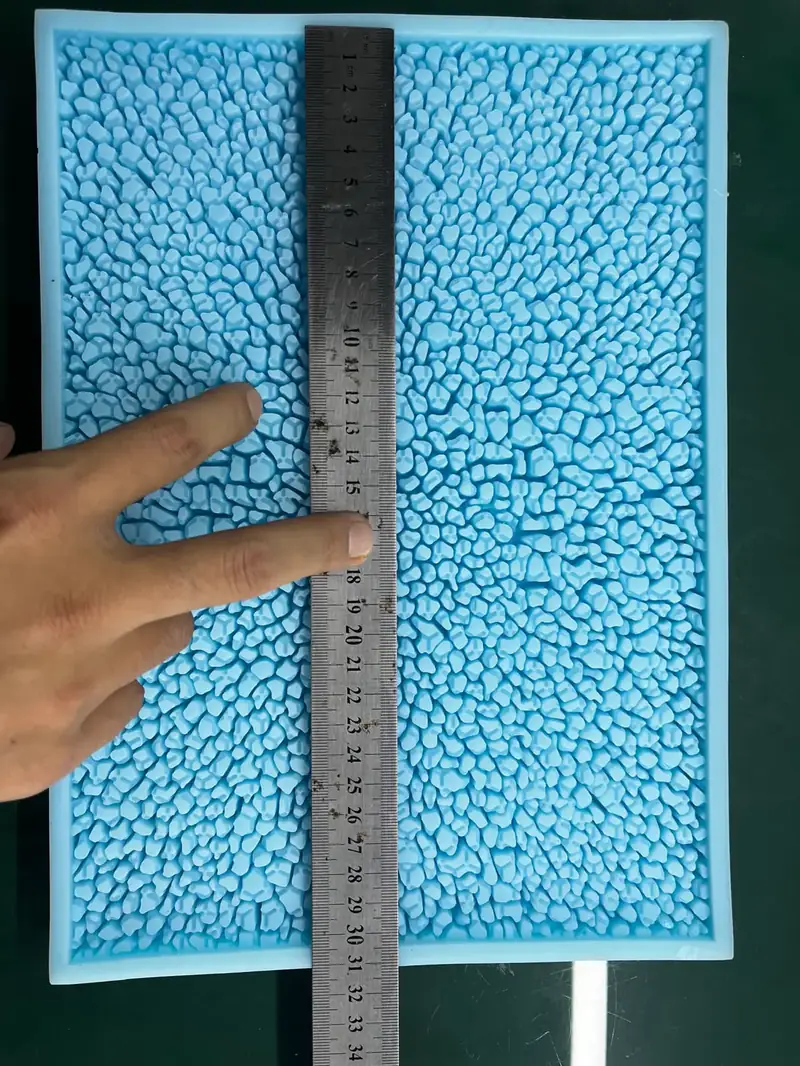
Talc haze on a clear UV charm is a reject. Talc in a plaster paver texture can be the look you signed. Mold soap on chocolate bloom-looks and will not wash back to a food well - retire that cavity to craft. Fragrance oil from a soap dump is the same retirement.
A food cavity that saw talc "just once for a resin test" is a craft tool. Recast the food skin from a clean master. Wash is not a reset. Cabinets split at the factory; they should split at yours.
ISO 3302-1 M2 is a rubber class, not a purity claim for powder. CAD lock on a chocolate tray includes "no powder in the well."
Failure: white film on the first resin dump, or a soapy chocolate
Symptom A: matte, dusty charm faces.
Cause: talc left in the serif.
Confirm: raking light on the empty well before the pour.
Fix: blow out, recast the dump; if the rubber is packed with powder, wash a *craft* cavity or recast the tool.
Symptom B: chocolate that tastes like soap or will not set a shine.
Cause: mold soap or a kitchen detergent wipe.
Confirm: the well smears water; a clean platinum well does not feel soapy.
Fix: retire the well from food. Recast. Do not "season" a chocolate RTV like cast iron.
Typical shop values
Reference values only. Confirm material-specific limits against the supplier’s technical data and agree project acceptance criteria before production.
| Item | Typical shop value |
|---|---|
| Mix / shrink | 1:1 or 10:1 by weight; platinum about 0.1-0.3% |
| Food wells | clean platinum; no talc, no mold soap |
| Craft undercuts | dry talc, excess blown off |
| Cavity Shore | 10A-20A skins; 20A-40A trays |
| Prototype | 3-7 business days after CAD lock |
| Production MOQ | 20 pieces per design |
| Simple 3D | USD $50 when that CAD scope applies |
| Drawing class | ISO 3302-1 M2 as a common default |
Stay on this page / skip this page
Stay when you are choosing a dry powder, a mold-soap film, or a clean platinum food face - three films, three dumps.
Skip if you want a food-contact chocolate or gummy tray and thought talc was a kitchen release. Skip finished soap dishes or spatulas - a different RFQ - ask us.
We will not quote talc in a chocolate or gummy cavity. We will not quote mold soap as a "food-safe" dressing. We will not quote hairspray as a personality-test release. We will not use the same well for a talc resin trial and a couverture SKU. We will not substitute bakery flour for talc.
Related: food-grade molds, lye vs food cabinets, contact.
Worked example: resin test in the chocolate tray
Buyer had a platinum bar mold, MOQ 20 path, then dusted talc to try a resin prototype in the same wells. Resin released. Next chocolate lot picked up haze and they asked for a wash SOP. We retired that tray to craft, recast a dedicated food skin from the sealed master. Prototype 3-7 business days after CAD lock (master already locked; pour window). No extra $50 CAD because the STEP had not changed. Production MOQ 20 of the food design. Talc stayed on the craft shelf.
Mix-up: release on the master vs release in the cavity
A barrier on an SLA *master* before we pour platinum is inhibition insurance. Talc in the *cavity* after the mold exists is a dump release. Do not copy one SOP onto the other. Related: custom chocolate bar molds, contact.
What to ask when you're buying
- Dump: food, plaster, PU - named, not "sometimes all three"?
- If craft, talc in the undercut only, or a soap dressing your plaster shop already runs?
- Will this cavity ever need to return to food? If yes, do not powder it.
- Who keeps the clean master for a food recast?
- After lock, 3-7 business days, then MOQ 20 / design?
RFQ copy-pack - talc vs food oil
Paste into [email protected]:
Object: RTV mold, not an LSR/HCR part Dump list: food / plaster / resin - cabinets split Release you already use (talc / soap / none) Undercuts that suck the dump File: STEP / STL / photos with a millimetre scale CAD: mold-ready STEP OR USD $50 3D if that scope applies Prototype 3-7 business days after CAD lock, then MOQ 20 per design Who keeps the master
Send the dump list, not "what powder do you recommend for everything." We will not talc a food well - not a blank quote request. Phone +86 135 3006 2969. Xinhe Blvd, Shajing, Bao'an. Shop since 2018.
FAQ
Can I use baby powder in a silicone chocolate mold? We would not. Talc is a craft release. Chocolate wells stay clean platinum. Powder copies as haze and takes the well off a food path.
Is mold soap food-safe in RTV? Mold soap is a plaster dressing. It is not a food oil. A soaped well is a craft tool.
Do I need talc if the resin sticks? Maybe in an undercut, after you name PU/epoxy. First check inhibition, undercure, and missing draft. Powder is not a cure for a sticky platinum face.
Can I wash talc out and go back to gummies? Do not. Recast a dedicated food tray from the clean master. Wash is not a cabinet reset.
Does release choice change lead time? CAD lock still starts the 3-7 business day pour window. Naming the dump so we do not powder a food well is part of lock. MOQ 20 per design.
Custom silicone development · DFM & prototype support
CAD, drawing, photos or sample details