
Thin Skin vs Thick Block RTV Mold Tooling | RUUIPON
Thin RTV skins need jackets; thick blocks spend gum and still sag. Tear, cost, and when each family wins. Mix 1:1 or 10:1, MOQ 20, $50 CAD when it applies.
 Kyler Yang · Founder7 min read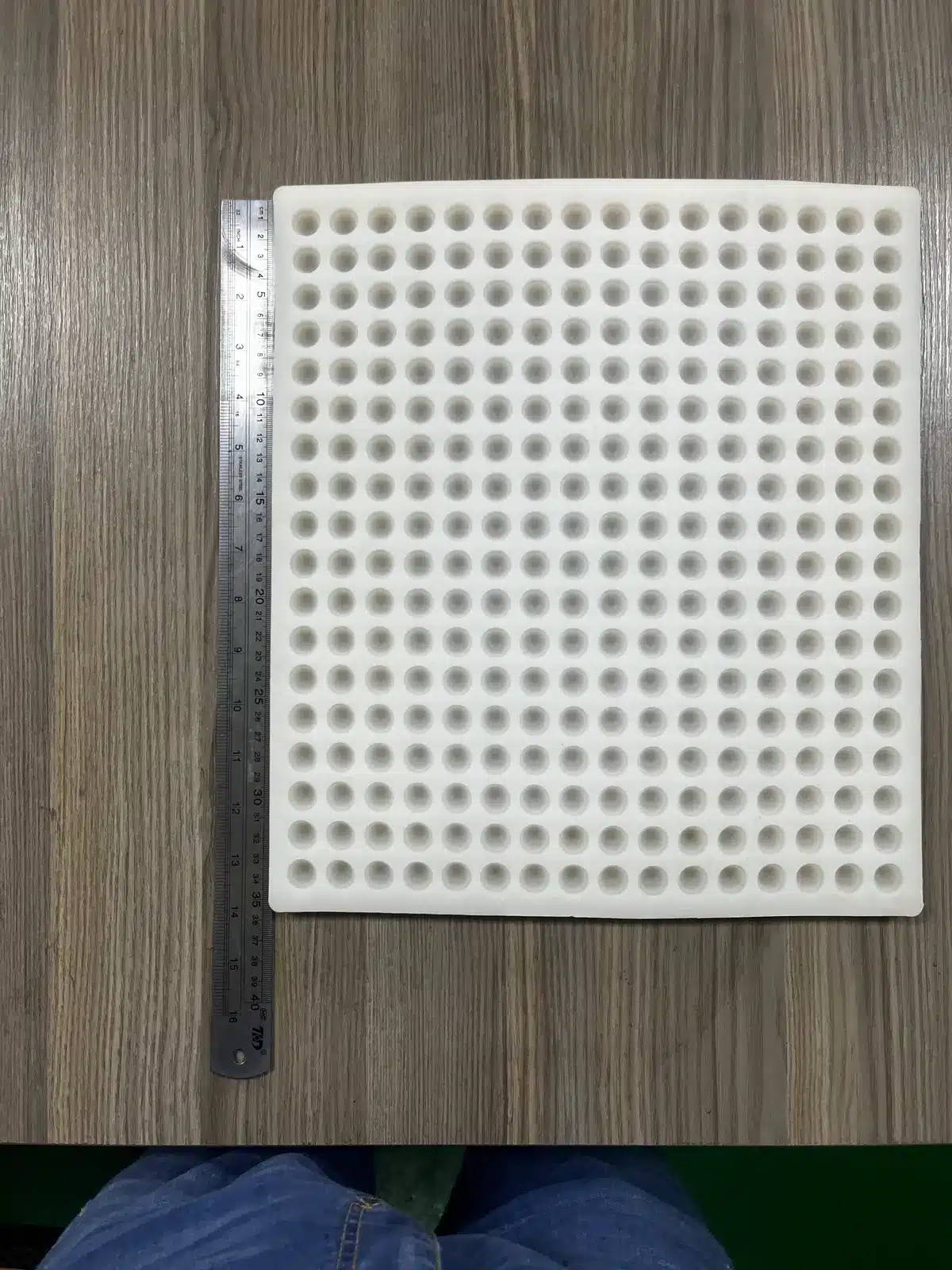
Thin versus thick on an RTV mold is a tool family, not a millimetre brag. A thin platinum skin (about 1–3 mm behind the face, typical shop start) copies well, peels, and needs a mother mold when the dump is wet or the span is wide. A thick block (a cube of rubber) peels from a solid, burns gum, and still sags on a loaded sheet because extra gum is still gum. Page 063 on this site is the two wall numbers (cavity skin vs jacket wall). This page is when to pick a glove/skin versus a block in the first place.
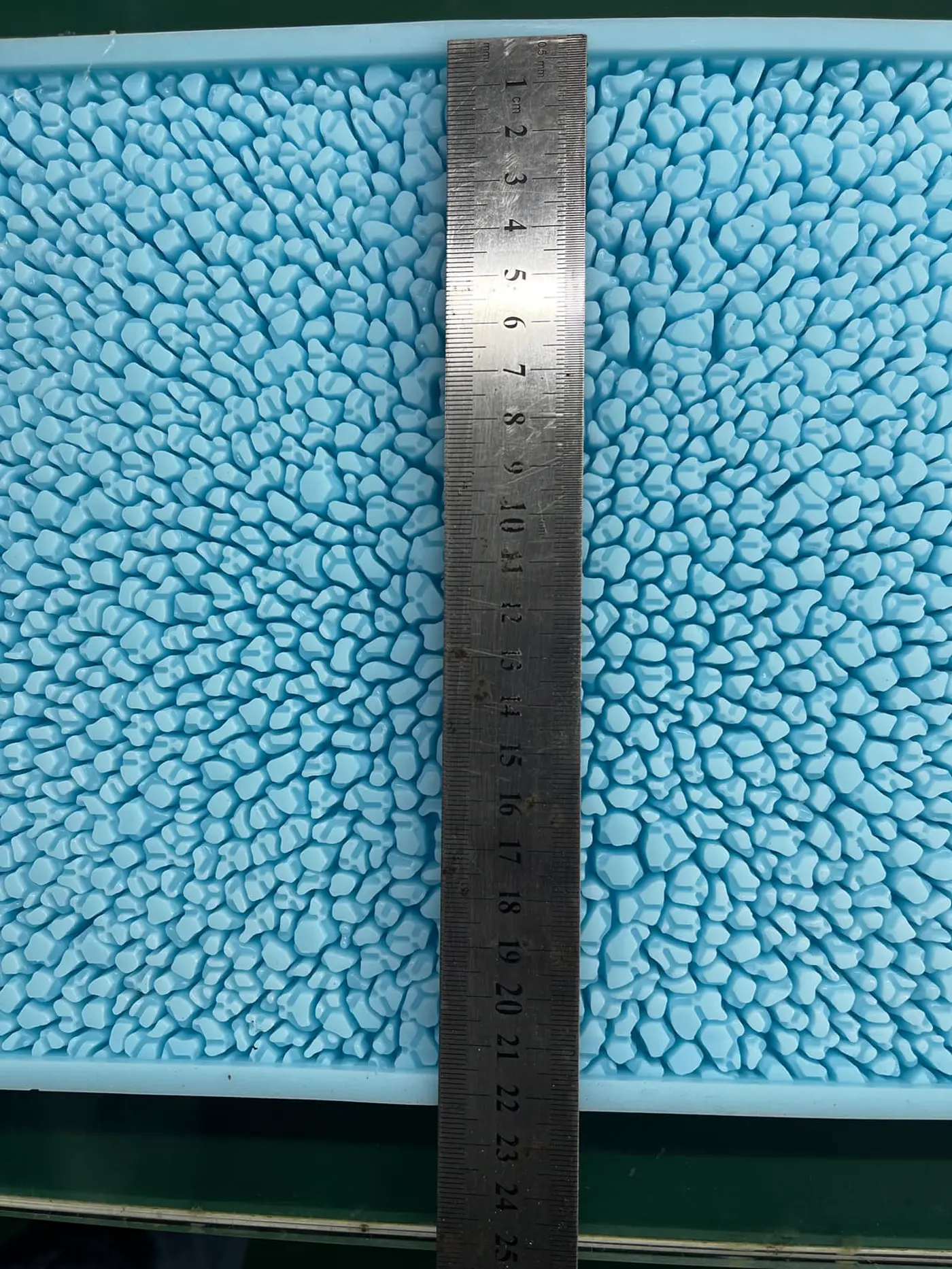
RUUIPON quotes both families in Bao'an / Shajing since 2018. Prototype 3–7 business days after CAD lock. Production MOQ 20 pieces per design. Simple 3D is USD $50 when that CAD scope applies. Mix 1:1 or 10:1 by weight; platinum shrink about 0.1–0.3% after a full cure. Steel thickness on an LSR plate is a different RFQ.
Does not apply when "thickness" means the dump (a 2 mm chocolate shell). That is cavity depth. It also does not apply to HCR flash-land thickness on a compression *part*.
Skin-and-jacket vs block: pick the family, then the millimetres
Skin + jacket. Use it for trays, panels, large figurines, concrete tiles, anything where stiffness should live in plaster, resin, or a printed shell. Rubber does peel; jacket does span. Loaded-tray edge sag without a jacket is typically about 0.5–1.5 mm.
Block. Use it for small resin masters you want to peel as a cube, some jewelry, some soap stamps, when the envelope is small and a jacket would cost more than the extra gum. Blocks still want keys if you split. They are a poor answer to "the last thin mold tore."
Tear on a thin island (a 0.3 mm letter crossbar) is a local geometry problem, not a reason to pour a 20 mm block around a whole tray. Thicken the island. Sag on a half-sheet is a jacket problem, not a reason to pour 10 mm of 40A.
- Span wide or dump wet? - yes -> Thin skin + mother mold
- Span wide or dump wet? - no small envelope -> Will a block cost less than a jacket?
- Will a block cost less than a jacket? - yes -> Block, keys if split
- Will a block cost less than a jacket? - no -> Thin skin + mother mold
- Thin skin + mother mold -> Do not thicken skin to fake stiffness
- Block, keys if split -> Do not treat block as longer life
- Do not thicken skin to fake stiffness -> CAD lock then 3-7 day prototype
- Do not treat block as longer life -> CAD lock then 3-7 day prototype
The photo that would prove the family: a cut section of a 2 mm skin in a jacket next to a cut block of the same cavity, grams of rubber tagged on each. A catalog "heavy duty mold" label does not prove which family you bought.
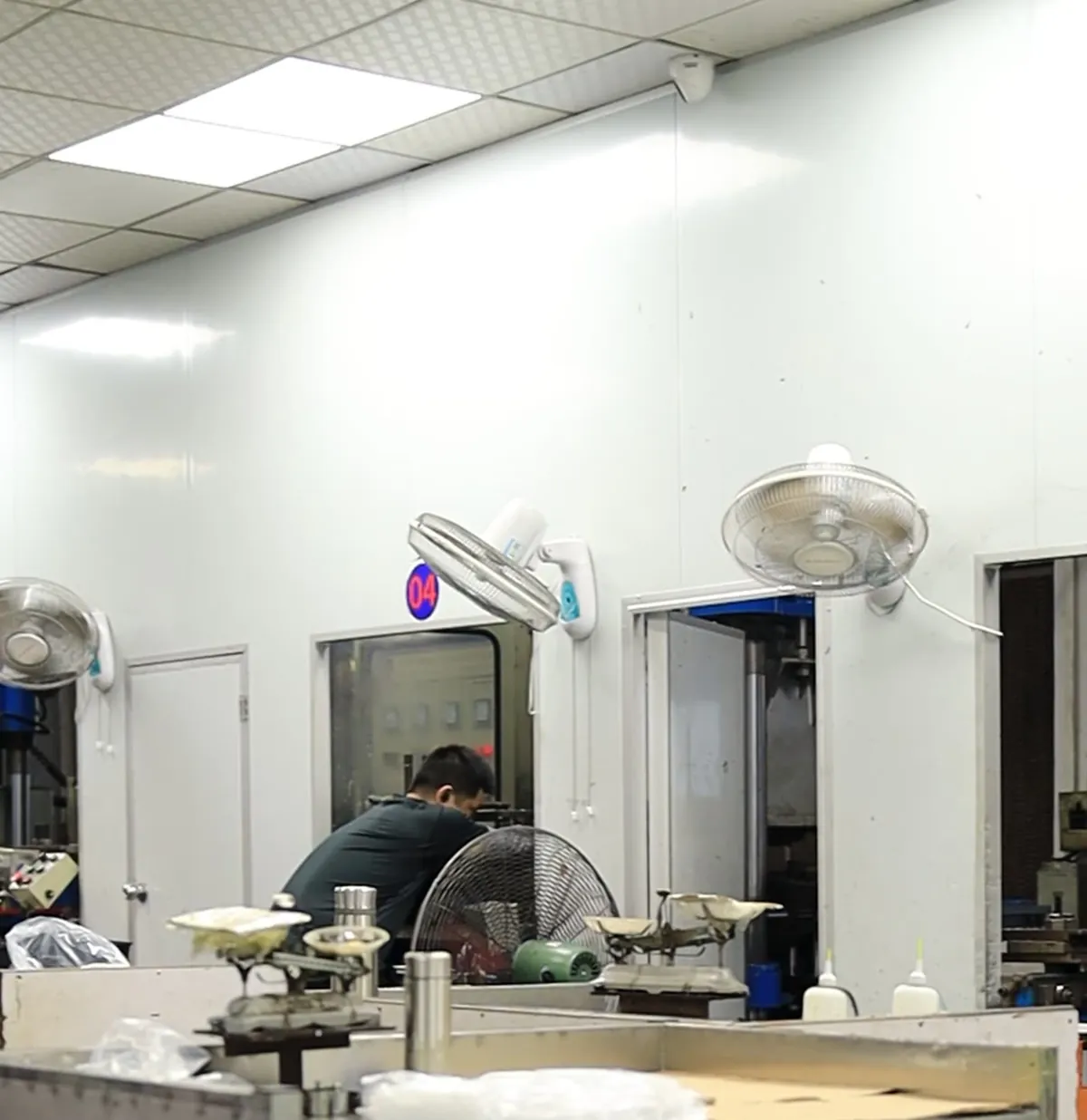
Tear, sag, and rubber cost on the same span
Rubber cost follows cm³. A block that looks "strong" is often the expensive way to get a tool that still dishes under plaster. Cycle life follows tear at lips and keys, plus chemistry (platinum library vs tin drift), not millimetres of dead gum in the middle.
Concrete and plaster dumps punish the wrong family twice. A thick unsupported skin dishes, then the abrasive dump wears the low spot faster, so the next paver is both dish-shaped and glazed. Jacket the skin. A jewelry block on a 20 mm charm does not have that beam problem, so do not copy the concrete jacket onto a ring master "for consistency." ISO 3302-1 M2 is a class on the dump, not a thickness grade.
Straightedge and peel nicks pick the family
On a tray: straightedge across a loaded sheet. Gap at the outer row means you needed a jacket, not a thicker block. On a figurine: peel a witness dump and look for lip nicks at undercuts — that is structure (split/plug), not "add 5 mm of rubber." We do not publish named PO sag numbers here; 0.5–1.5 mm is the typical shop band when the jacket is missing.
Shop numbers for thin vs thick families
Reference values only. Confirm material-specific limits against the supplier’s technical data and agree project acceptance criteria before production.
| Item | Typical shop value |
|---|---|
| Skin behind a simple face (start) | about 1–3 mm |
| Logo island talk | about 0.3 mm; thicken the island |
| Block envelope | small masters; still keys if split |
| Mix / shrink | 1:1 or 10:1; platinum about 0.1–0.3% |
| Sag if jacket missing | about 0.5–1.5 mm |
| Prototype / MOQ | 3–7 business days after CAD lock; 20 per design |
| Simple 3D | USD $50 when that CAD scope applies |
Families we would not quote as "thicker is better"
We would not recommend a 10 mm skin on a half-sheet tray to skip the jacket.
We would not recommend a 0.3 mm uniform glove on a whole statue to save rubber.
We would not recommend matching mold thickness to dump thickness ("2 mm chocolate so 2 mm silicone").
We would not recommend sanding the master after the first recast to "thin the wall." You moved every later cavity.
A tooling charge is not unrestricted ownership of the unsanded master. If you sand the block "to make it a skin" you destroyed the recast face; we would rather pour a new skin from the original master than machine cured rubber down to a guess.
Worked example: 8 mm block that tore at the A crossbar
Resin badge, 2 mm letters, buyer ordered an 8 mm block "so it lasts." Tear at the "A" crossbar, heavy gum bill. Recast: modest 15A skin, thicker letter island, thin jacket. Less rubber, better life. Prototype 3–7 business days after CAD lock. $50 3D did not apply. MOQ 20 per design. Sibling sag story: pectin sheet that evened when we added a jacket instead of thickening rubber — see mother mold.
Mix-up: "thicker mold lasts longer"
Life is tear sites, dump chemistry, and storage, not dead millimetres. The other mix-up is reading wall-thickness page 063 and this page as the same spec. 063 splits skin vs jacket numbers. This page picks the family.
Questions that pick the family
- Span and dump mass — sheet or small cube?
- Are we allowed a jacket, and who stores it?
- Any 0.3 mm islands that need local thicken, not a whole-tool thicken?
- Open-back, split, or glove?
- Who keeps the master for recast?
Related: wall thickness, how much silicone, contact.
RFQ copy-pack — skin vs block
Paste into [email protected]:
Object: RTV mold I pour into, not an LSR/HCR part Family you want: thin skin + jacket / block / you mark it Span, dump mass, peak °C Logo islands that cannot go thin File: STEP / STL / photos with a millimetre scale CAD: mold-ready STEP OR USD $50 3D if that scope applies Prototype 3–7 business days after CAD lock, then MOQ 20 per design Mix 1:1 or 10:1 by weight; platinum shrink about 0.1–0.3%
Send span and dump mass, not "make it thick." We mark family on the 2D — not a blank "free quote." Phone +86 135 3006 2969. Licheng Technology Industry Park, Xinhe Blvd, Shajing, Bao'an. Shop since 2018.
FAQ
Will a thicker block stop my tray from sagging? Usually no. Sag on a loaded sheet wants a jacket. Extra gum sags too.
Is a thin skin always cheaper? Gum is cheaper. A complex jacket can cost more than a small block. Quote the envelope.
Can I raise Shore instead of adding a jacket? Harder rubber grabs undercuts and still dishes on a wide span. Shore is peel, not a beam. Put stiffness in the jacket when the span is wide.
Does platinum shrink change the family? 0.1–0.3% is a size band after cure. It does not pick skin vs block.
If I paid for a thick block, can you recast it thin later? Yes if the unsanded master still exists. A tooling charge is not unrestricted ownership of that master — write custody.
Custom silicone development · DFM & prototype support
CAD, drawing, photos or sample details