
Stone Texture vs Concrete Pinholes
Deep stone texture creates two opposite jobs: the silicone must wet every valley, then the concrete must fill those valleys without trapping air. If the casting shows smooth white spots, first ask whether the empty cavity still has the grain. This page is that diagnosis.
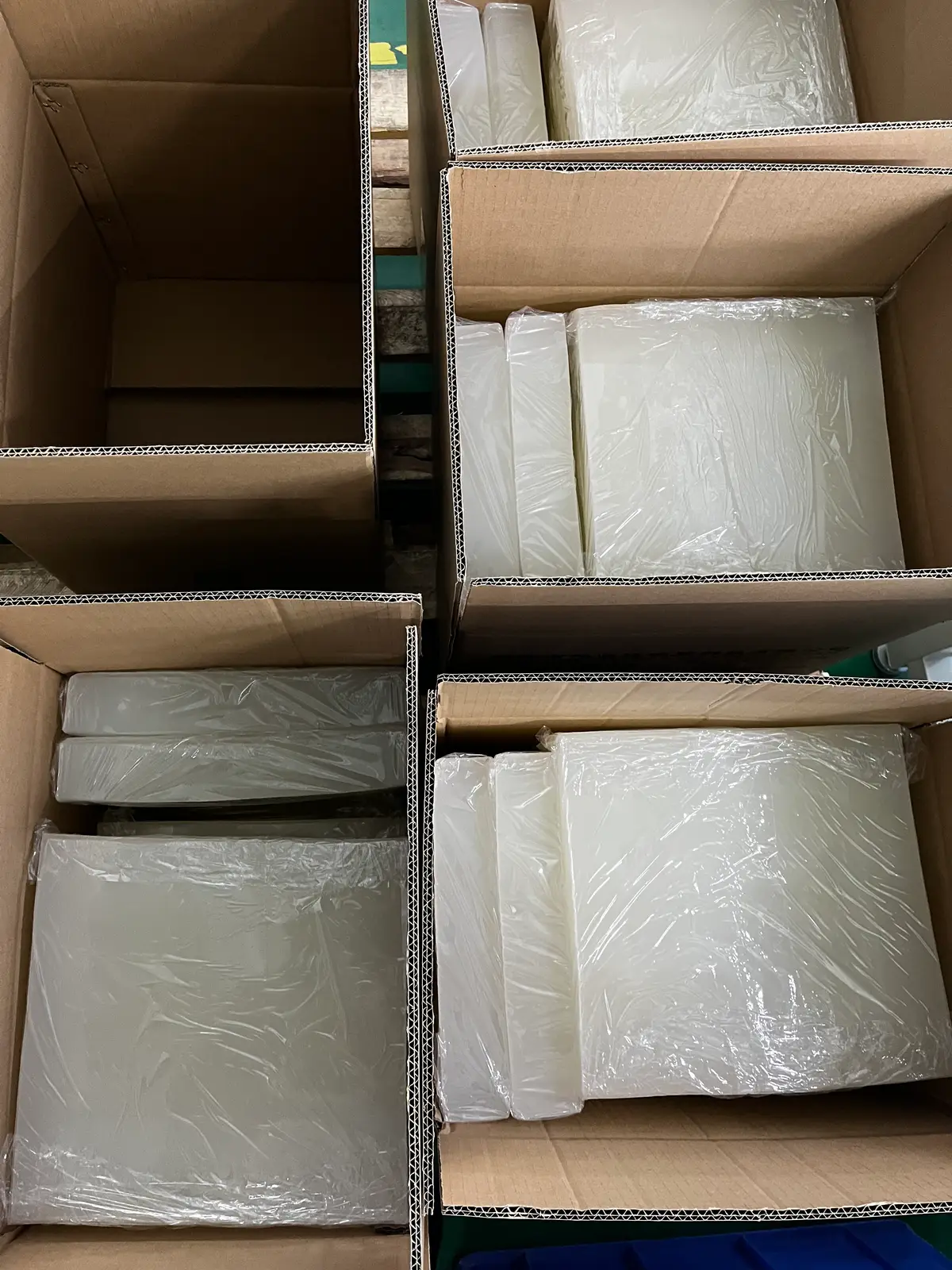
RUUIPON pours platinum RTV tools in Bao'an, Shenzhen (Licheng Technology Industry Park, Xinhe Blvd, Shajing; USCC 91440300MA5FAXCN9W) since 2018. Simple 3D is USD 50 when that CAD scope applies. Prototype is 3-7 business days after CAD lock. Production is MOQ 20 pieces per design. Concrete tools are not food-contact trays.
Where this page sits
The commercial category is concrete and cement molds. How fine texture copies at all lives on fine texture reproduction. Wear after repeated abrasion lives on texture wear diagnosis. This page covers stone-grain capture vs concrete air.
Three surfaces
Compare master, empty cavity, and first casting under the same light. If the cavity is missing grain, fix master seal, first silicone layer, or trapped air on the pour of the rubber. If the cavity has the grain and the concrete does not, it is fill orientation, face coat, vibration, or venting - not "silicone resolution."
Typical shop values
Reference values only. Confirm material-specific limits against the supplier’s technical data and agree project acceptance criteria before production.
| Item | Typical shop value |
|---|---|
| Master | Seal porous stone without bridging valleys |
| First RTV layer | Wet the grain; degas does not empty a recess by itself |
| Concrete air | Orientation so air can leave; vibration without walking the mold |
| Vent | Only where a witness mark is acceptable |
| Wear | Abrasive mixes polish peaks over time - plan recast |
| 3D / CAD | USD 50 when that modeling scope applies |
| Prototype after CAD lock | 3-7 business days |
| Production after written pass | MOQ 20 pieces per design |
| Contact | [email protected] · +86 135 3006 2969 |
Worked example: white spots
Typical job, not a named PO. Buyer asked for a harder Shore to "hold texture." The empty cavity still had the grain. Pinholes were concrete air in deep valleys. We changed fill orientation and a face coat. A remake would have copied the same pour.
When this page does not apply
This diagnosis does not replace the concrete hub or fine texture transfer. It does not apply to chocolate gloss. HCR compression products and molds stay on a RUUIPON HTV RFQ. High-volume LSR cold-runner part tools are a different RFQ - ask us.
RFQs we will not accept as-is
Remaking the mold before the three-surface comparison. Raising Shore to fix concrete air. Sending an HCR / LSR part through this RTV texture page.
Matched next step
Send master, empty-cavity, and casting photos of the same region. We will say mold capture or concrete air. "Texture missing" is not enough.
Send the three-surface photos · Concrete hub · Fine texture · Texture wear
[email protected] · +86 135 3006 2969 · Licheng Technology Industry Park, Xinhe Blvd, Shajing, Bao'an, Shenzhen. USCC 91440300MA5FAXCN9W.
FAQ
Is this the concrete product hub? No.
If the empty mold has the grain, do we remake? Usually not. Fix the pour.
Is this the fine-texture page? No. That is capture across materials.
Do you hang FDA papers on concrete tools? No.
What is MOQ after a pass? 20 pieces per design.