
Pillar vs Container Candle RTV Mold Tools | RUUIPON
Pillar candles peel from RTV. Container candles stay in the jar - that glass is not a silicone tool. Wick wells, pour cups. Typical shop. MOQ 20, $50 CAD.
 Kyler Yang · Founder7 min read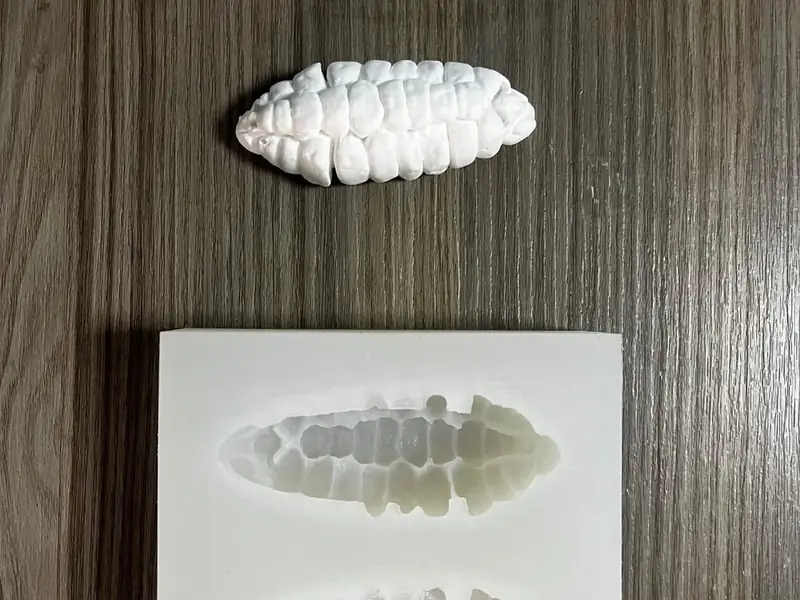
A pillar-candle RTV mold is a cavity you peel off a free-standing wax column. A container candle is wax poured into a jar, tin, or ceramic that *stays* the package - that glass is not a silicone tool, and we would not wrap platinum around a mason jar so you can "mold the container." If you need a silicone *sleeve* to hold a jar while you pour, say so; that is a fixture, not a cavity. Wick wells, foot draft, and a pour cup belong on the pillar RFQ. Container work belongs on a wick-centering and jar-procurement conversation we are not selling as an RTV SKU.
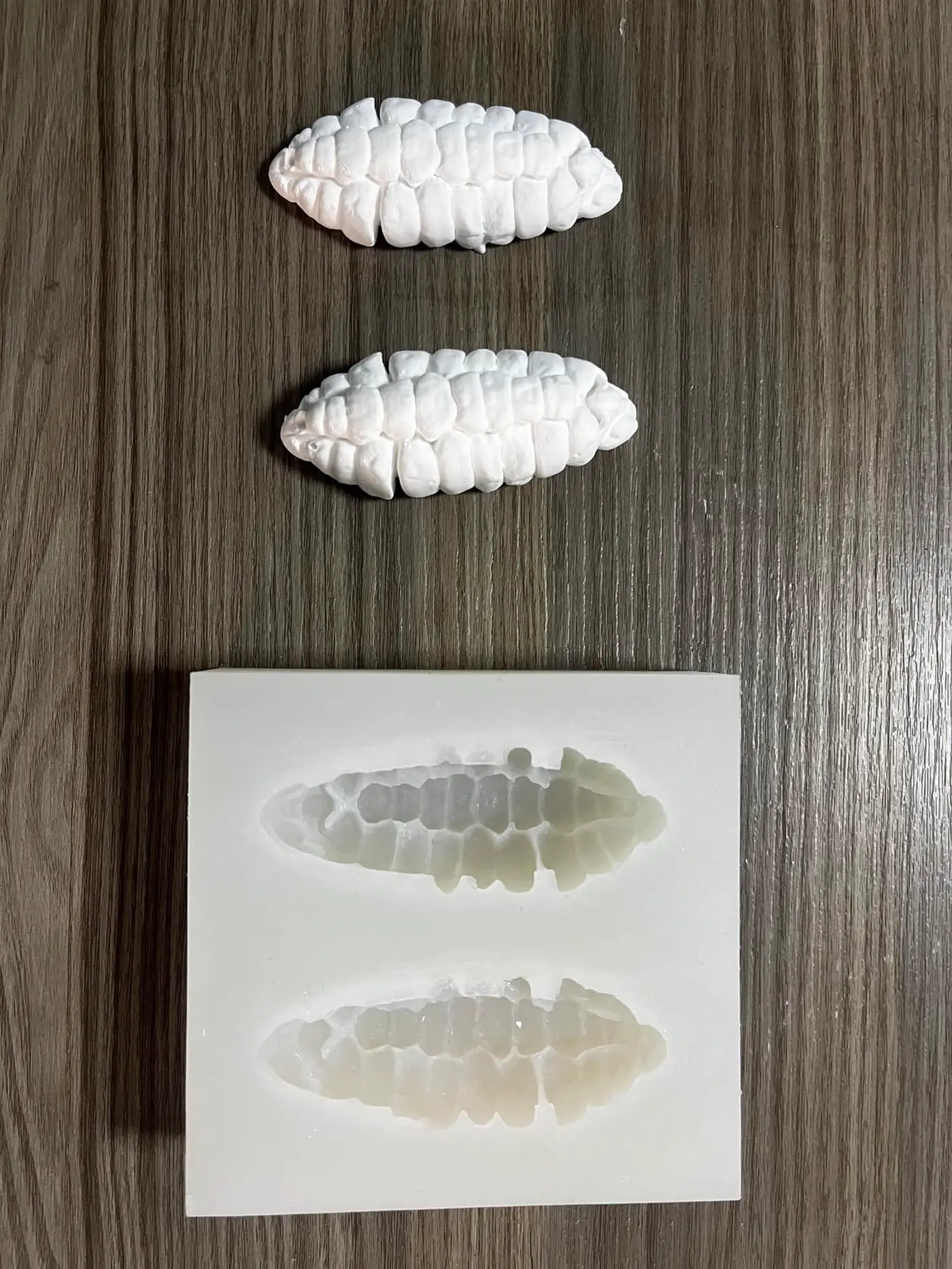
On this site the path is photos, sketch, or CAD, then a 3D-printed pattern, often a temporary silicone flip, a resin production mother, then batch RTV. The mother is not the pattern. Free DFM. HTV/HCR compression mold tooling is also quoted on RUUIPON.
Does not apply when you meant a chocolate "candle," a food-contact claim on paraffin, or an HTV product or mold RFQ here, or ask us if you need a high-volume LSR cold-runner tool compression *part* that looks like a candle. This is not a finished-parts candle-product essay. We will not spec tin for a food-adjacent wax you plan to skin-contact as a balm without naming that dump. CBD/THC: tooling only.
Peel the pillar; do not RTV the jar
Pillar / novelty / tart. Open-back or two-part depending on undercuts. Straight columns with draft often peel as a glove or a simple open-back tube. Sculpted pillars with arms or deep texture want a split. Jacket if the wax dump is tall and the skin is 10A-20A.
Container. The cavity is the jar. RTV around the jar only if you are making a *copy of the jar as a wax pillar*, which is a different SKU (a pillar that looks like a tumbler). Copying a branded glass from photos without rights is not a $50 CAD.
Wick well. A designed pin or a post on the master gives you a wick hole. Drilling after every dump is a labor tax. Put the pin on the lock.
Pour cup / foot. Pillars need a defined foot so they sit. A container has the jar foot. Do not mix those drawings.
The photo that would prove a pillar spec: mold open, wick pin in millimetres, draft on the column, a witness pillar beside the cavity. A lit jar on a sofa is a container photo, not a tool photo.
- Stays in a jar? - yes -> Container - no RTV cavity, unless you are copying the jar as a pillar
- Stays in a jar? - no -> Pillar / novelty
- Pillar / novelty -> Undercuts peel?
- Undercuts peel? - yes -> Open-back or glove
- Undercuts peel? - no -> Keyed two-part
- Open-back or glove -> Wick pin + foot on CAD lock
- Keyed two-part -> Wick pin + foot on CAD lock
- Wick pin + foot on CAD lock -> Platinum 1:1 or 10:1, vacuum
Wax temperature vs rubber, and what is not food
Pour temps for paraffin and soy are a named band on the RFQ, not "candle heat." We will not spec a baking-tray Shore because someone said "hot wax." Platinum food-path rubber used for candles is a *craft* cabinet after fragrance oil. Do not wash-and-switch to chocolate.
ISO 3302-1 M2 is a rubber class if you care about the wax article's dimensions. It is not a burn-safety cert, and we will not invent one.
A two-piece pillar that looks like a sculpted character still follows Structure Decision, not a jar SOP. If the arms hook, split the rubber and put the sprue on a hidden foot. Container buyers sometimes send a character jar (a ceramic house) and want "the inside molded." That is still a container unless they will demold a free-standing house-shaped pillar. Write which SKU ships.
Fragrance and dye stain. Plan recast from the sealed master, not infinite life.
Tall skinny pillars also sag in a jacket-free 10A tube: the wax is hydrostatic for a few minutes. A simple board or a cheap printed shell is enough on a 150 mm column; a 400 mm column wants a real mother mold. Do not steal Shore from a baking tray to skip that shell.
Failure: container buyer sent a jar and asked for a mold of the inside
Symptom: RFQ is a pint glass and "silicone mold so I can pour candles."
Cause: mix-up between package and tool.
Confirm: will the wax leave the cavity as a free pillar, or stay in glass?
Fix: if pillar-that-looks-like-a-glass, we model the *outer* as a peelable shape with draft. If container, buy jars. We will not wrap a glove around glass and call it a production mold.
Typical shop values
Reference values only. Confirm material-specific limits against the supplier’s technical data and agree project acceptance criteria before production.
| Item | Typical shop value |
|---|---|
| Mix / shrink | 1:1 or 10:1 by weight; platinum about 0.1-0.3% |
| Cavity Shore | 10A-20A peel; 20A-40A if you need a firmer tube |
| Prototype | 3-7 business days after CAD lock |
| Production MOQ | 20 pieces per design |
| Simple 3D | USD $50 when that CAD scope applies |
| Drawing class | ISO 3302-1 M2 as a common default |
Stay on this page / skip this page
Stay when you need a peel-off pillar or novelty wax cavity - wick pin, foot draft, pour cup.
Skip if the jar is the package. Skip wrapping platinum around a mason jar as a "container mold." Skip a food-contact pack as a burn claim. Skip finished silicone kitchenware - a different RFQ - ask us.
We will not quote RTV around a mason jar as a container mold. We will not skip the wick pin on a production pillar. We will not quote a one-piece peel on a sculpted figurine pillar with hooks. We will not use the same well for soy candles and chocolate. We will not sell a food-contact pack as a burn claim.
Related: custom pillar candle molds, candle molds, contact.
Worked example: 70 × 150 mm column, no wick pin
Soy pillar, 70 mm OD × 150 mm, buyer open-back tube, drilled wicks by hand. Drift on every SKU. We added a wick pin on CAD lock, 1° draft, platinum 1:1. Prototype 3-7 business days after lock. $50 CAD applied because the OD was a tape measure on a photo. Production MOQ 20 of that design.
Mix-up: the jar is "the mold we already have"
Glass is packaging. RTV is the tool for a pillar you demold. Related: products candle molds, contact.
What to ask when you're buying
- Pillar (demold) or container (stay in jar)?
- Wick pin diameter and depth, in millimetres?
- Pour temp band of the wax?
- Fragrance - this well leaves the food cabinet?
- After lock, 3-7 business days, then MOQ 20 / design?
RFQ copy-pack - pillar vs container
Paste into [email protected]:
Object: RTV pillar/novelty wax tool, not an LSR/HCR part, not a jar Demold: yes (pillar) / no (stop - that is a container) OD × height mm, wick pin mm Wax type and pour °C File: STEP / STL / photos with a millimetre scale CAD: mold-ready OR USD $50 3D if that scope applies Prototype 3-7 business days after CAD lock, then MOQ 20 per design Who keeps the master
Send pillar millimetres and wick pin, not a jar SKU. We peel columns - not a blank quote request. Phone +86 135 3006 2969. Xinhe Blvd, Shajing, Bao'an. Shop since 2018.
FAQ
Do I need a silicone mold for container candles? Usually no. The jar is the cavity. RTV is for pillars and novelties you demold.
Can you mold my glass tumbler in silicone so I can pour into it? We will not wrap production platinum around a jar as a "container mold." If you want a pillar that *looks* like a tumbler, that is a different peelable CAD.
Where does the wick hole come from? A pin on the master, locked in millimetres. Drilling every dump is how diameter drifts.
Can I use a candle mold for chocolate later? No. Fragrance oil retires the well from food. Recast a dedicated food tray.
What's the prototype clock? 3-7 business days after CAD lock. USD $50 when we must model. MOQ 20 per design. Mix 1:1 or 10:1.
Custom silicone development · DFM & prototype support
CAD, drawing, photos or sample details