
Chocolate Shell vs Bar: RTV Mold Geometry | RUUIPON
Shell RTV tools need a pull path or core; bar trays live on flex and contraction. Lock wall mm, demold vector, and jacket before copying one mascot to
 Kyler Yang · Founder8 min read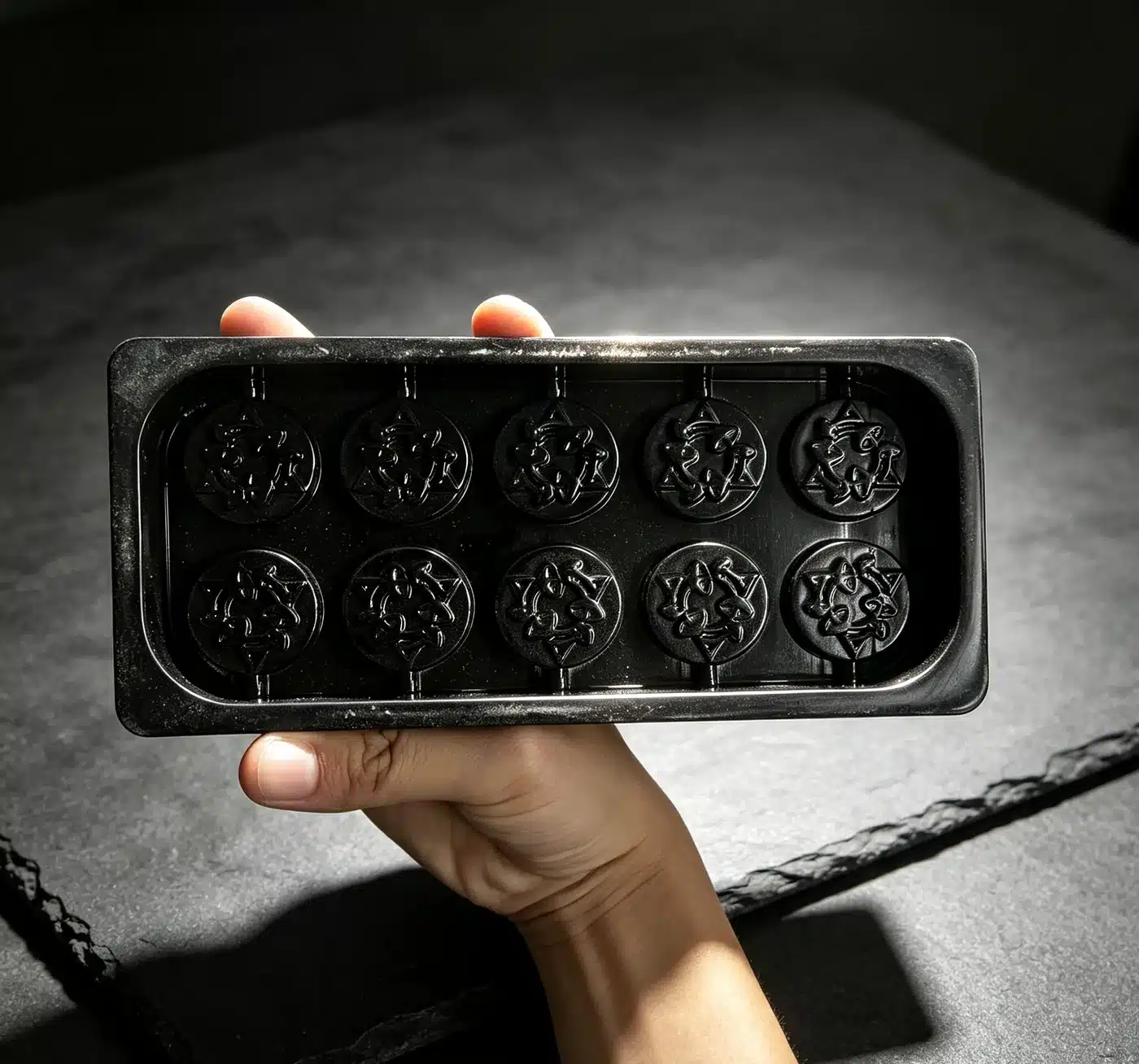
A chocolate bar leaves an open-back RTV tray mostly by temper contraction plus a flex of the sheet. A chocolate shell (hemisphere, cocoa-bomb half, filled wall, hollow mascot) leaves by a pull vector along a wall that has to survive that pull. Copying the same mascot CAD into both tools without changing draft, core, and Shore is how shells tear at the equator and bars nick at the serif. RUUIPON pours these as RTV *tools* in Bao'an since 2018. Prototype 3–7 business days after CAD lock. MOQ 20 pieces per design. USD $50 when CAD scope still applies.
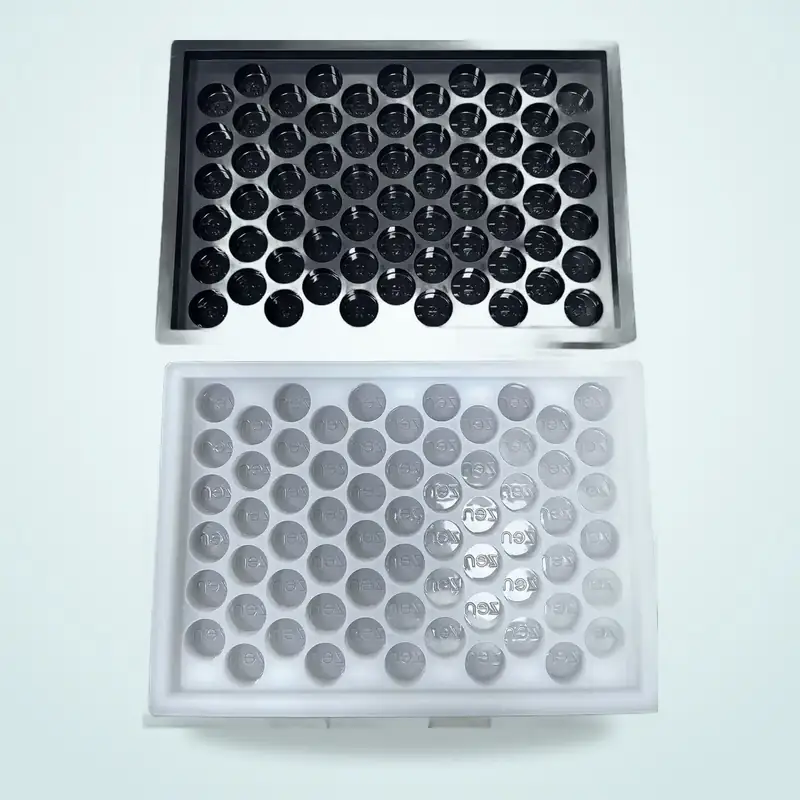
This is not a polycarbonate gloss-bar class, and it is not a steel/LSR *part* job (an HTV product RFQ here. This file is a geometry blog, not a chocolate product slug.
Does not apply when you are filling a bought shell with ganache (the shell already exists), when the piece is a solid bite that only *looks* hollow in the render, or when you need PC shine for a retail bar line. Rigid PC and soft RTV are different release physics.
Two demold physics
Bar / slab / logo tablet. Open-back. Face down in the well, back is the scrape plane. Tempered couverture shrinks (Form V) and opens a hairline. You flex the tray. Stick here is usually temper, moisture, or a logo undercut — not "needs a core."
Shell / bomb half / hollow wall. You are pulling a thin chocolate wall off a male core, out of a female well, or off a plug. The rubber has to peel without collapsing the rim. Wall millimetres in chocolate are the product; wall millimetres in rubber are the tool. If the CAD is only an outer surface, we do not have a shell yet.
Symptom: bomb rims flare or tear at the equator; bars from the "same mascot" dump fine. Cause: you built a bar tray and hoped the hemisphere would flex like a tablet. Confirm: section the CAD — is there a core pull path? Is the RTV a glove around a male, or a female well? Fix: run structure again. Don't raise Shore on the bar tray and call it a shell tool.
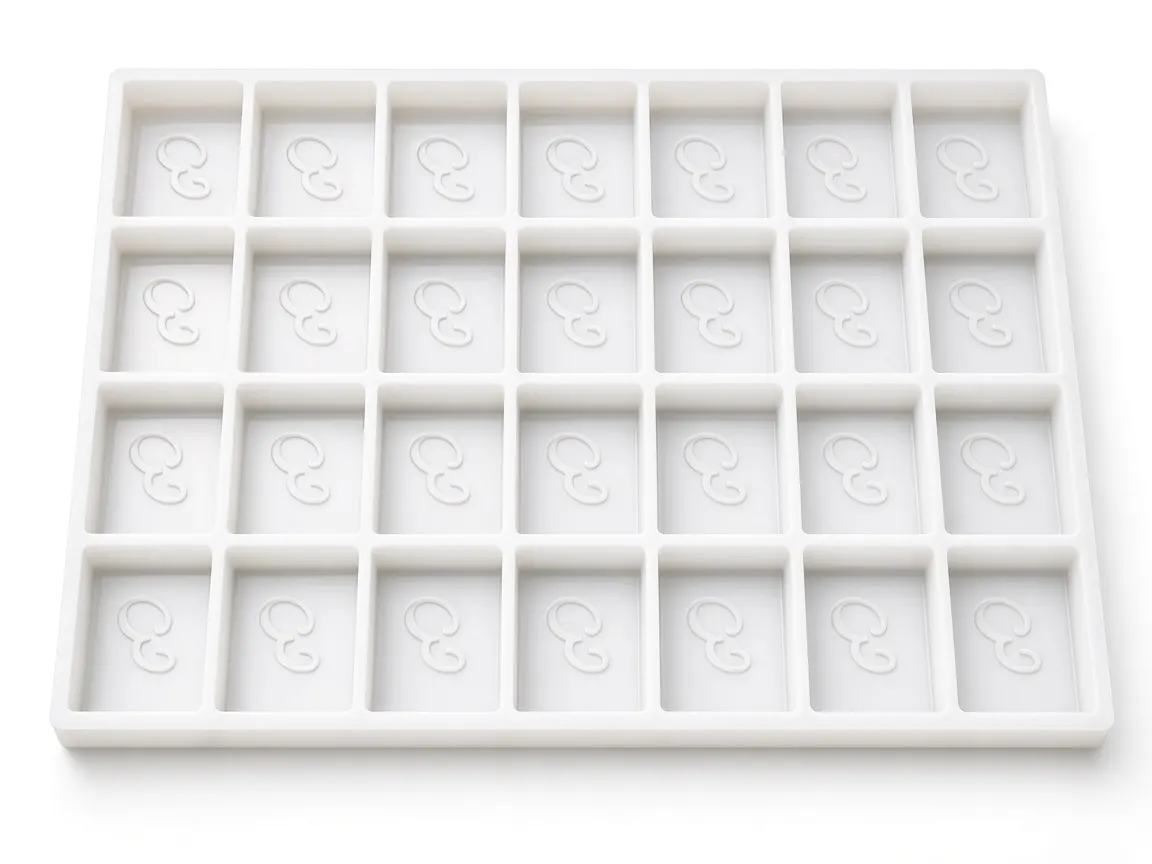
Mold Structure Decision for chocolate geometry
RUUIPON Mold Structure Decision:
- Flat back (bar) → open-back tray, often 20A–40A.
- Deep undercuts that still peel (a shallow bomb with draft) → glove / open-back with a defined pull.
- If they will not peel (closed equator, two-sided logo, inner bail) → two-part, plug, or core.
- Large wet casting (a block pour, not a shell) → mother mold so sag is not 0.5–1.5 mm of wall error.
A cocoa-bomb is usually a male form the chocolate sits *on* or a female well the chocolate sits *in*. Those two are not interchangeable at lock. Filled shells that need a uniform wall often want a core that extracts without wiping the rim. If the core cannot extract, you designed a cut mold.
Registration keys on a two-part shell tool belong on the jacket, not as pip marks that print into the eating surface. Stacking those keys in storage will bump the next season's rims.
Wall mm, cores, and what to freeze at CAD lock
Lock before we pour:
- Outer shape
- Inner wall (chocolate thickness band)
- Demold direction (flex vs pull vs split)
- Logo depth that still rinses
- Jacket yes/no
- Food cabinet only — no soap or resin in this skin
ISO 3302-1 M2 on the 2D classes the rubber dump. It does not hold a 1.0 mm chocolate wall if the core walks. Platinum shrink of about 0.1–0.3% stacks onto that wall; a mis-scaled SLA stacks again.
The photo that would prove a shell-vs-bar mismatch: a torn bomb rim next to a clean bar from the "same" mascot, both on a scale, CAD screenshot showing no core. Not a holiday product flat-lay.
Typical shop values
Reference values only. Confirm material-specific limits against the supplier’s technical data and agree project acceptance criteria before production.
| Item | Typical shop value | Bar vs shell |
|---|---|---|
| Bar tray Shore | often 20A–40A | Flex + contraction |
| Shell glove Shore | often 10A–20A + jacket | Pull without collapsing the rim |
| Platinum shrink | about 0.1–0.3% | Stack onto wall mm |
| Mix | 1:1 or 10:1 by weight | Vacuum both |
| Loaded sag | about 0.5–1.5 mm without jacket | Fatal on a thin shell wall |
| Prototype | 3–7 business days after CAD lock | Lock includes demold vector |
| Production | MOQ 20 pieces per design | Bar SKU and shell SKU are two designs if the tools differ |
| Simple 3D | USD $50 when that CAD scope applies | Outer-only STL is not a shell |
Worked example (anonymized)
A 50 mm bear requested as "bar and bomb, one mold." We poured an open-back bar first; witness bars released. Bomb trial in the same well made a thick solid, not a shell — no core, no wall. $50 CAD to build a male hemisphere family with a pull path and a matching bar tray as a *second* tool. Two locks, two 3–7 day pours, two MOQ 20 lots. Buyer had paid one tooling conversation; they did not own a dual-geometry cavity. Jacket on the shell glove; bar stayed a sheet.
One procurement mix-up
Treating a hemisphere render as a bar cavity "because it's chocolate either way." Temper release on a tablet does not equal rim survival on a shell. A second mix-up is greasing the shell to survive a missing draft. We would not oil a food well to hide structure. Paying a tooling charge on the bar tray does not include a free core for the bomb.
We would not recommend
We would not recommend one tray for bars and bombs.
We would not recommend a one-piece glove on a closed-equator hollow mascot.
We would not recommend skipping the jacket on a thin-wall shell dump.
We would not recommend publishing this geometry note as a chocolate product URL.
- Flat back tablet? - Yes -> Open-back bar tray — flex plus temper
- Flat back tablet? - No -> Thin wall / hollow / bomb?
- Thin wall / hollow / bomb? - Yes -> Core or plug can extract?
- Core or plug can extract? - Yes -> Shell tool: glove or female plus core plus jacket
- Core or plug can extract? - No -> Split or redesign — do not one-piece
- Thin wall / hollow / bomb? - Solid 3D bite -> Bar-family dump; still watch undercuts
What to ask when you're buying
- Bar, shell, or both — two tools if both?
- Wall millimetres if a shell, not only the outer STL?
- Demold: flex, pull, split, core extract?
- Jacket for the shell glove?
- Food-only traveler, no oil, 177.2600 / LFGB on the article?
- MOQ 20 per design after each lock?
RFQ copy-pack
[email protected] · +86 135 3006 2969 · Xinhe Blvd, Shajing, Bao'an
RUUIPON chocolate shell vs bar RTV RFQ SKU: bar / shell / bomb half / filled wall Outer STEP or STL: Inner wall mm (if shell): Demold vector: flex / pull / split / core Jacket: yes / decide Docs: 177.2600 / LFGB Qty: prototype / MOQ 20 per design CAD: $50 if outer-only or dual SKU still open; then lock; then 3–7 business days Not a product-page request — tool RFQ
Matched next step: send outer CAD plus wall millimetres and the demold you actually run. We will call bar tray vs shell tool, not "one mascot mold." Prototype 3–7 business days after CAD lock. MOQ 20 per design.
Related: why chocolate sticks to custom RTV, 3D-print masters for chocolate RTV, custom silicone mold design service, contact.
FAQ
Can one RTV tray make both a logo bar and a cocoa-bomb half? Not as one cavity family. Different demold vectors. Quote two designs. Each is MOQ 20.
Why did the bomb rim stretch when the bar from the same bear released? The bar flexed a tablet. The bomb needed a pull path and usually a jacketed glove or a core. Shore on the bar tray will not invent that path.
Do I grease shells so they slide off the core? No. Dry food face. Fix draft, core extract, and temper. Oil is a document-pack problem.
Is a male bomb form the same as a female well? No. Chocolate-on vs chocolate-in changes wall control and how the rubber peels. Freeze which one at lock.
If I only have an outer STL, is that the $50 CAD? Often yes — we still have to model a wall and a pull path. Outer-only is not a shell tool. Clock starts after that lock, then 3–7 business days.
Custom silicone development · DFM & prototype support
CAD, drawing, photos or sample details