
Epoxy Dump Life vs PU vs Food RTV Cavities | RUUIPON
Epoxy life on an RTV tool is a different clock than PU or chocolate. Exotherm, amine etch, recast triggers. Typical shop values. Cabinets stay split. MOQ
 Kyler Yang · Founder7 min read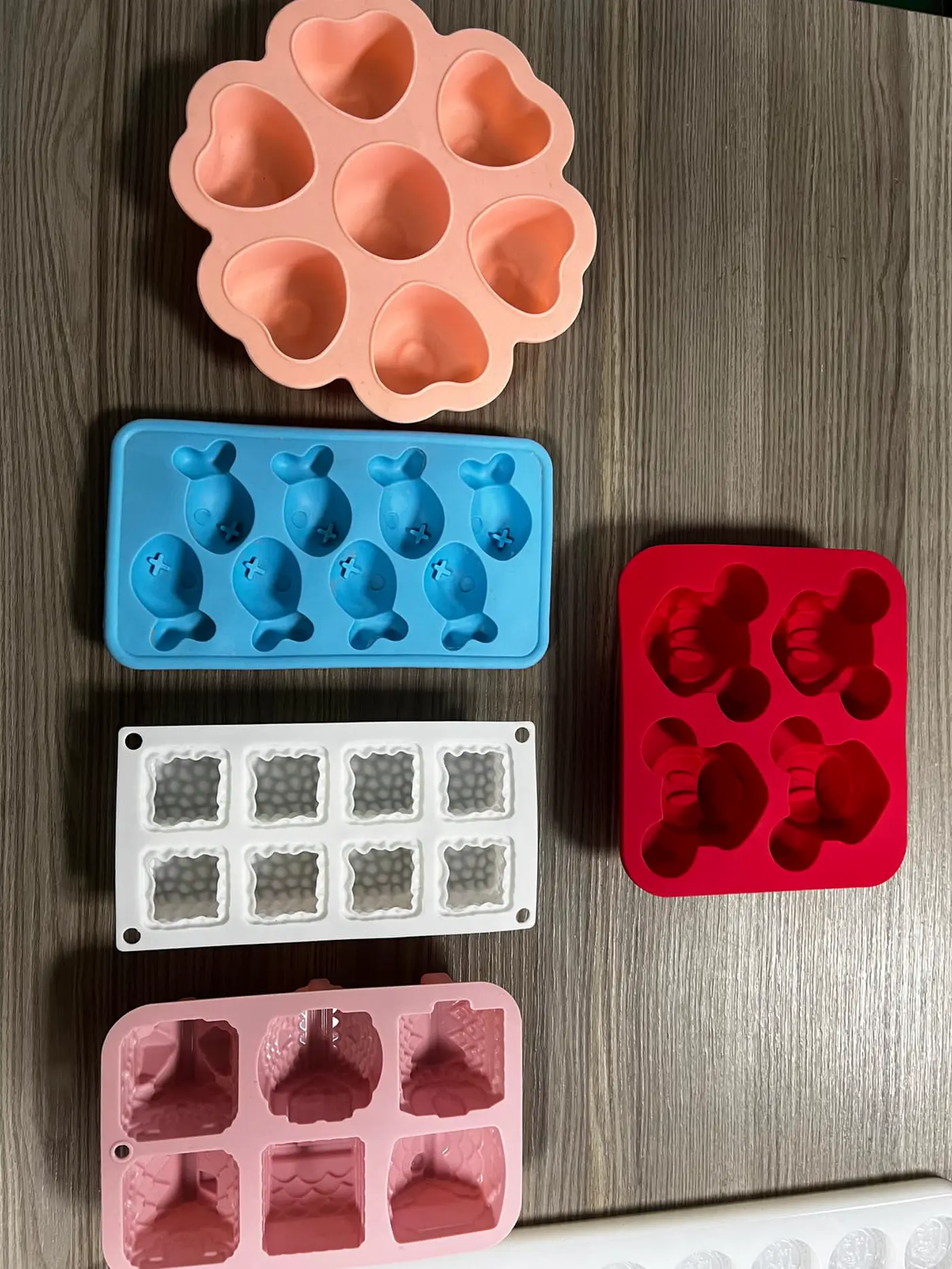
Epoxy in a platinum RTV well fails the tool on amine chemistry and on heat, not on "uses" copied from a PU figurine blog or a chocolate season. Slow epoxies in thin jewelry layers can be polite. Fast, amine-rich, deep pours cook the face, leave a greasy etch, and then lock. Food is a third clock: cooler dump, documented article, no grease, no tin. We will not use one skin across those three. Recast when the empty well is no longer the well you approved — matte, swollen, or smearing — not when a marketplace listing's cycle count runs out.
On this site the path is photos, sketch, or CAD, then a 3D-printed pattern, often a temporary silicone flip, a resin production mother, then batch RTV. The mother is not the pattern. Free DFM. HTV/HCR compression mold tooling is also quoted on RUUIPON.
Does not apply when the dump is polyurethane (use the PU-life page), UV jewelry resin, or tempered chocolate. It also does not apply to epoxy *coating* a plaster jacket. Don't treat platinum as an FDA-approved-factory stamp on an epoxy coaster mold.
Three clocks on similar geometry
Chocolate / gummy / ice (food). Platinum, dry well, wash SOP, 177.2600 / LFGB as named. Life is more wash, nick, and sag than chemistry etch. We will not spec tin. We will not grease.
PU. Exotherm + isocyanate, often no shrink-off. Rotation and jackets matter.
Epoxy. Amine hardeners attack some platinum faces even when the dump never went "hot" on an IR gun. A 5 mm jewelry fill may look fine for dozens of shots; a 15 mm table-blank in the same rubber can etch in a handful. Confirm with an unused cavity on the same tool: if only filled wells smear and smell amine-sharp, it is chemistry, not Shore.
Don't rank "epoxy is worse than PU" as a universal. Slow, thin, cool epoxy can outlast a fast PU brick. Write the hardener and the thickness.
Confirm before you recast
Symptom: piece glossy, well still glossy, but a hook holds. Cause: geometry. Structure Decision — split, plug, or core. Recasting a one-piece copies the hook.
Symptom: well dull and slightly swollen where the mass was thick. Cause: exotherm. Slower hardener, thinner lifts, heat-sink jacket. Recast the cooked face.
Symptom: well greasy after a wipe that used to leave it dry; unused wells fine. Cause: amine etch. Named craft barrier only if we name it and the SKU is not food; otherwise recast and change epoxy family.
Symptom: first centimetre milky, lock at the floor. Cause: wet mix or a vacuum skip on *your* dump. Change the pour. A new skin still glues a wet mix.
ISO 3302-1 M2 is a drawing class on the part, not an epoxy-life class.
- Unused well on same tool still dry and glossy? - yes used wells greasy -> Amine etch — recast; not food
- Unused well on same tool still dry and glossy? - yes used wells matte at thick mass -> Exotherm — thinner / slower / jacket
- Unused well on same tool still dry and glossy? - yes both glossy -> Hook?
- Hook? - yes -> Split / plug / core — don't just recast one-piece
- Hook? - no -> Check your mix, vent, pot
- Unused well on same tool still dry and glossy? - no all wells dull including unused -> Wrong rubber, UV window, or old tin leftover — different diagnosis
The photo that would prove amine vs heat: used well + unused well + a paper towel from each, labeled hardener and dump mm. Don't send a finished river-table photo.
Typical shop values
Reference values only. Confirm material-specific limits against the supplier’s technical data and agree project acceptance criteria before production.
| Item | Typical shop value |
|---|---|
| Rubber | platinum RTV, mix 1:1 or 10:1 by weight |
| Food cavity | no epoxy, no grease, no tin |
| Cavity Shore | 10A–20A gloves; 20A–40A open trays |
| Platinum shrink | about 0.1–0.3% after full cure |
| Prototype | 3–7 business days after CAD lock |
| Production MOQ | 20 pieces per design |
| Simple 3D | USD $50 when that CAD scope applies |
| Loaded sag without jacket | about 0.5–1.5 mm |
Shop comparison: food vs PU vs epoxy on the same CAD family
Reference values only. Confirm material-specific limits against the supplier’s technical data and agree project acceptance criteria before production.
| Dump | What usually kills the well | First lever | Food path |
|---|---|---|---|
| Chocolate / gummy / ice | Nick, sag, wash film | Platinum, dry well, jacket if sag 0.5–1.5 mm | Yes — no grease, no tin |
| PU | Exotherm brick, isocyanate, no shrink-off | Thin / slower / split / rotation | No — well retired |
| Epoxy | Amine etch and/or heat in thick lifts | Hardener + thickness, then recast | No — well retired |
A buyer who sends one STEP and says "resin" forces us to guess which clock. Name epoxy vs PU vs food on the first email. ISO 3302-1 M2 still belongs on the dump drawing, not as a substitute for that line.
Worked example (anonymized)
Open-back epoxy coaster, 8 mm fill, platinum ~25A. Life was fine. Buyer moved the same CAD to a 20 mm "mini slab" in a faster hardener. Wells smeared after a short run; unused spare on the original 8 mm tool was still dry. We did not "upgrade Shore." We recast the slab as a jacketed open-back, named a slower hardener on the traveler, and kept the coaster SKU on its own skin. $50 CAD because the slab needed a pour lip the coaster never had. MOQ 20 per design.
One procurement mix-up
Copying a PU cycle-life email onto an epoxy RFQ. Different hardener, different heat, different etch. Also: asking for a food extraction PDF on the epoxy tool "because we might do chocolate later." We will not. Cabinets split from mix day.
Stay on this page / skip this page
Stay when epoxy in a platinum well is aging the face on amine chemistry and heat, and you need a buyer-safe comparison to PU and food - not a copied cycle count.
Skip if the dump is polyurethane (cousin page), UV jewelry resin, or tempered chocolate. Skip epoxy coating a plaster jacket. Skip a food-contact sentence on an epoxy PO.
We will not quote one cavity for epoxy, PU, and chocolate. We will not quote a fixed cycle count; life depends on dump chemistry. We will not grease an epoxy well and then wash it "back" to food. We will not raise Shore A to fight amine smear. We will not quote a kitchen freezer as the epoxy-life extender.
Related: PU dump life, epoxy resin molds, contact.
What to ask when you're buying
- Epoxy family and hardener, dump thickness, any IR reading?
- Same CAD as a PU or food SKU, or a dedicated skin?
- Barrier coat named, or recast-on-etch as the plan?
- Jacket for thick fills?
- Master archive duration after the first recast?
RFQ copy-pack
Send to [email protected] · +86 135 3006 2969 · Xinhe Blvd, Shajing, Bao'an.
RUUIPON epoxy mold-life RFQ Photo: used well vs unused well Epoxy / hardener; dump thickness mm Peak temp if measured Geometry: open-back / glove / split; jacket yes/no Also pouring PU or food in this well? (we will not) Qty: witness recast / MOQ 20 CAD: locked / $50 3D if lip or split must change
Matched next step: send used-vs-unused well photos and the hardener name. We recast etched faces and split hooked geometry. We will not share a food cabinet with epoxy. Prototype 3–7 business days after CAD lock. MOQ 20 per design.
Related: custom resin molds, resin stuck in RTV, contact, RTV molding.
FAQ
Is epoxy always harder on RTV than PU? No. Thin slow epoxy can be gentle. Fast deep epoxy can etch faster than a cool PU. Write the system.
Can I wipe amine smear with acetone and keep going? A solvent wipe can spread the attack and swell the face. If the well is etched, recast. Don't send it to food.
Will a clear platinum last longer than a tinted one in epoxy? Color is not the clock. Heat and amine are. Clear tools have a UV-window problem of their own.
Do I need a new master when the face etches? Usually no, if the master is unsanded and the dump didn't glue to it. Recast the skin. CAD fee only if we must change geometry.
Can leftover epoxy in a well be scraped so the next dump is food-safe? We will not. That well is retired from food. Recast a dedicated platinum food skin, ungreased, no tin.
Custom silicone development · DFM & prototype support
CAD, drawing, photos or sample details