
Damaged RTV Tooling: Recast the Skin vs Replace the Kit
A torn RTV skin is not automatically a dead tool. Inspect pour face, support shell, and living mother. Recast the skin; replace when the mother is gone.
 Kyler Yang · Founder8 min read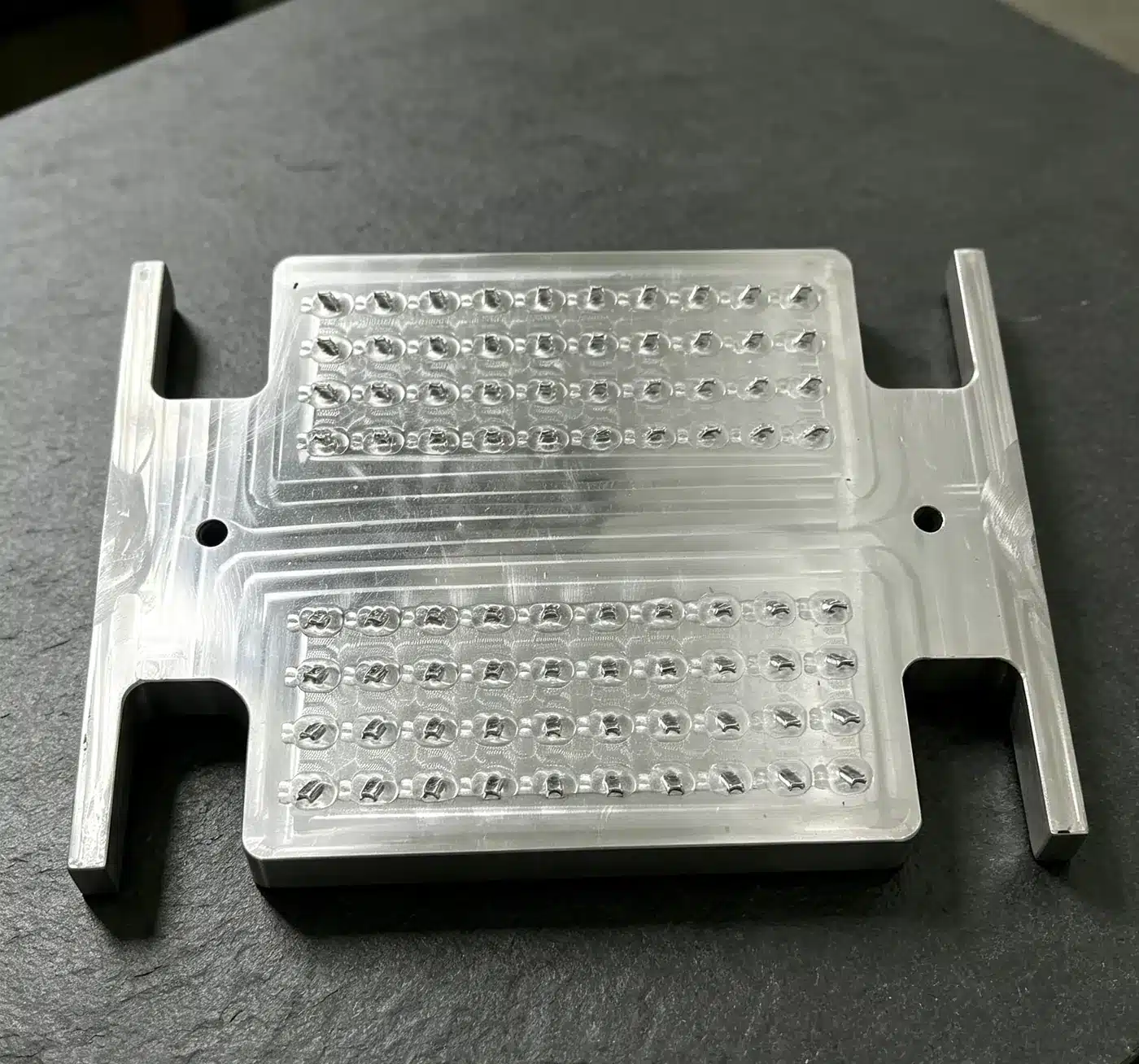
A torn RTV skin is not automatically a dead tool. A mashed or missing resin production mother often is. Walk the damage in the order that decides capability: pour face, then the jacket / mother-mold support shell, then the living mother, then chemistry. The first fatal item wins. Everything after that is estimating.
On this site the path is photos, sketch, or CAD, then a 3D-printed pattern, often a temporary silicone flip, a resin production mother, then batch RTV. The mother is not the pattern. Free DFM. HTV/HCR compression mold tooling is also quoted on RUUIPON.
The object on this page
Salvage vs replace is a diagnostic, not a feeling after a bad dump. Photograph the seated skin and the living mother before anyone opens a glue bottle.
- Pour face. Raking light, skin seated in the support shell, unstretched. A local tear off a logo can be a recast. A split across a sealing land, a sharp letter, or a dimensional datum is recast territory. If closing the tear changes the outline, stop stitching.
- Jacket / mother-mold support shell. Cracked plaster, a pinched printed shell, a crate that no longer closes without wrinkling the skin. A healthy skin in a dead shell still dumps fat profiles. Recast does not fix that.
- Living resin production mother. Dings, sanded cleanup, a cracked pattern that never became a mother, a physical sample that left the building. If the mother is gone, you cannot recast. You are scanning a part and lying to yourself, or you are reprinting a pattern, often flipping again, and casting a new mother. The mother is not the 3D-printed pattern.
- Chemistry and age. Oil-soaked, UV-chalky, tin that has been shrinking for a year. Rotten rubber will not hold a bond. Recast in platinum against a still-true mother.
- Cores and mandrels. Bent inner cores, a pull path that now tears. Replace the core. If the extract hole is oval, the support shell may be the replacement.
If the damage is a brinelled LSR land or a flooded heater well, you are on a parts-tool salvage. An HTV/HCR compression mold salvage stays a RUUIPON RFQ - different quote.
Salvage is the adult call when the living mother exists and is unsanded; a localized tear is off the show face; the dead items are support-shell hardware; or one pocket of a multi-cavity tray is dead (plug it for an emergency lot, then recast that pocket or the whole skin). Do not run 11/12 forever and call it the new process. Salvage must include a witness pour against the last good part.
Replace is cheaper than optimism when the mother is gone or sanded through a datum; the gloss or texture cannot be restored without a new pattern; stacked salvage crosses a stated fraction of new-skin plus support-shell cost; a tin library was already off-size before the incident; or a food-contact skin was patched with untested adhesive. Recast in the qualified compound or retest the article. Replacement can mean a new skin in the old support shell, or a one-cavity emergency pour while a new mother is cast.
Common mix-up
Weld, EDM, and heater megger tests belong on steel. Glue on a 10A pour face is not weld. If the salvage PDF talks about cold-runners and optical A-sides, someone packed the wrong diagnostic. If your email still says "master, box, keys, jacket" as the buy, you are listing shop furniture, not the object. Catalog copy that says cut a resin master skips the pattern-vs-mother split. We will not quote that sentence.
Typical shop values
Reference values only. Confirm material-specific limits against the supplier’s technical data and agree project acceptance criteria before production.
| Item | Typical shop value |
|---|---|
| Recast mix | Platinum 1:1 or 10:1; vacuum degas until the foam collapses |
| Cavity Shore | 10A-20A skin with a jacket / mother-mold support shell |
| Platinum shrink | About 0.1-0.3% after full cure |
| Tin already on the shelf | Still shrinking; prefer platinum replace |
| Loaded-tray edge sag, cracked shell | About 0.5-1.5 mm |
| Salvage cap (shop rule of thumb) | Stop when salvage approaches new-skin + support-shell cost |
| DFM / CAD / proto / MOQ | Free DFM; USD 50 when we edit 3D; 3-7 days after a new CAD lock; 20 pcs/design |
Worked example
12-cavity, 18 mm, platinum 10A-20A, support shell, about 2,000 dumps a month. One outer pocket tore at a letter. Living mother still in the shop. Adult call: recast the skin, keep the support shell, witness-weigh vs 4.0 g. Do not glue the letter proud and ship. If the shell also cracked and edge sag is already 0.5-1.5 mm, replace the shell in the same PO. Free DFM named that split. Nobody cut a resin master as a slogan.
Stay on this page / skip this page
Stay when a finished RTV kit is damaged and you need recast versus new mother versus new support shell.
Skip if the tool is a heated LSR or HCR parts mold - a different RFQ - ask us for the part. Skip if you are changing a compression tool - RUUIPON HTV/HCR mold RFQ. A tiny shallow one-piece tray with a printed pattern can reprint overnight; geometry can override the salvage math.
We will not glue a gloss pour face just to try. We will not stone a mother datum to clean it up. We will not cut a resin master as the written shop path. We will not quote weld language onto this PO. We will not keep running 11/12 without updating dump-weight math.
Related: shipping the kit, extend mold life, contact.
What to send
- Raking-light photos of the seated skin and the living mother
- Fatal feature: pour face, support shell, mother, or chemistry
- Whether the mother still exists and is unsanded
- How the line dumps in the meantime (plug pocket, emergency 1-up, wait)
- Food-contact: recast in qualified compound, or retest
Send the pack to [email protected] or contact.
- Living mother true and present? - no -> New pattern, often flip, new mother, then recast
- Living mother true and present? - yes -> Pour face torn on show/datum?
- Pour face torn on show/datum? - yes -> Recast skin
- Pour face torn on show/datum? - no, flange tear -> Recast or stop stitching
- Recast skin -> Support shell seats?
- Recast or stop stitching -> Support shell seats?
- Support shell seats? - no -> New jacket / mother-mold support shell
- Support shell seats? - yes -> Witness pour vs last good
FAQ
When is a torn RTV skin still the adult salvage call? When the living mother exists, the tear is off the show face, or the dead items are support-shell hardware. Recast is the default production salvage. Bond only off the pour face with matched chemistry, then witness-pour.
Why inspect the pour face and the mother before anyone quotes glue? Geometry lives in the rubber that copied the mother. A local flange tear can wait; a split across a letter or datum is a recast. If the mother is mashed or gone, glue cannot invent a pattern. Photograph everything if freight is involved.
When is replace cheaper than optimism? Replace when the mother is gone, the gloss or texture cannot be restored, stacked salvage crosses a stated fraction of new-kit cost, or a food skin was patched with untested adhesive. Unknown history with missing files is the same call.
Can I run eleven cavities of a twelve-cavity tray forever after one pocket dies? Plug it for an emergency lot, then recast that pocket or the skin. Do not freeze 11/12 as the new process without updating dump-weight math.
Can you just cut a resin master? We will not quote that sentence. The resin production mother is the hard production tool. It is not the 3D-printed pattern. A lost mother is a new mother, not a slogan.
Custom silicone development · DFM & prototype support
CAD, drawing, photos or sample details