
Silicone Gummy Mold Manufacturing: Pattern to RTV Tray
Production gummy trays are platinum RTV from a living mother, jacketed, and post-cured. 21 CFR 177.2600 extractives apply to the article, not a spatula.
 Kyler Yang · Founder9 min read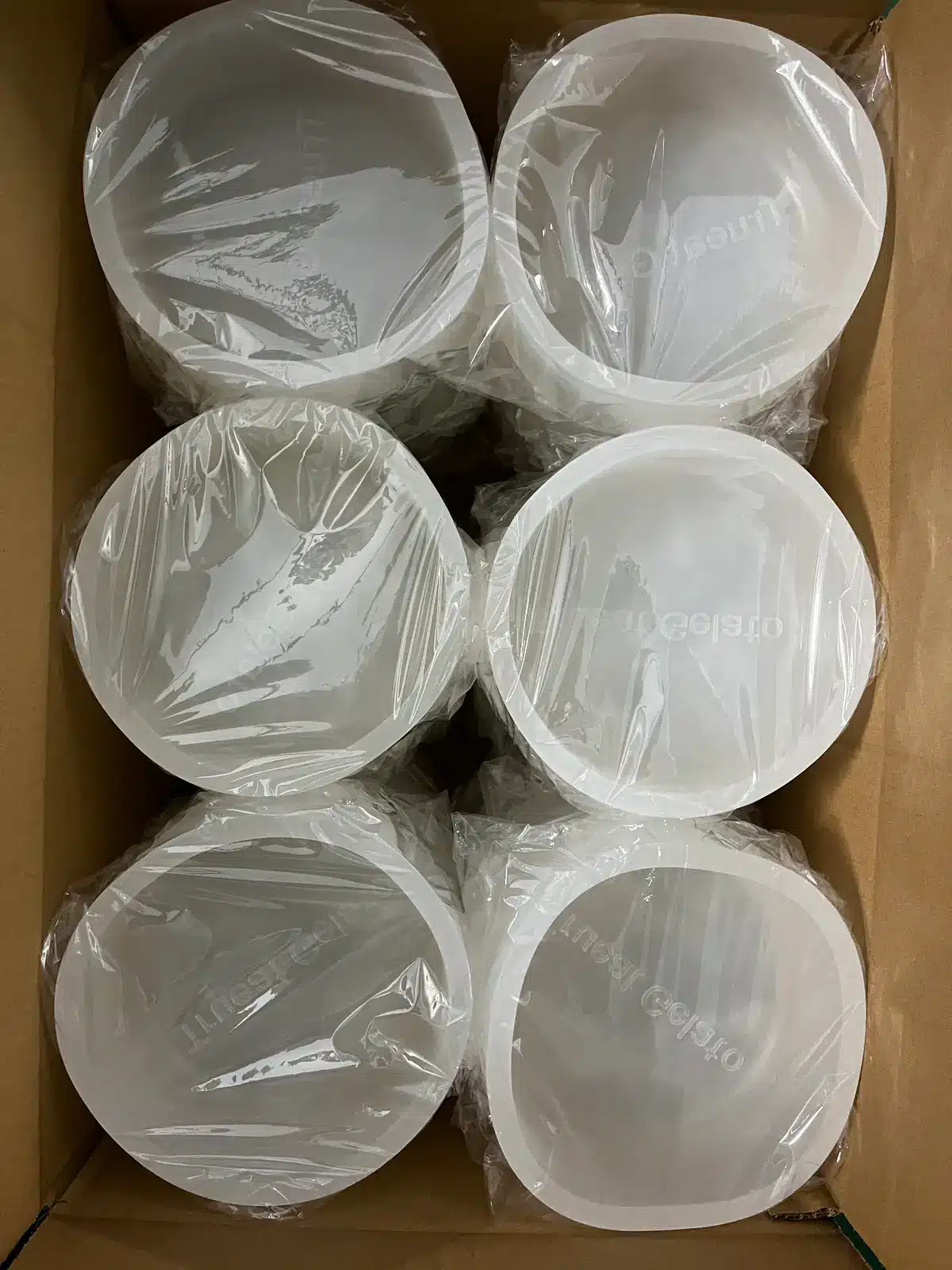
If you are buying a silicone gummy mold from us, manufacturing means pouring a food-contact platinum RTV tray that a depositor can fill and a dump station can empty. We are not pouring tin-cure into a 3D-printed bear and calling it done, and we are not injecting LSR into a heated steel tool unless you separately ordered a molded silicone part.
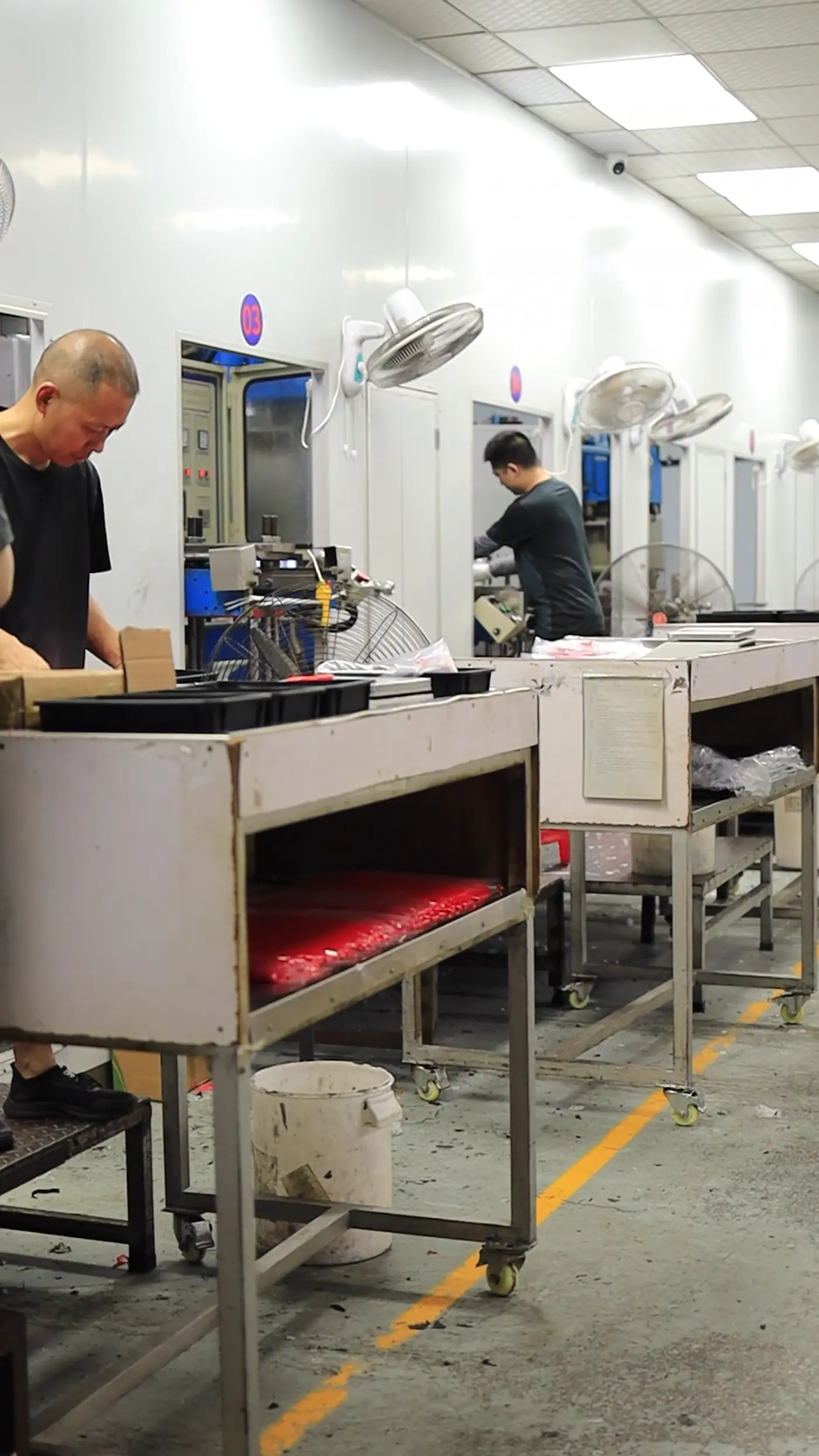
On this site the path is photos, sketch, or CAD, then a 3D-printed pattern, often a temporary silicone flip, a resin production mother, then batch RTV. The mother is not the pattern. Free DFM. HTV/HCR compression mold tooling is also quoted on RUUIPON.
The object on this page
The RTV tray is the product. The living resin production mother is how we make it. Logos live in reverse on the mother. Hairline serifs fill with RTV and then trap gelatin, so we radius relief on the pattern, not with sandpaper after the pour. After demold we trim flash so slurry cannot sit on a ragged lip, then post-cure in a ventilated oven scaled to thickness. A 2 mm cavity floor and a 12 mm jacketed back do not share a lazy bake. Wash as production will wash. The food-contact file is this SKU, this color, this RTV grade, this post-cure. A natural plaque does not qualify a red production tray. If your email still says "master, box, keys, jacket" as the buy, you are listing shop furniture, not the object.
A tray that looks like a gummy mold on a table can still miss every nozzle. We need locating that matches your carrier, a flat back or a designed flex axis for a roller dump, and a jacket / mother-mold support shell when one Shore cannot stay flat and still dump. A first article is not a pretty bear. It is pitch and envelope against your drawing, cavity volume against the piece-weight plan, dump of your slurry at a stated temperature (or a stand-in gel you accept as mechanical only), flatness after post-cure and wash, flash, and article identity. Formula, nutrient load, and any cannabinoid question stay out of our traveler.
Common mix-up
A lot of RFQs treat silicone gummy mold manufacturing as LSR injection of a plate from a steel production tool. In the shop that usually means you have been sent a cold-runner, heaters, and a part-tool FAI - none of which dump candy. Soft platinum one-ups (hand peel, no support shell) are the right sample family; they are not the production tray until Shore, thickness, register, support shell, and post-cure match the line. Catalog copy that says cut a resin master skips the pattern-vs-mother split. We will not quote that sentence.
Typical shop values
Reference values only. Confirm material-specific limits against the supplier’s technical data and agree project acceptance criteria before production.
| Item | Typical shop value |
|---|---|
| Path | Photos / sketch / CAD, 3D-printed pattern, often a flip, resin production mother, batch RTV |
| Piece-weight target | 4.0 g (cavity volume x measured slurry density) |
| Outer-row vs center | 3-6% heavy if the loaded tray sags under the nozzles |
| Loaded-tray edge sag | 0.5-1.5 mm without a flat support shell |
| Cavity Shore | 10A-20A platinum RTV skin + jacket / mother-mold support shell |
| Platinum linear shrink | 0.1-0.3% |
| Mix | Platinum 1:1 or 10:1; vacuum degas |
| Post-cure | Scaled to 2 mm floor vs about 12 mm jacketed back - not one lazy bake |
| DFM / CAD / proto / MOQ | Free DFM; USD 50 when we edit 3D; 3-7 days after CAD lock; 20 pcs/design |
Worked example
A 12-cavity fruit, 20 mm tall, 2.4 ml, platinum RTV in the 10A-20A band poured after CAD lock: pattern, often a flip, resin production mother, batch RTV, resin support shell, post-cured, then water-filled at corners and center before the plant runs pectin. Recast of the face is priced against that living mother, not as a new LSR production tool.
Stay on this page / skip this page
Stay when you need the shop sequence for a food-contact platinum RTV gummy tray.
Skip if you actually want a factory-pressed LSR or HCR plate as a molded silicone article - a different RFQ - ask us. Skip if you only need a 1-cavity kitchen peel to freeze a formula. Tin-cure craft kits are not a cheaper version of this sequence. An HTV/HCR compression mold stays on a RUUIPON RFQ if you need that tool.
We will not quote an LSR plate as a pectin dump tray. We will not skip post-cure because the gummy is not baked in the cavity. We will not use tin-cure as a cheaper pour. We will not cut a resin master as the written shop path.
Related: what gummy molds are, gummy trays, contact.
What to send
- Photos, sketch, STL, or STEP
- Cavity count, dump height, nozzle pitch, tray envelope
- Target grams or ml; slurry family for the dump trial
- Support-shell material if you already have a carrier
- 21 CFR 177.2600 and/or LFGB sections 30/31 on this color/thickness
- Recast of the face against the living mother: line item?
Send the pack to [email protected] or contact.
- CAD lock + free DFM -> 3D-printed pattern
- 3D-printed pattern -> Often: temporary silicone flip
- Often: temporary silicone flip -> Resin production mother
- Resin production mother -> Batch RTV + support shell
- Batch RTV + support shell -> Post-cure scaled to floor AND shell
- Post-cure scaled to floor AND shell -> Wash + volume map + article identity
FAQ
Is platinum RTV the same manufacturing route as LSR plates? No. Platinum RTV is poured against a living mother and usually jacketed. LSR injection uses a heated metal tool, often with a cold-runner, to mold silicone parts. Use RTV when you need a flexible depositing tray.
Why post-cure a gummy tray if the gummy is not baked in it? Post-cure is for the rubber article: volatiles, extractives, sensory. 21 CFR 177.2600 and LFGB sections 30/31 see the finished, cleansed tray. Jacket and floor thickness set the bake.
Can you recast a worn tray instead of cutting new steel? If the living mother and support shell still register, a new platinum RTV face is the normal repair. If the mother was sanded to clean it up or lost, you are back to pattern, often a flip, new mother. A recast is not an LSR remold.
Does a pattern FAI replace food-contact testing? No. Pattern and mother inspection prove reverse geometry. Food-contact proves the poured, post-cured tray. You need both for an article that will touch candy or vitamin gummies.
Where does tin-cure belong in this flow? It does not. Tin-cure RTV is not the production chemistry, is not the prototype chemistry we want on a food-contact sample, and is not a repair bead for hybrid jackets.
Custom silicone development · DFM & prototype support
CAD, drawing, photos or sample details