
How to Measure Silicone Mold Cavity Volume for Fill Weight
How to measure silicone mold cavity volume for fill weight - water method, CAD volume, density math, and MOQ 50 tray layout checks.
 Kyler Yang · Founder5 min read
On this page
Fill weight mistakes show up as underfilled gummies or overflowing chocolate. Measuring silicone mold cavity volume before you order MOQ 50 saves a redesign cycle. RUUIPON prototypes in 3-7 days so you can verify volume on a real tray.
Quick answer: Prefer CAD volume from the cavity solid; verify with water fill on the prototype; convert cm3 to grams with your compound density; include ~0.1% shrink in master scale.
Methods Compared
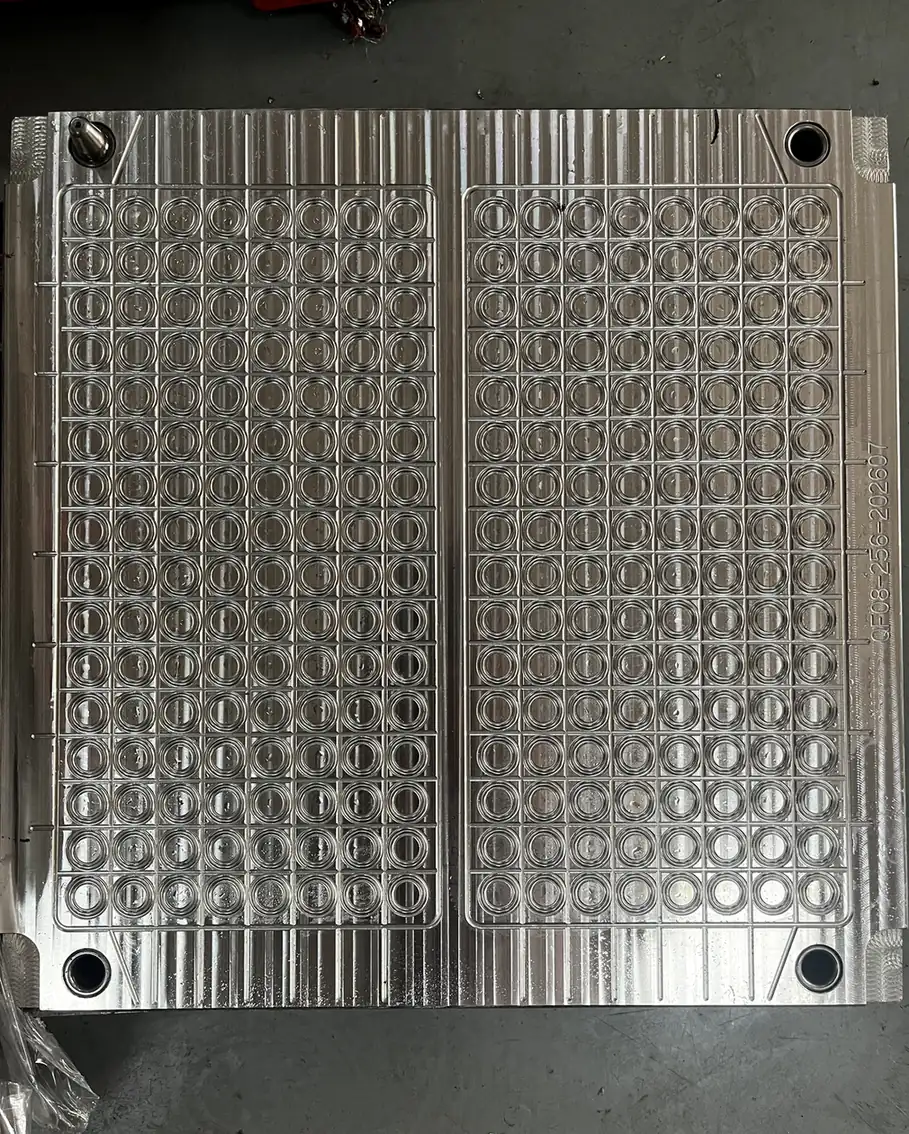
| Method | Best for | Watch-outs |
|---|---|---|
| CAD cavity volume | New designs | Must model shrink |
| Water fill + scale | Physical prototype | Surface tension on tiny cells |
| Shot weight history | Reorders | Recipe density changes |
Water Method
Level the tray, fill one cavity to the lip, weigh water (1 g ≈ 1 cm3), repeat 3 cavities, average. Dry fully before food use. Related: gummy cavity volume.
CAD Method
Boolean the cavity solid from the master. Scale for shrink - tolerance and shrinkage. Send STEP with target grams per piece on the RFQ.
Density Math
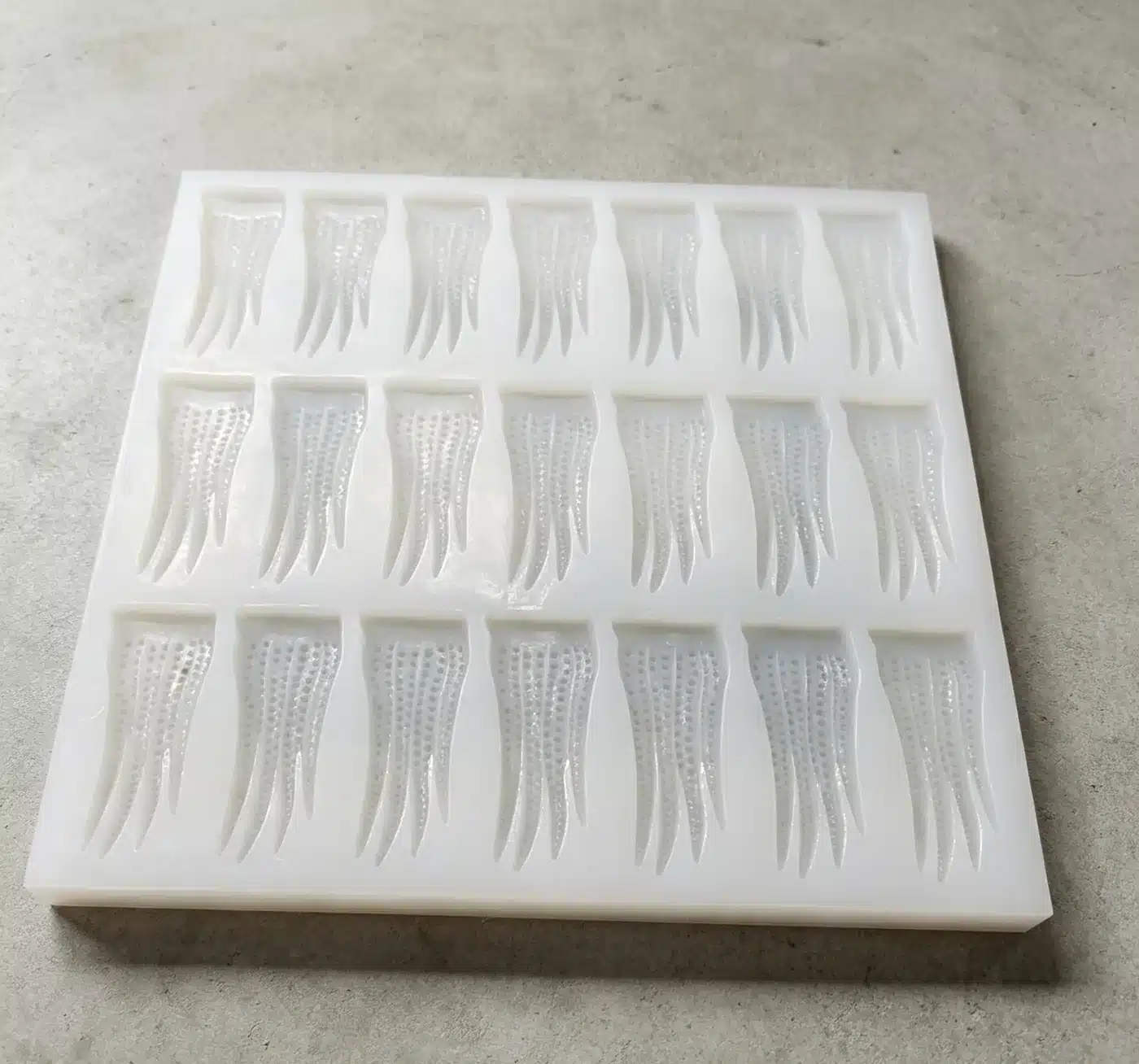
grams = cm3 x density. Chocolate, pectin slurry, and resin differ. Always use your production recipe density, not water, for final depositor setpoints.
Layout Effects
Dense layouts with spacing under ~8 mm starve walls and distort volume after cure. Keep 8-20 mm spacing and 2.5-5 mm walls - layout guide and wall thickness.
Frequently Asked Questions
Do you guarantee grams?
We match agreed cavity volume on sample; recipe density is buyer-side.
Prototype first?
Yes - 3-7 days, then MOQ 50.
Contact?
[email protected] | +86 135 3006 2969 | Contact.
Ready to order custom silicone molds?
Free quote for OEM/ODM projects. MOQ 20 · Prototype 3-7 days · FDA/LFGB available.