
Mixing-Cup Heel Waste in RTV Volume Calcs | RUUIPON
Cup heel is mixed platinum you already paid for. Weigh it, do not guess 10%. How heel, vacuum foam, and flask leak sit on the traveler. MOQ 20, $50 CAD.
 Kyler Yang · Founder8 min read
The mixing-cup heel is the platinum that clings to the walls and floor after you pour the flask. It is mixed rubber. It already ate pot life, vacuum time, and money. If you size the shot as flask-minus-master and then treat the heel as free leftover, the flask comes up short at the last serif and you either starve a corner or mix a panic second batch that does not bond. Count the heel as a gram line on the traveler, the same way you count vacuum overflow. A sibling page sizes the box; this page is only the cling in the cup.
RUUIPON weighs shots in Bao'an, Xinhe Blvd, Shajing, since 2018. On this site the path is photos, sketch, or CAD, then a 3D-printed pattern, often a temporary silicone flip, a resin production mother, then batch RTV. The mother is not the pattern. Free DFM. HTV/HCR compression mold tooling is also quoted on RUUIPON.
Does not apply when you are dumping chocolate or resin *into* a finished tray — that is dump mass, not tool mass. It also does not apply to a brush-on glove, where waste is coat overlap and drip, not a cup floor. A one-part caulk tube is not this chemistry.
Heel grams sit on the traveler next to flask grams
Weigh the empty cup. Mix. Vacuum. Pour the flask. Weigh the cup again. The difference minus any splash you can name is heel. Typical shop cling on a 1 kg 1:1 shot in a smooth PP cup is often tens of grams, not a rounding error, and a scratched or ribbed cup holds more. That number belongs on the traveler as "heel g," not as "waste ~10%" copied from a kit card.
Vacuum foam is a different waste line. Foam that climbs and rains back is still in the cup until you overflow the rim. Heel is what stays after a clean pour. Dam leak is a third line: rubber that left the flask. Do not merge the three into one fudge factor or you will keep guessing the same short flask.
Unfilled platinum density often sits near 1.1 g/cm³ on the TDS (typical shop start, not a named COA). Convert flask cm³ to grams first, then add heel and a dam-risk pad, then split A/B. ISO 3302-1 M2 is a dump class. It does not size the heel.
- Convert with TDS density -> Add named heel grams from a similar cup
- Add named heel grams from a similar cup -> Add vacuum overflow and dam-risk pad
- Add vacuum overflow and dam-risk pad -> Split 1:1 or 10:1 by weight
- Split 1:1 or 10:1 by weight -> Pour, then weigh the cup again
- Pour, then weigh the cup again -> Heel close to the named line?
- Heel close to the named line? - yes -> Lock that cup and that line for the recast
- Heel close to the named line? - no, flask starved -> Do not scrape green heel into a second flask
The photo that would prove a heel call: scale under the empty cup, scale under the spent cup, flask fill line in the same frame. A shopping-cart kit photo does not prove cling.
Why "scrape the heel in" is a second, dirty shot
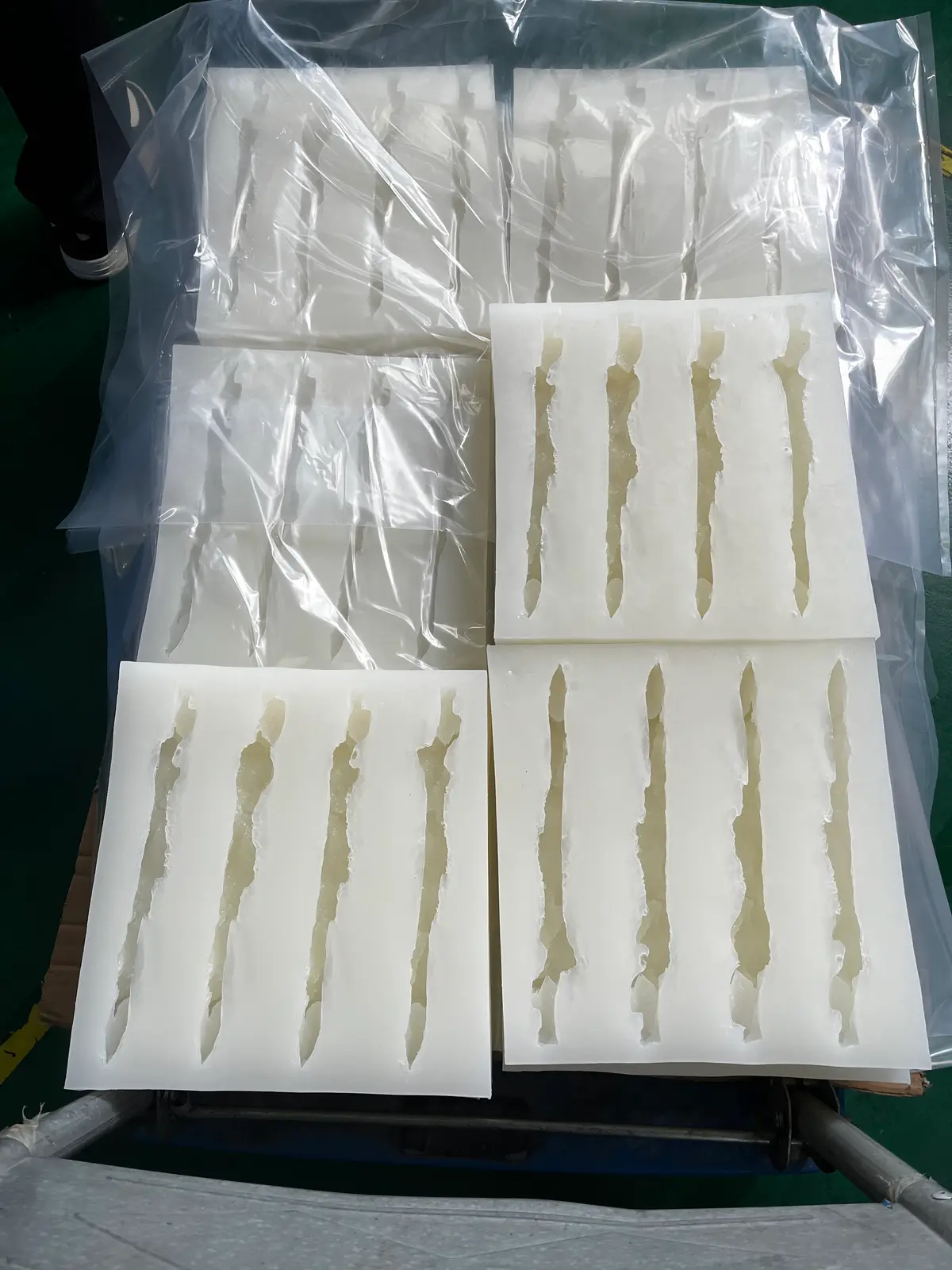
Green heel has already started to gel. Folding it into a starved corner makes a knit that tears on first peel, or a sticky lane that looks like inhibition. We will not scrape a 1:1 heel into a 10:1 top-up, or the reverse. Chemistry and clock are both wrong.
A second weighed cup, mixed and vacuumed, can wet-bond if you are still inside the grade's recoat window. That is a planned layer pour, not a spatula rescue. If the first shot gelled in the cup, stop. Mix a new shot. The flask waits.
Pigment paste left in the heel is part of the ratio if you counted it in the cup. Leaving colored heel and pouring a clear top-up makes a marble the dump will copy. Count colorant as mass before you close 1:1 or 10:1.
Typical shop values
Reference values only. Confirm material-specific limits against the supplier’s technical data and agree project acceptance criteria before production.
| Item | Typical shop value |
|---|---|
| Mix / shrink | 1:1 or 10:1 by weight; platinum about 0.1–0.3% |
| Unfilled RTV density (start) | near 1.1 g/cm³ — check the TDS |
| Heel on a smooth PP cup, ~1 kg shot | often tens of grams; weigh yours |
| Cavity Shore | 10A–20A skins; 20A–40A trays |
| Loaded sag without jacket | about 0.5–1.5 mm |
| Prototype | 3–7 business days after CAD lock |
| Production MOQ | 20 pieces per design |
| Simple 3D | USD $50 when that CAD scope applies |
| Drawing class | ISO 3302-1 M2 as a common default |
Stay on this page / skip this page
Stay when heel grams in the mix cup are starving the last corner of a flask and you need them on the traveler.
Skip dump-shot mass into a finished well (that is specific-gravity math). Skip a brush-on glove where waste is drip, not a cup floor. Skip finished-part mix rooms - a different RFQ - ask us. Heel is mixed rubber you still count, not a master / box / keys / jacket pitch.
We will not scrape a 1:1 heel into a 10:1 top-up, or the reverse. We will not order "one kit" and stretch the heel to finish a 400 mm tray. We will not add extra B to the heel "so it still pours." That is a ratio mistake, not a volume trick. We will not park a mixed heel overnight and use it as a detail coat in the morning. Pot life is already spent. We will not recast a food logo from an unmarked cup that held tin last week. Wash or change cups. See pouring-cup contamination when that page is live.
A tooling charge is not unrestricted ownership of our traveler grams. Ask for the grade name on the PO if you will recast the same flask later.
Worked example: 1.4 kg flask, 80 g heel, starved serif
Jewelry resin master, flask calling for about 1.4 kg platinum 1:1 after density convert. Buyer mixed one 1 kg kit plus a 400 g top-up and ignored heel. First pour left a 4 mm starve at the bail. They scraped ~80 g of green heel into the gap. Knit tore on peel. Recast: two weighed cups, heel line written from the first spent cup, vacuum each, pour as one wet flask. Prototype 3–7 business days after CAD lock of flask height. $50 CAD applied because the master arrived as photos plus a caliper. Production MOQ 20 of that design. Related: jewelry resin molds.
Mix-up: heel is leftover you can save
Heel is mixed. Unmixed A or B left in a drum is inventory. Do not file them as the same waste bucket on a purchasing sheet. The other mix-up is treating dump grams (a 4 g gummy) as rubber grams. Dump mass does not size the cup.
What to ask when you're buying the shot — or the mold
- Flask inside mm and pour height, or permission to build the flask?
- Master volume (STEP or a sealed water-displacement check)?
- Cup type you will mix in, and a weighed heel from a similar shot?
- 1:1 or 10:1, and a scale that actually resolves the B part?
- After CAD lock, 3–7 business days, then MOQ 20 / design?
Related: mix-ratio mistakes, contact.
RFQ copy-pack — heel as a named line
Paste into [email protected]:
Object: RTV mold I pour into, not an LSR/HCR part Flask L x W x pour height mm, or ask us to size it Master: STEP / STL / photos with a millimetre scale Dump chemistry and peak °C Mix: 1:1 or 10:1 by weight if specified Who mixes: RUUIPON or your bench (cup type if you mix) CAD: mold-ready STEP OR USD $50 3D if that scope applies Prototype 3–7 business days after CAD lock, then MOQ 20 per design
Send flask millimetres and who mixes, not "one kit." We name heel on the traveler — not a blank free quote. Phone +86 135 3006 2969. Licheng Technology Industry Park, Xinhe Blvd, Shajing, Bao'an. Shop since 2018.
FAQ
Does mixing-cup heel count as usable silicone? No. It is mixed cling. Count it as waste grams. Do not scrape it into a starved flask after it has started to gel.
How much heel should I add to the volume calc? Weigh a spent cup from a similar shot and cup. A printed 10% is a guess. Smooth PP clings less than a ribbed pail.
Can I thin the heel with solvent and pour the last corner? We would not. You changed the rubber. Mix a new weighed shot inside the recoat window, or recast.
Is heel the same as vacuum overflow? No. Overflow left the cup under vacuum. Heel stayed after the pour. Track both.
Does heel change the 3–7 day prototype clock? No. The clock starts at CAD lock. A short flask because heel was ignored is not locked. MOQ 20 per design after the witness.
Custom silicone development · DFM & prototype support
CAD, drawing, photos or sample details