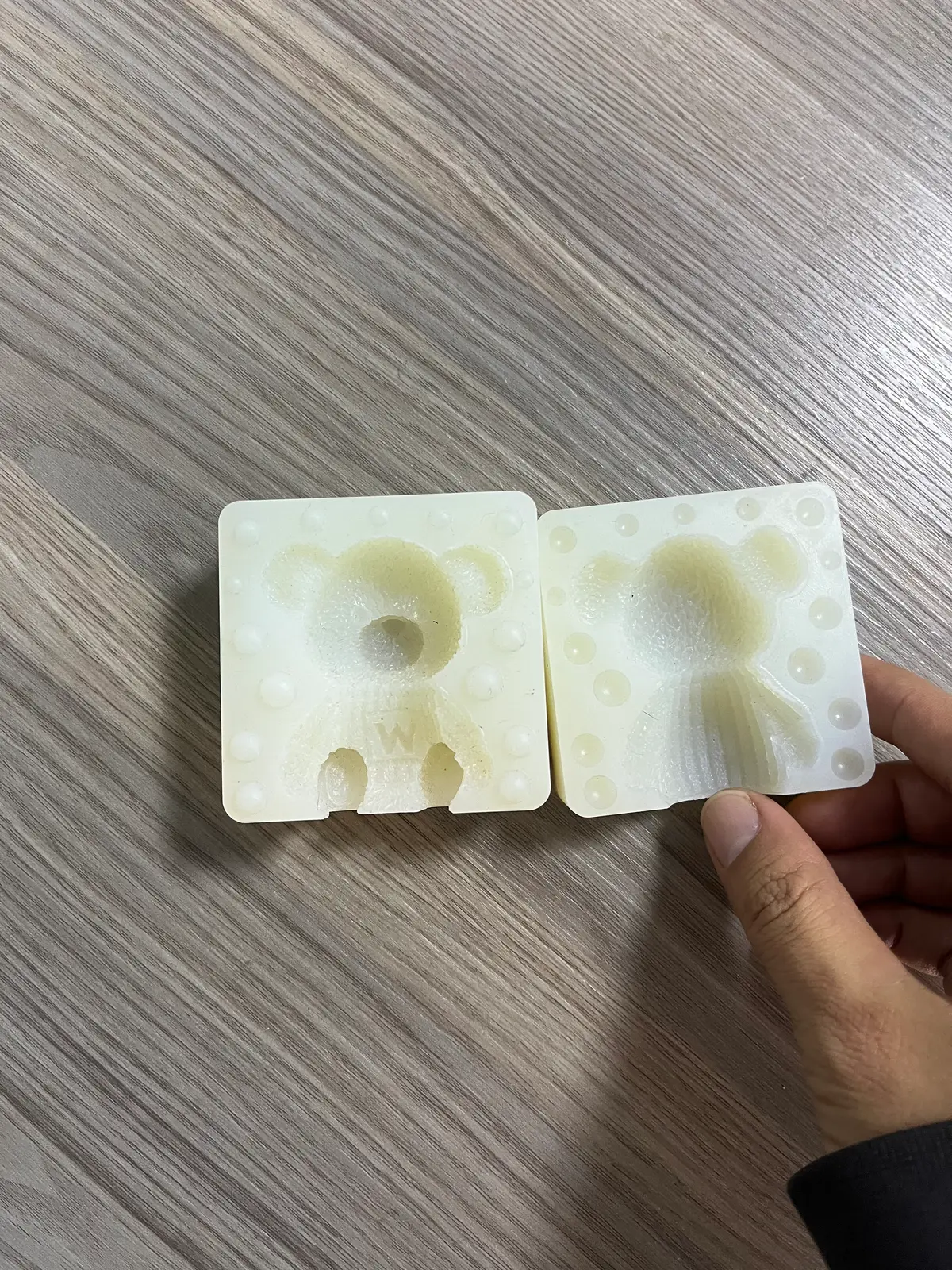
How to Make Silicone Molds: A Practical Guide for Producers
Silicone mold making is the process of creating a flexible negative impression (the mold) from a positive master model. This mold is then used to cast prod
Read article -Custom silicone development · RTV mold MOQ from 20 · DFM & prototype support
Explore practical silicone mold guides from RUUIPON, covering design, release, materials and production planning. Start with the problem you need to solve, then open the relevant product page when you are ready to discuss a quotation. CAD, drawings, samples and measured reference photos can all help define the project.
A broad DFM guide covering release, undercuts, splits, detail, multi-cavity layout, material selection and prototype validation.
The information that helps a supplier identify the correct mold structure, process, quantity and documentation requirements.
Understand when a flexible casting mold, compression tool or LSR tool fits the product.
Understand what food-contact documentation means and what to request for the destination market.
Use this cluster for one-piece vs two-part molds, undercuts and split molds, registration keys, wall thickness and support, edge radius, logo/text detail, tolerance and shrinkage, and DFM review.
One-piece vs two-part · Undercuts and split molds · DFM review
Use this cluster for gummy mold design, gummy size and cavity volume, chocolate molds, baking, ice and food-contact documents.
Use this cluster for platinum vs tin cure, vacuum degassing, cure time, RTV vs HCR/HTV vs LSR, and overmolding.
Use this cluster for RFQ preparation, low MOQ, lead time, custom vs off-the-shelf, factory sourcing, prototype to production, and ownership/reorder.
RFQ guide · Low MOQ · Custom vs off-the-shelf · Manufacturer
Use this cluster for common defects, tearing, resin bubbles, storage/warping, lifespan and cleaning.
Common defects · Resin bubbles · Storage and warping · Mold lifespan
Latest articles · 412 guides · page 41 of 42 · 10 per page
Title preview
Silicone mold making is the process of creating a flexible negative impression (the mold) from a positive master model. This mold is then used to cast prod
Read article -The material you choose for your production molds directly impacts:
Read article -Getting cavity size right is essential for:
Read article -Starting a gummy manufacturing business is an exciting venture, but choosing the right silicone molds is one of the most critical decisions you'll make. Th
Read article -While both chocolate and gummy molds are made from platinum-cured silicone, they serve different production needs. Understanding the key differences helps
Read article -Even with quality platinum-cured silicone molds, production issues can arise. This troubleshooting guide addresses the most common problems encountered in
Read article -While silicone molds are best known for food production, their unique properties make them valuable across many industrial applications. This guide explore
Read article -
Silicone shrinkage is a critical factor in mold design and production. Understanding how silicone behaves during curing and over time ensures accurate prod
Read article -
Adding a logo to your gummy or chocolate mold seems straightforward — emboss your brand name or design onto the cavity, and the product comes out with your
Read article -
The surface finish of your chocolate mold cavity directly determines the finish of your finished chocolate piece. A mirror-gloss cavity produces a high-glo
Read article -