Logo Depth in mm That Will Wash and Peel | RUUIPON
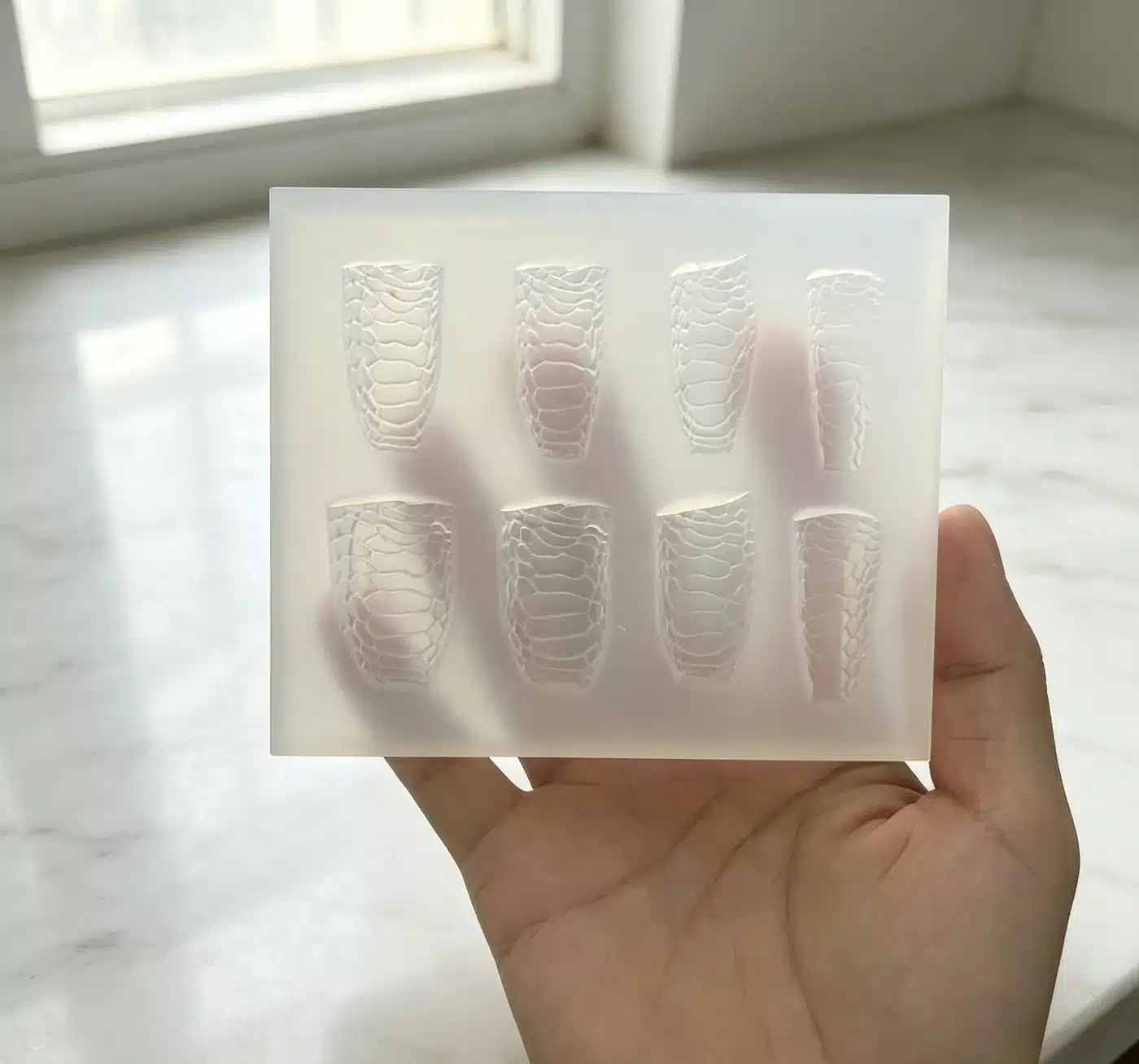
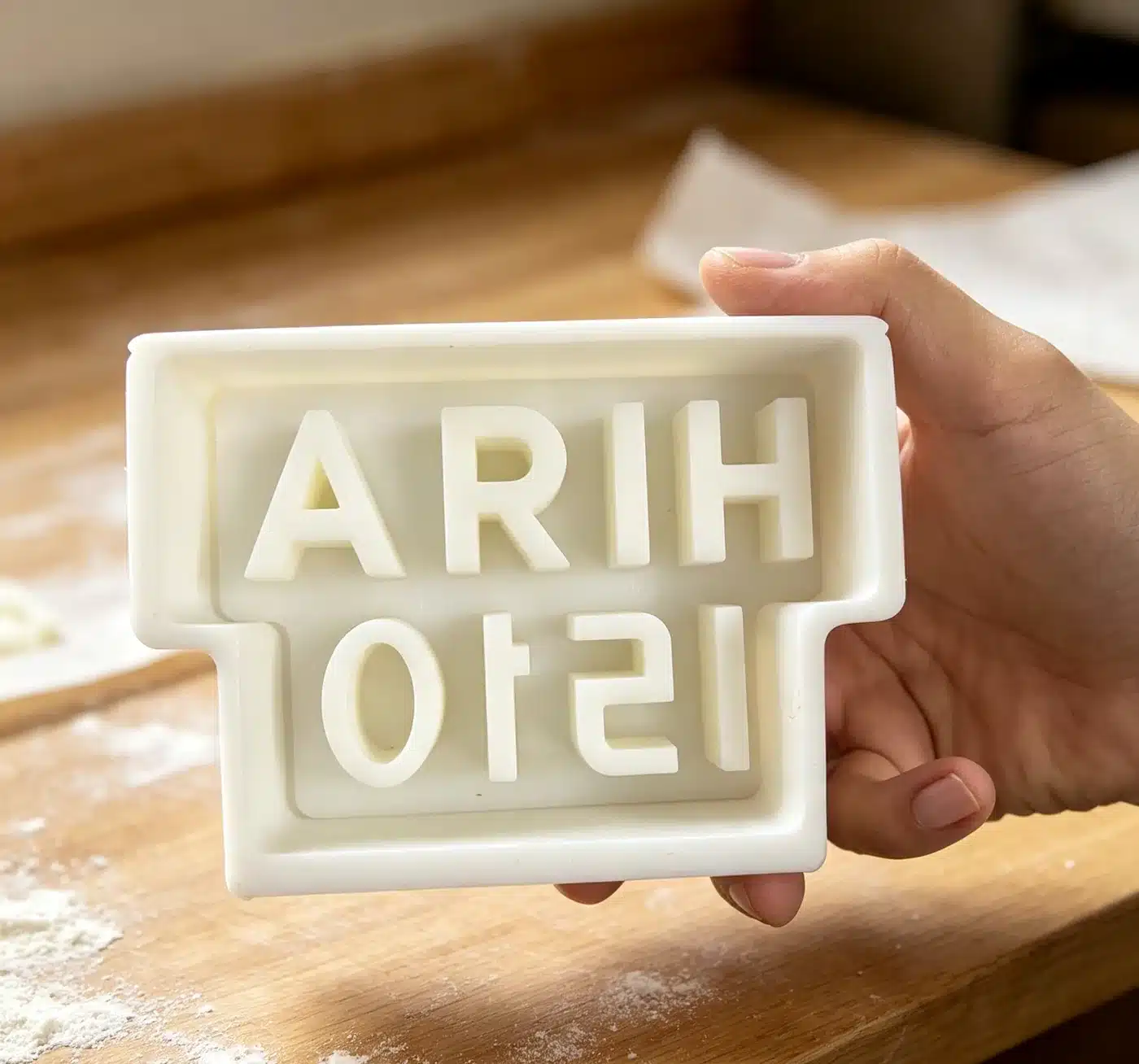
Lock logo depth in millimetres before CAD freeze. Too shallow washes after temper; too deep tears serifs on demold. 0.3–0.6 mm is a start, not a slogan.
Read article -Custom silicone development · RTV mold MOQ from 20 · DFM & prototype support
Explore practical silicone mold guides from RUUIPON, covering design, release, materials and production planning. Start with the problem you need to solve, then open the relevant product page when you are ready to discuss a quotation. CAD, drawings, samples and measured reference photos can all help define the project.
A broad DFM guide covering release, undercuts, splits, detail, multi-cavity layout, material selection and prototype validation.
The information that helps a supplier identify the correct mold structure, process, quantity and documentation requirements.
Understand when a flexible casting mold, compression tool or LSR tool fits the product.
Understand what food-contact documentation means and what to request for the destination market.
Use this cluster for one-piece vs two-part molds, undercuts and split molds, registration keys, wall thickness and support, edge radius, logo/text detail, tolerance and shrinkage, and DFM review.
One-piece vs two-part · Undercuts and split molds · DFM review
Use this cluster for gummy mold design, gummy size and cavity volume, chocolate molds, baking, ice and food-contact documents.
Use this cluster for platinum vs tin cure, vacuum degassing, cure time, RTV vs HCR/HTV vs LSR, and overmolding.
Use this cluster for RFQ preparation, low MOQ, lead time, custom vs off-the-shelf, factory sourcing, prototype to production, and ownership/reorder.
RFQ guide · Low MOQ · Custom vs off-the-shelf · Manufacturer
Use this cluster for common defects, tearing, resin bubbles, storage/warping, lifespan and cleaning.
Common defects · Resin bubbles · Storage and warping · Mold lifespan
Latest articles · 412 guides · page 18 of 42 · 10 per page
Title preview
Lock logo depth in millimetres before CAD freeze. Too shallow washes after temper; too deep tears serifs on demold. 0.3–0.6 mm is a start, not a slogan.
Read article -Put the RTV parting land off the show face and off the logo. Keys register the halves; flash lives on the land. A seam through the wordmark is a fail.
Read article -
Extra RTV pockets change webs, jacket sag, and grams - not nozzle pitch. Outer rows run heavy when a loaded sheet droops. Depositor maps are a line-layout brief, not this RTV tray RFQ.
Read article -
RUUIPON production MOQ is 20 molds per design — not 20 mixed SKUs, not MOQ 1. A paid prototype is a test. CAD is $50 when that scope applies.
Read article -
A RUUIPON sample is a working RTV prototype in your dump, 3–7 days after CAD lock — not a colour chip. Sign it, then MOQ 20 per design. CAD $50 when in
Read article -
Simple 3D is USD $50 when CAD scope applies: photos-to-model or sketch-to-cavity. Not branding-on-a-budget. Reconstruction is quoted separately.
Read article -Spare RTV capacity is a recast from a living master, a spare jacket, or complete tools you rotate. Unmatched floppy skins are not spares. MOQ 20 per
Read article -Temper, moisture, and logo undercuts cause most chocolate stick. How to confirm each cause, when the RTV tray is at fault, and what to send for a recast.
Read article -Pectin stretch, a wet cavity, and a thin mascot arm cause most stick and tear. Confirm gel vs tray vs draft. Recast only if the rubber is the tear start.
Read article -A tacky cavity against a cured jacket is platinum inhibition from sulfur, latex, or SLA. Confirm face vs back, scrap the food skin, remake from a sealed
Read article -