
Why RTV Molds Go Sticky and Dull with Age | RUUIPON
Months later a dull, tacky cavity is wear, dump chemistry, or tin bleed — not a master that poisoned platinum. Confirm spare vs used wells before you
 Kyler Yang · Founder7 min read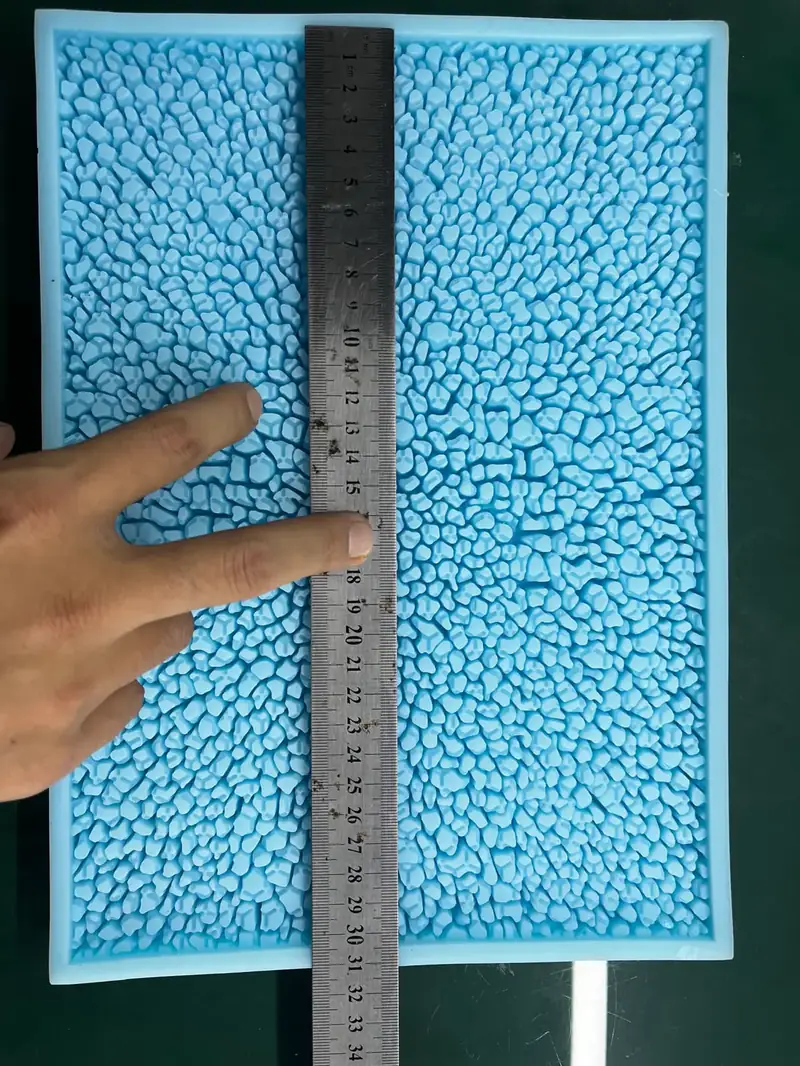
If a platinum cavity was snap-dry at first demold and months later feels tacky and looks dull, you are not looking at classic inhibition. Inhibition is a first-cure event: the face that touched the master stays under-crosslinked while the jacket cures. An aged dull well is a different stack — dump chemistry chewing the skin, plasticizer or tin bleed, detergent film baked into micro-texture, or UV/heat taking the gloss off a tool you stored in a window. Washing “like a new mold” will not rebuild the network. Recast from the unsanded master if the face is spent.
RUUIPON archive and recast work is Bao'an since 2018. Prototype on a recast is 3–7 business days after we confirm the master is still the locked CAD. Production MOQ 20 pieces per design. USD $50 only when CAD scope applies again. Steel/LSR *parts* with bloom live on wydsilicone.com.
Does not apply when the mold never cured on day one (face strings, jacket firm — scrap a food skin and remake), when the dullness is chocolate fat or resin that wipes off a spare unused well, or when you are describing an HCR part from a press. Don't treat a greasy old tray as proof the factory failed 21 CFR 177.2600; that test is on the article you ship.
Age patterns you can split without a lab number
Used wells dull and slightly tacky; a cavity you never poured is still dry and has the original sheen. Cause: the dump — amine epoxy, some UV resins, fragrance oils, acidic soap, or a commercial dishwasher film. Confirm: spare vs used in one photo, raking light. Towel from the used well smells like the pour, not like rubber. Stick test: no long strings the way an inhibited first face strings. Fix: retire that well from food if it ever was food. For craft, decide barrier vs recast. Stop oiling. We would not raise Shore on the next PO to “resist” a resin you will not name.
Unused spare is also dull and slick; paper towel films again an hour after a wipe. Cause: true exudation — more often tin-cure or a filled cheap mix, sometimes heat-aged platinum that was always marginal. Confirm: spare never saw a dump. Jacket keys that used to fit have slack if tin kept shrinking in storage (platinum typical shrink is about 0.1–0.3% and then sits; tin does not sit still). Fix: platinum recast for any food path. Craft: cosmetic vs recast. We would not multiply a bleeding tin food sample to MOQ 20.
Dull, dry, no tack, gloss gone after months on a windowsill or under shop UV. Cause: UV and heat, not inhibition. Transparent tools show it first. Confirm: a tray from the same PO stored in the dark still has sheen. No strings. Fix: storage spec. Recast when the texture you sell is the gloss. Do not coat a food well with a craft varnish to fake gloss.
Tack only after a hot warehouse summer, plus a polyethylene bag print on the face. Cause: bag film plus heat, or accelerated bleed. Confirm: cool, unbagged twin from the same job. Fix: unpack, wash the right cabinet, recast if food-contact film returns after a documented wash.
The photo that would prove age vs inhibition: date-coded first-week cavity photo next to today’s spare and used wells, stick lifting (or not) on each, jacket keys in the frame.
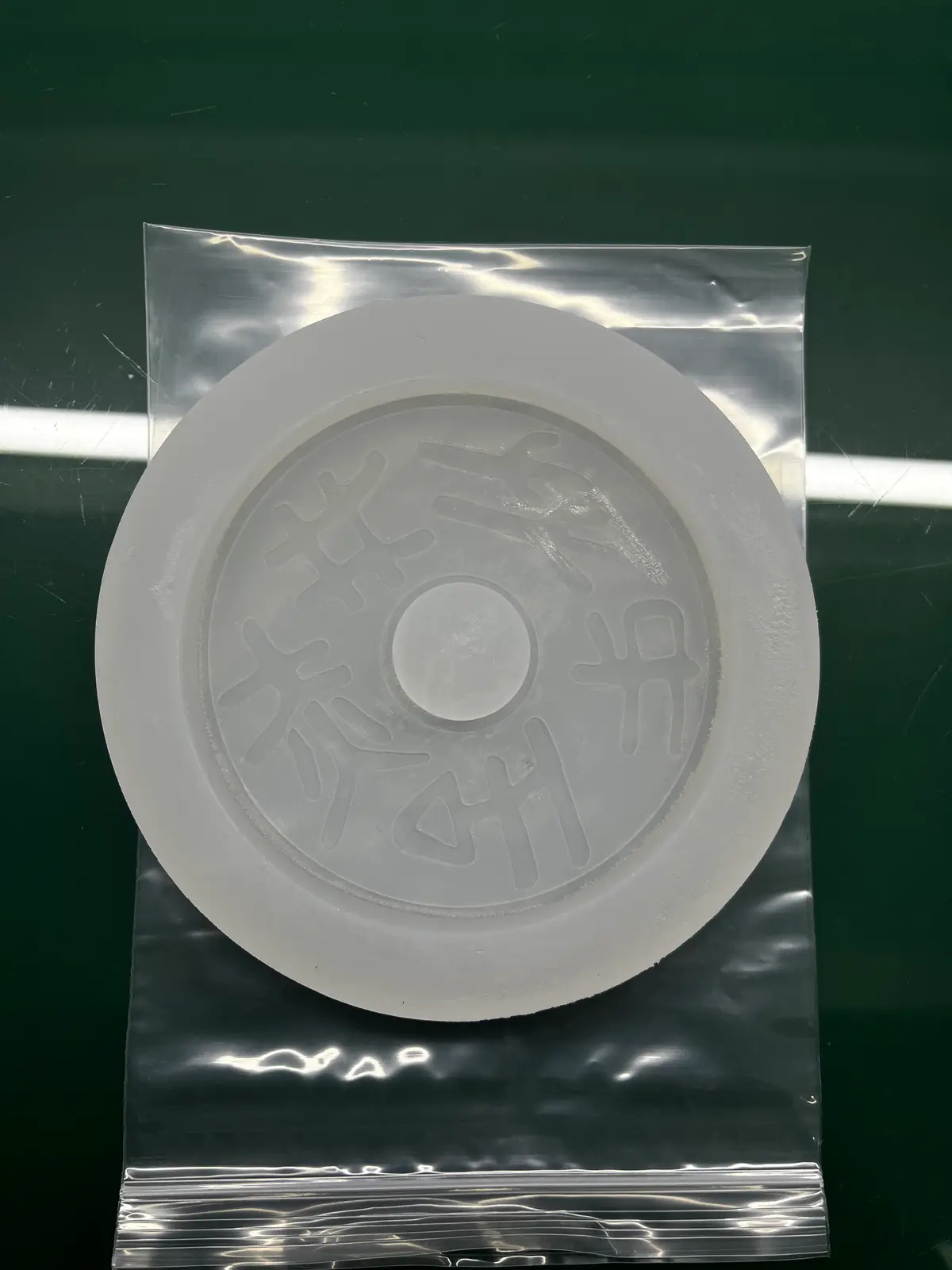
Typical shop values
Caption: Typical shop values.
| Item | Typical shop value | Age note |
|---|---|---|
| Rubber | Platinum for food; tin only if craft-named | Tin in storage is the usual late slick |
| Platinum shrink | about 0.1–0.3% | Late key slack is a tin clue, not platinum “creep” |
| Cavity Shore | 20A–40A trays; 10A–20A gloves + jacket | Soft skins dull faster under abrasive dumps |
| Mix | 1:1 or 10:1 by weight | Off-ratio day one is not this page |
| Prototype recast | 3–7 business days after master confirmed | Clock does not start on a lost master |
| MOQ | 20 pieces per design | Recast is a design lot, not one replacement skin for free |
| Simple 3D | USD $50 when CAD scope applies | Lost master + photo only may need CAD again |
Worked example (anonymized)
A 12-cavity resin coaster, platinum ~30A, fine at dump 1. At dump ~80 the wells looked matte and felt draggy; an unused thirteenth cavity from the same pour was still dry. Buyer wanted “the same inhibition remake as last year.” We refused that label. Spare vs used photo, towel smelled like hardener. Recast in the same Shore from the locked master; we named the resin family on the job card and would not put a food path on those wells. MOQ 20. No $50 CAD.
One procurement mix-up
“The mold went sticky so the platinum was fake” is a forum line, not a test. Day-one face/jacket split is inhibition. Month-six used-well-only tack is the dump. Ask for a spare. Tooling charge did not buy a lifetime face against an unnamed epoxy.
We would not recommend
We would not recommend oven-post-curing an aged dull food well and shipping it as new.
We would not recommend oiling an aged tray to hide tack.
We would not recommend storing production tools in a sunlit window or a hot sealed poly bag.
We would not recommend calling every late tack “inhibition” on a warranty line.
flowchart TD
  A[Old RTV well sticky and dull] --> B{Was face snap-dry at first demold?}
  B -->|No, day-one strings| C[Inhibition — different article; scrap food skin]
  B -->|Yes| D{Unused spare still dry and glossy?}
  D -->|Yes| E[Dump chemistry or wash film — retire food; recast or barrier craft]
  D -->|No, spare slick too| F{Keys still fit? odor?}
  F -->|Keys slack / sour| G[Tin storage move — platinum recast]
  F -->|Dry dull, dark twin OK| H[UV/heat — storage spec, recast if gloss is the product]
What to ask when you're buying
- Do you have a spare cavity from the original pour that never saw the dump?
- What was poured, how many cycles, wash method, storage?
- Platinum or tin on the original PO?
- Food well that later saw resin? That cabinet is retired.
- Recast from the locked master, or is CAD lost (USD $50 if we must remodel)?
RFQ copy-pack
[email protected] · +86 135 3006 2969
RUUIPON aged-face RFQ Job / CAD lock date if known Photo: spare unused + used well + jacket keys Pour: resin / soap / wax / food; cycles approx Wash: hand / dishwasher Storage: dark / window / bag / hot Original rubber: platinum / tin / unknown Food path still claimed? yes/no Qty: recast sample / MOQ 20 CAD: have lock / lost / need $50 3D
Matched next step: send spare-versus-used photos and the pour history. We recast a spent face; we will not relabel age as day-one inhibition. Prototype 3–7 business days after the master is confirmed. MOQ 20 per design.
Related: oil bleeding on aged RTV, how to clean a silicone mold, yellowing of transparent molds, contact.
FAQ
Can an inhibited mold look fine at first and go tacky later? Classic inhibition is visible at first demold on the master face. Late tack on used wells only is almost always the dump or storage. Do not mix the words on the PO.
Will a dishwasher restore gloss? Usually the opposite: film plus heat dulls micro-texture. Hand-wash spec on the next recast if that is how you run.
Is dull the same as worn-out? Dull and dry can still dump if grams and logo survive. Dull and tacky plus etched texture is a recast conversation.
Can I keep using a tacky resin well for chocolate? We would not. Cabinets split. A resin-etched well is retired from food, docs included.
Does recast of an aged tool restart MOQ? Yes. Production is MOQ 20 pieces per design. The spent skins are not a credit toward a new lot unless the PO says so. $50 CAD only if we must rebuild the model.
Ready to order custom silicone molds?
Free quote for OEM/ODM projects. MOQ 20 · Prototype 3-7 days · FDA/LFGB available.