
Is Platinum Silicone Safer for Food Molds | RUUIPON
Platinum RTV is the food-cavity path we spec, not a toxicity stamp. Tin stays off food POs. Docs, wash, and dump still decide contact. MOQ 20.
 Kyler Yang · Founder8 min read
"Safer" is the search; the buying answer is narrower. For a food-contact RTV cavity — chocolate, gummy, ice, baking, popsicle — we spec platinum-cure rubber and we would not spec tin-cure. Platinum (addition cure) is the chemistry that matches the document packs a retailer actually asks for: 21 CFR 177.2600 is extraction of the *finished article*, not an FDA-approved factory stamp, and LFGB / BfR is a separate EU pack. Tin-cure (condensation) is a craft chemistry with a leftover and shrink story we do not want under couverture. Platinum is not a magic safety badge. Dump, wash SOP, colorant, and the named compound still have to match the market.
RUUIPON pours those platinum tools in Bao'an since 2018: master, mold box, A/B mixed 1:1 or 10:1 by weight, vacuum degas, post-cure when the PO asks. Prototype is 3–7 business days after CAD lock. Production is MOQ 20 pieces per design. Simple 3D is USD $50 when that CAD scope applies. A molded food *part* (spatula, teether, lid) is not this shop — send parts to wydsilicone.com. Food-cavity docs: food-grade molds.
Does not apply when the dump is PU resin, plaster, concrete, or a decorative candle you will never plate food on. Tin can be a named craft choice there. Also does not apply to LSR food *parts* in a heated steel cavity with a cold-runner. Different factory, different shrink. Jewelry and concrete tools on this site are craft/industrial cavities — they do not inherit a food extraction pack.
Safer than tin leftovers, not safer than a missing extraction
Platinum addition-cure has no condensation by-product and typical linear shrink in about a 0.1–0.3% band that holds in storage. Tin keeps moving dimensionally, can leave an odor conversation, and is what hobby kits sell as "food safe" with a smile. Forgiveness on a dirty master is not a food-contact argument.
What platinum does *not* do: it does not approve our gate, it does not forgive an unwashed first dump, and it does not turn a sulfur-clay master into a 177.2600 article. Inhibition is the platinum tax — leftover SLA resin, latex gloves, tin residues, and some clays leave the cavity face sticky while the jacket back is cured. That food skin is scrap. We remake from a sealed or post-cured master. Tell us what the pattern was printed in: printed masters.
The photo that would prove a food path is the named compound on the PI, the extraction pack that matches *that* color, a post-cure note, and a first-wash SOP — not a "platinum = non-toxic" sticker on the carton.
What still has to be true after you pick platinum
Market first. US retail wants 177.2600-style extraction language on the article. EU wants LFGB / BfR on the named grade. A gum-supplier letter is formulation evidence, not a tray extraction. Do not copy a chocolate fat pack onto an ice well and call both "safer."
Wash and post-cure still belong on platinum food tools before the first dump. Catalyst choice is the RFQ line that has to be right before that bake. Colorant bleed, oil, and a cousin "clear food" kit that was never the named grade will still fail a buyer audit even if the drum said platinum.
ISO 3302-1 M2 is a common rubber drawing class on the cavity. It is not a toxicity class. Do not write "precision food mold" and expect that to stand in for extraction.
Typical shop values
Caption: Typical shop values. Not a named lot, not a lab report number.
| Item | Platinum food cavity (what we quote) | Tin (craft only; we would not spec for food) |
|---|---|---|
| Cure | Addition, 1:1 or 10:1 by weight | Condensation, kit-dependent |
| Vacuum | Yes on food detail | Often skipped in hobby pours |
| Shrink | about 0.1–0.3% linear, then holds | Keeps moving in storage |
| Food-doc path | 177.2600 and/or LFGB on the named compound | Do not borrow a platinum PDF |
| Odor at first use | Low if washed and post-cured | Common leftover conversation |
| Master sensitivity | Inhibition on sulfur / some SLA | More forgiving, still not a food argument |
| Prototype | 3–7 business days after CAD lock | Not our food clock |
| MOQ | 20 pieces per design | Stock kits are not this PO |
| Drawing class | ISO 3302-1 M2 unless the print says otherwise | Not a safety stamp |
Common mix-up: platinum equals medical-grade equals FDA factory
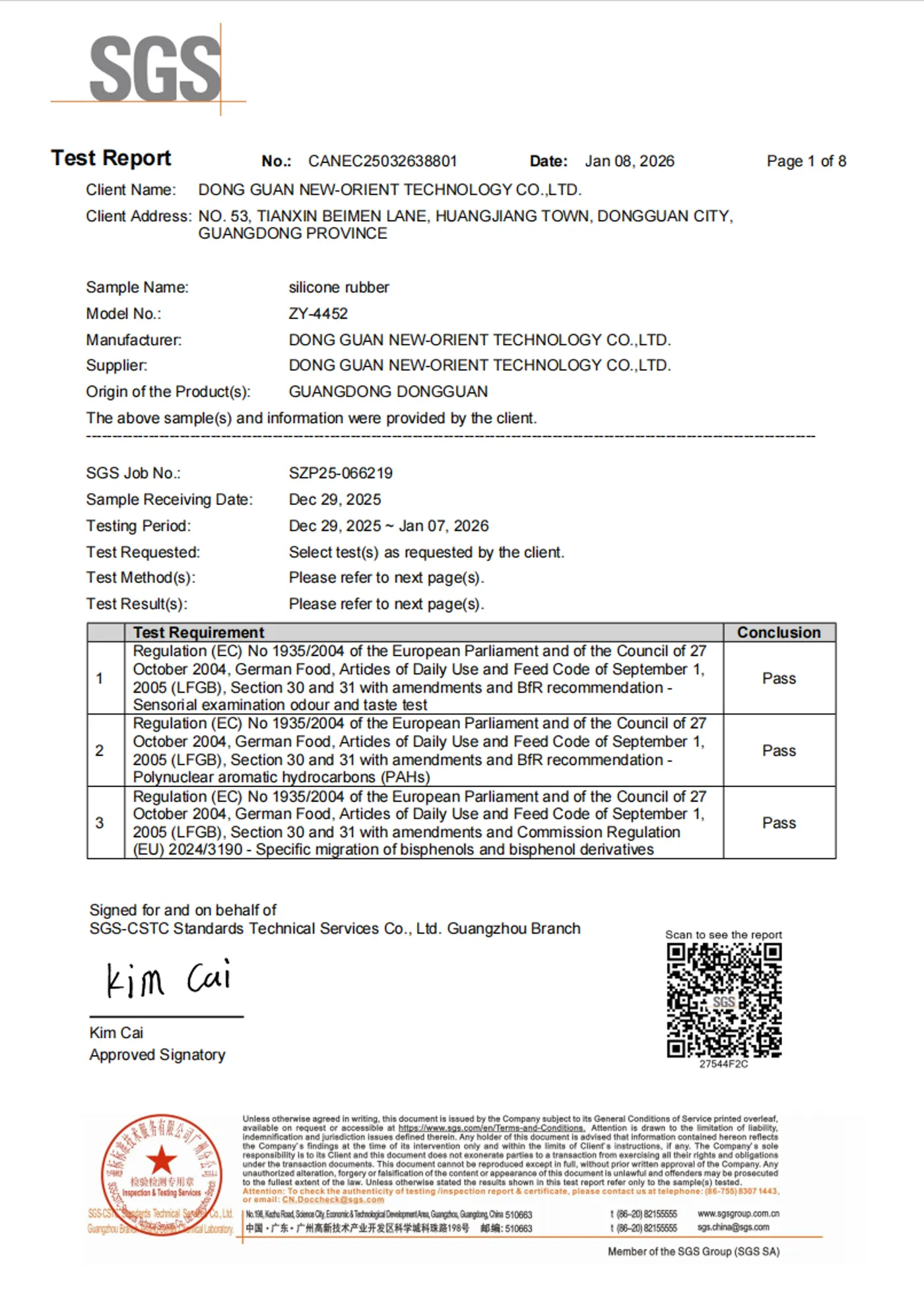
A buyer forwards a kit TDS that says platinum and "non-toxic" and asks us to stamp the carton FDA-approved. 21 CFR 177.2600 does not approve a factory. ISO 10993 / USP Class VI is a device conversation we do not invent on an RTV tray. We would not run a craft platinum PDF as a US retail pack, and we would not call RUUIPON an FDA-approved factory. Name US, EU, or craft-only on the RFQ. Buyer fields: food-grade buyer spec.
Worked example (anonymized)
A 12-cavity chocolate shell headed to US grocery plus a later EU listing. The first email said "safest silicone, tin is fine if cheaper." We refused the tin line, quoted platinum ~25A open-back with a jacket because loaded edge sag is often 0.5–1.5 mm, charged USD $50 CAD only because the STEP had no fill line, locked CAD, poured in the 3–7 business day window, and listed 177.2600 extraction on that compound plus an LFGB pack for the EU SKU. The same shell sold as a hobby resin mold with no food claim would have been a different sentence. The chocolate SKU could not borrow it.
We would not recommend
We would not spec tin-cure rubber for food cavities from this shop — chocolate, gummy, ice, baking, popsicle.
We would not recommend using the word "safer" on a PO in place of platinum + named extraction pack.
We would not recommend calling a platinum drum "FDA approved" or calling this plant an FDA-approved factory.
We would not recommend skipping vacuum on a food logo well because a tin hobby video did.
We would not recommend painting a food cavity with a craft sealer to "make platinum safer." Recast the skin.
flowchart TD
  A[Food-contact RTV search: safer?] --> B{Dump is chocolate / gummy / ice / baking?}
  B -->|Yes| C[Platinum only — we would not spec tin]
  B -->|No, craft resin/plaster/jewelry/concrete| D[Name tin or platinum on purpose — not a food pack]
  C --> E{Docs: US 177.2600 and/or EU LFGB?}
  E -->|Named on the compound| F[Mix 1:1 or 10:1, vacuum, post-cure, first wash]
  E -->|FDA factory / non-toxic sticker| G[Stop — that is not a document]
  F --> H[CAD lock → 3–7 business days → MOQ 20]
What to ask when you're buying
- Platinum or tin, written on the PO — not "safer" as a blur?
- Which extraction pack ships with *this* compound and color?
- Will the master be sealed if it is SLA, so platinum does not inhibit?
- Post-cure and first-wash required before your first dump?
- Prototype after CAD lock, then MOQ 20 of that design?
RFQ copy-pack (food catalyst, not a slogan)
Email [email protected]:
Dump: chocolate / pectin / gelatin / batter / ice / other Market: US / EU / both / craft-only Cure: platinum (default here for food) Reports that must ship with the lot: 177.2600 / LFGB / none Master: CNC / sealed SLA / physical CAD state; USD $50 if we still model Prototype 3–7 business days after CAD lock, then MOQ 20 / design Do not quote tin for this food cavity
Matched next step: send dump + market + the report names. We will not quote tin for those food cavities. Phone +86 135 3006 2969. Desk: contact.
FAQ
Is platinum silicone safer for food than tin? For a food cavity from this shop, platinum is the path we will put on a PO. Tin stays off those food POs. "Safer" still needs extraction docs, wash, and a named compound — it is not a toxicity stamp.
Does platinum mean the mold is FDA approved? No. 21 CFR 177.2600 is extraction of a finished rubber article. It does not approve a factory and it is not automatic because the drum said platinum.
Can I use a platinum craft kit TDS as my food pack? We would not. A kit letter is not an article extraction on *this* color and *this* post-cure. Name the market reports on the RFQ.
If platinum is the food path, why do jewelry and concrete molds use it too? Platinum is a cure system. Jewelry and concrete are not food. They do not inherit 177.2600 because the drum is platinum.
Will you mix platinum food rubber over a leftover tin skin? No. Tin residues can inhibit platinum. If a previous tin pour contaminated the master, we seal or remake the master before a food pour.
Ready to order custom silicone molds?
Free quote for OEM/ODM projects. MOQ 20 · Prototype 3-7 days · FDA/LFGB available.